The leaderboard and the game2:00
XP for every door and sale, levels, daily objectives, the weekly race, badges, a live feed of wins — and a celebration on every one.
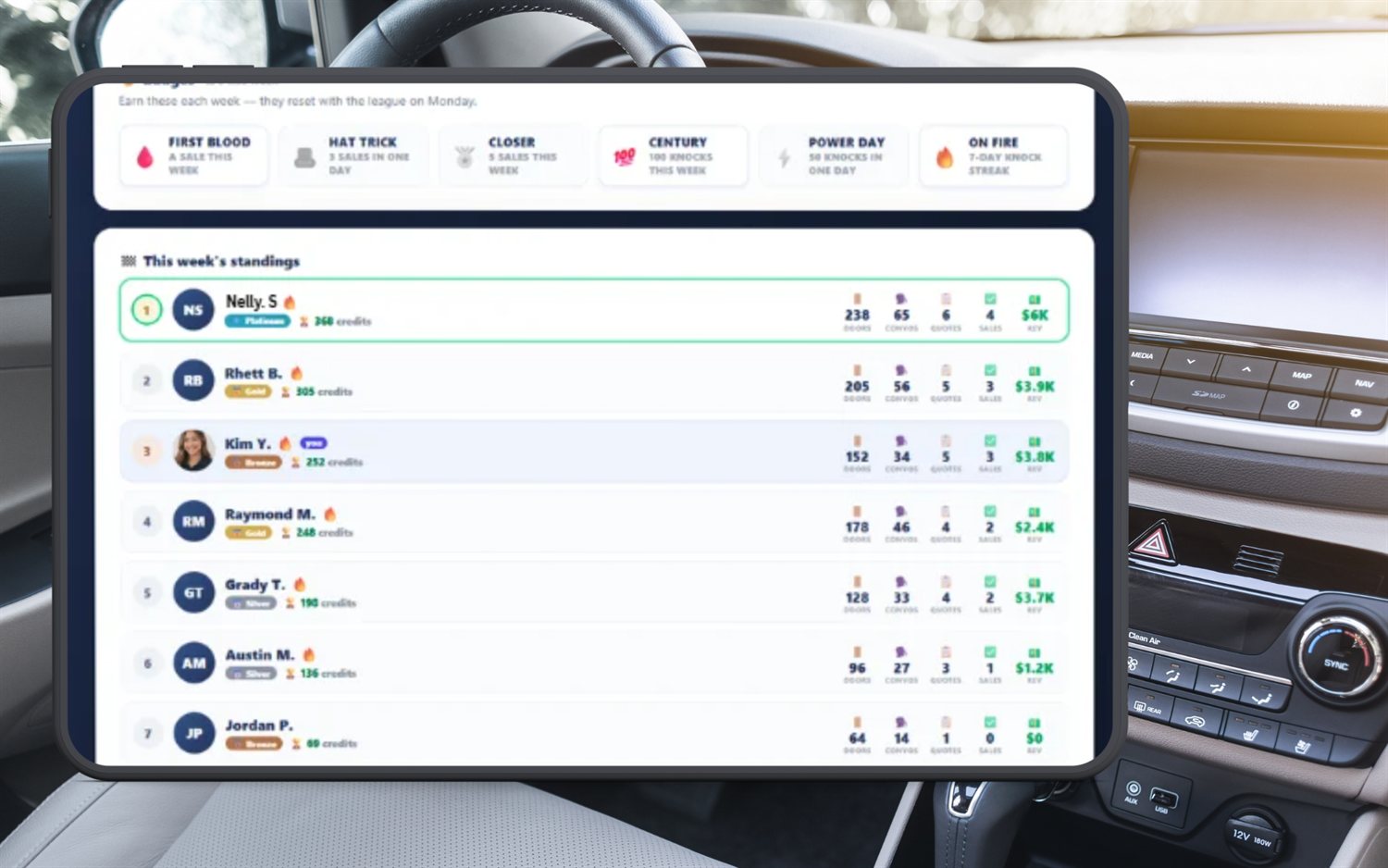
Today, This Week and This Month boards inside your team — plus a company Team League where whole crews climb from Bronze III to Diamond I. All computed from knocks you already log. Nothing to configure.
Flat from $30/mo, or $25/mo billed yearly · 14-day free trial · no seat minimums, no contract required
Most canvassing apps ship a leaderboard as a single column of numbers — name, doors, done. That gets looked at on Monday and ignored by Wednesday, because a flat list tells a rep nothing about the one thing they care about: who do I have to beat, and by how much?
The Game is built around that question. When a rep opens it, the board tells them their rank, the exact XP gap to the person directly above them, whether they are climbing or sliding today, who on the team is out knocking right now, and how long is left before Monday wipes the week. Underneath, the team itself is racing other companies in the same industry. This page is a straight description of what is on that screen — nothing on it is aspirational.
Every item below is a live element of The Game, not a mockup.
One individual leaderboard with three tabs, ranked by XP earned in that period, scoped to your team. This Week opens by default. Up to 60 reps are listed so a mid-pack rep still sees themselves and their rivals.
A tension line at the top of the board: "1,240 XP to pass Marcus," or "Leading by 800 XP over Dana" if you are out front, or "You own the board" if nobody is below you.
Top three on a medal podium, then a three-row strip showing only the rep above you, you, and the rep below you — the race narrowed to the two people who actually matter today.
A green LIVE dot on any rep whose last knock was within 15 minutes, and a 🔥 badge with the number of sales they have closed today. You can see who is out working right now.
Every row carries a ▲/▼ chip comparing a rep's rank on today's pace against their standing for the week — a fast read on who is surging and who has gone quiet.
A live timer on the board and on the Team League card showing days, hours and minutes until the week resets. Deadlines are what make a leaderboard bite.
There is exactly one scoring formula behind personal progression, the individual boards and the Team League — so a rep never has to ask which board rewards what. The weights are fixed platform-wide:
| Action | XP | The detail that matters |
|---|---|---|
| Knocked door | 5 | The grind. Volume is what keeps a steady rep on the board between sales. |
| Door marked interested | 25 | Only exists on disposition sets that include an "Interested" status. Alarm door-knocking has none, so those reps score on doors, appointments and sales. |
| Appointment set | 50 | Counted on the appointment's own date, not the day it was booked — an appointment set Friday for next Tuesday lands in next week's XP. |
| Sale | 500 | A door dispositioned sold — and a door already marked installed still counts, so advancing a job never erases the sale from the board. |
| Rep you referred | 125 | Lifetime total only. Deliberately excluded from the daily, weekly and monthly boards so recruiting can't buy a week's rank. |
Levels run off lifetime XP: level 1 costs 300 XP and every level after costs 60 more than the last.
Individual boards make reps compete with each other. The Team League makes them pull in the same direction — because your XP raises your team's average, and the average is what is ranked.
Not on a team yet? The league card says so and invites you to join or build one — your XP still counts on the individual board in the meantime.
The board is the headline. These are the panels around it on the same screen.
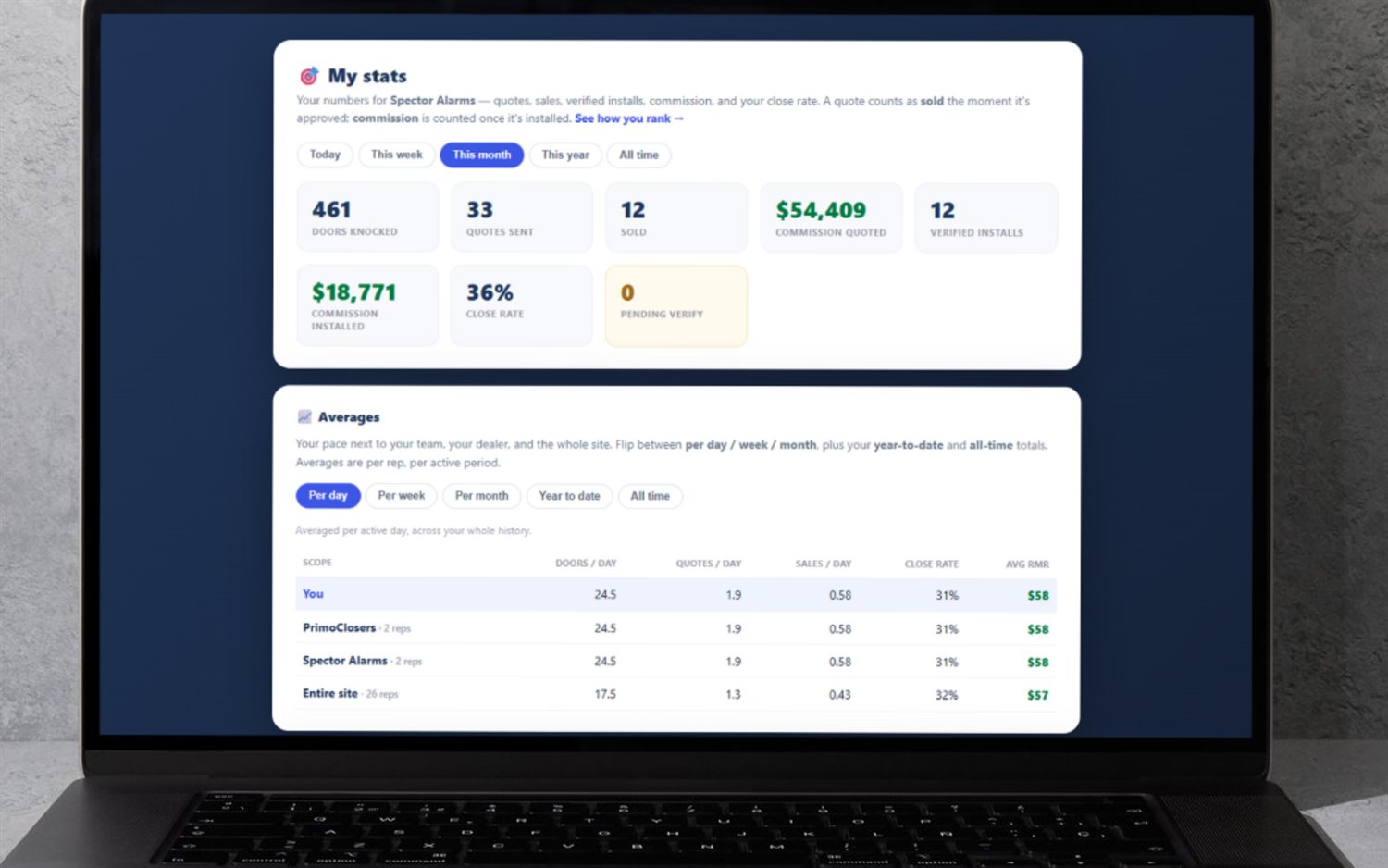
Three tiles — Today, This Week, This Month — each with your XP for the period and your rank in it, plus a movement chip on today.
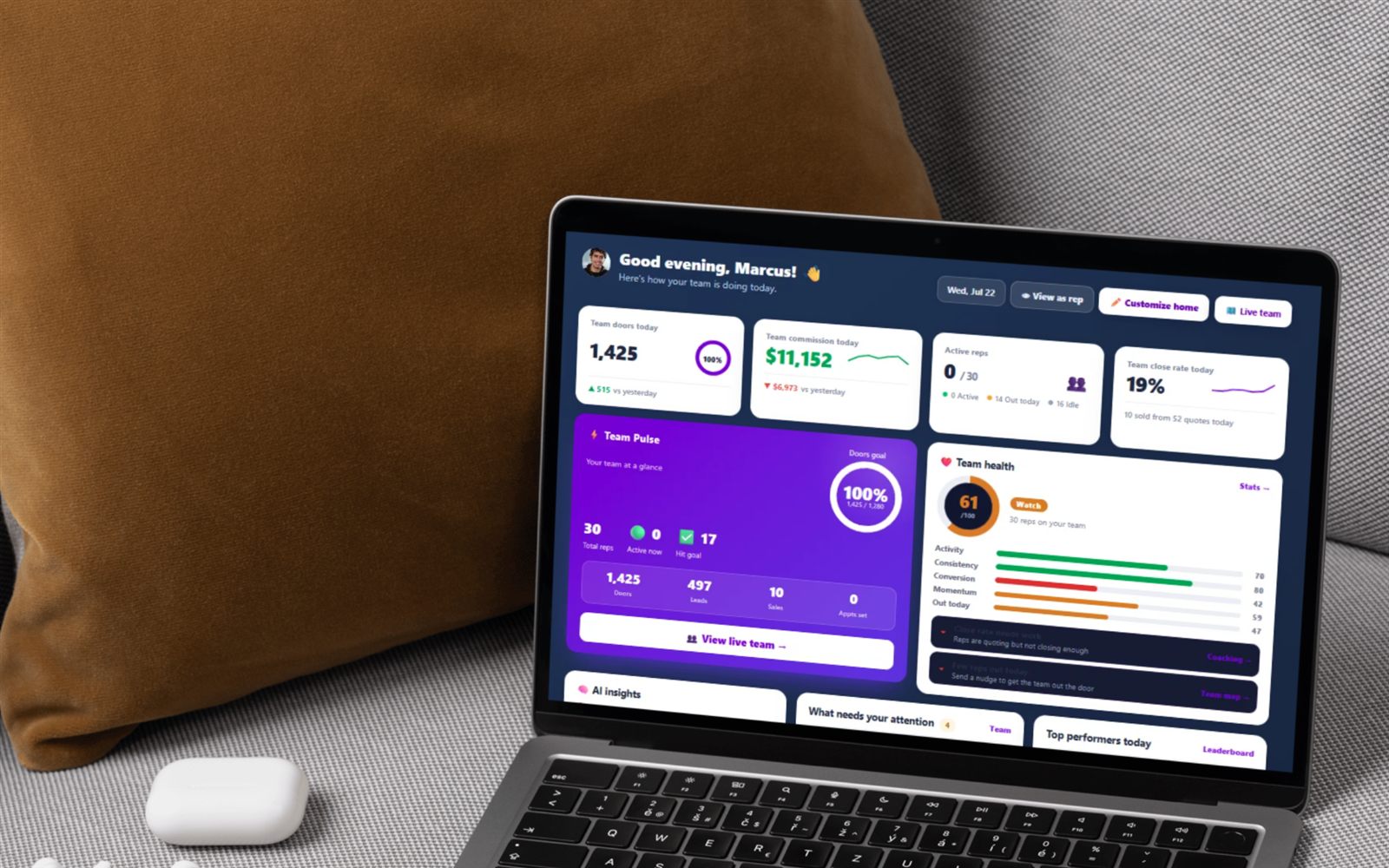
Today's team XP with the team's doors, appointments and sales so far, and whether the team is up or down places on today's pace versus its standing for the week.
Three daily quests with progress bars — knock 70 doors, set 3 appointments, close 1 sale — that reset at midnight in each rep's own timezone.
The top eight reps as a share of the team's total weekly XP, with a bar each. The clearest picture of who is actually carrying the week.
Eight badges in the set: First Sale, 100 Doors, Week Warrior (7-day streak), Appointment Machine (50 appointments), Referral King (10 reps), Closer (25 sales), 10K Doors and Legend (25,000 XP). The panel shows six at a time, earned first, with a link to the full shelf.
The team's last dozen wins from the past three days — sales closed, appointments set, go-backs scheduled, doors marked interested — each showing the XP it added to the team.
The same loop, every week, without a manager having to start it.
The weekly boards and the Team League clear. Every rep opens The Game to a fresh countdown and a team standing to defend or climb.
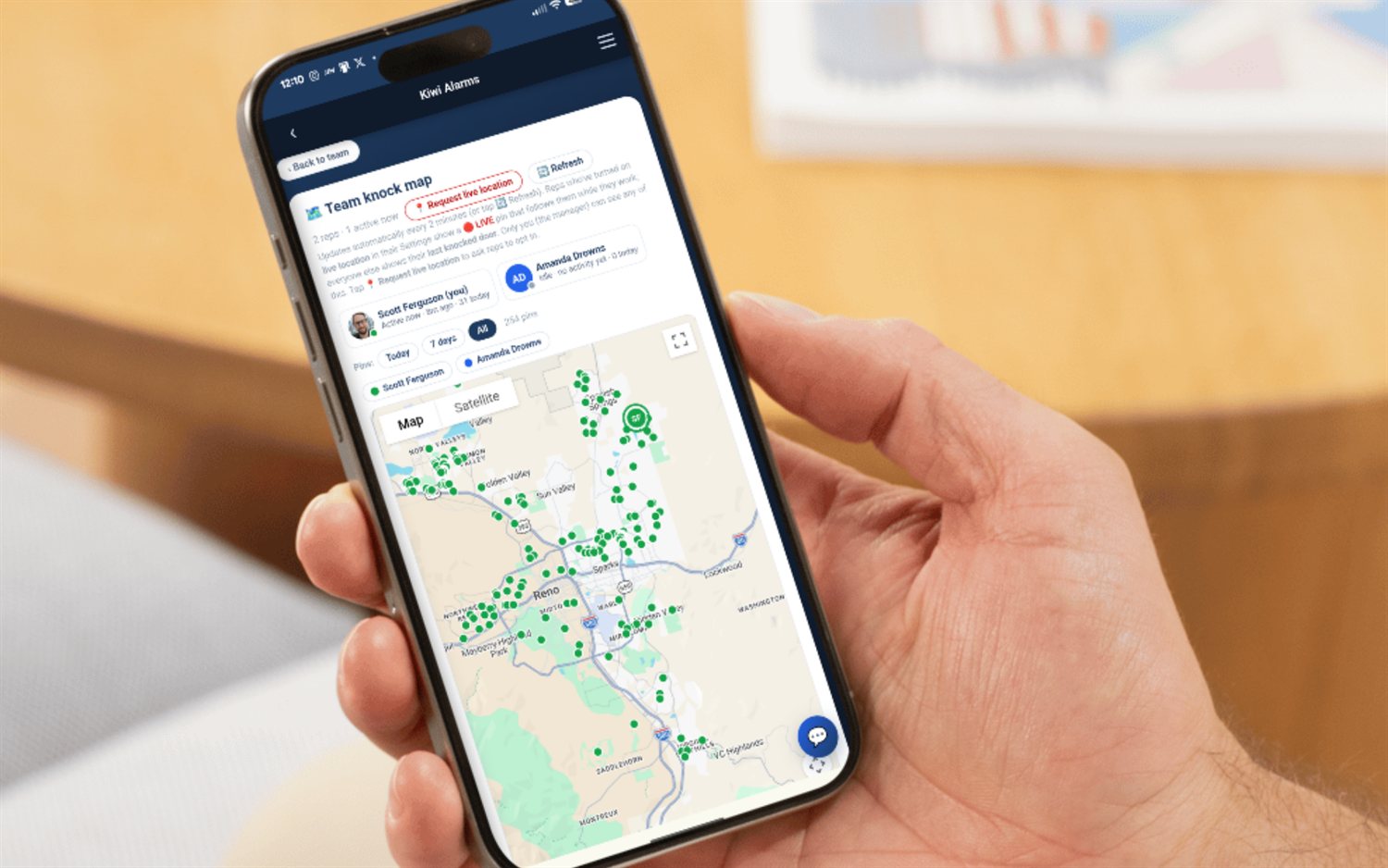
Reps disposition doors and set appointments on the knock map like always. XP, ranks, LIVE dots and the live feed update off that activity — nobody logs anything twice.
The team's average weekly XP per rep sets its league rung. Promotion, hold or slide — then Monday it starts again.
If you are evaluating sales competition software, the boundaries matter as much as the highlight reel. Here are ours, plainly:
A leaderboard nobody is on is worthless, and one nobody can leave is a liability. FieldStacker splits the difference:
Because every total is derived from dispositioned doors on the knock map, the board can't be gamed by typing numbers into a form — there is no form.
One number: XP. Inside your team, The Game ranks every rep by XP earned Today, This Week or This Month — three tabs on the same board, with This Week open by default. XP comes from field activity you are already logging: 5 XP a knocked door, 25 XP an "interested" door, 50 XP an appointment set, 500 XP a sale. Above that sits the company Team League, where whole teams are ranked by their AVERAGE weekly XP per rep. Nothing is scored in a separate system — the boards are computed live from your knocks and appointments, so there is no extra data entry and no way to pad the board without working doors.
Not today. The weights are fixed platform-wide (door 5, interested 25, appointment 50, sale 500, plus a lifetime-only 125 per rep you refer), and the daily objectives every rep sees — 70 doors, 3 appointments, 1 sale — are the same defaults for everyone until per-rep goals ship. If your team measures success very differently from "doors, appointments, sales," the board will not reflect that yet. What you do get is a board that needs zero configuration on day one.
No — that is exactly why it is ranked on AVERAGE weekly XP per rep instead of team total. A five-rep team that grinds can outrank a thirty-rep team that coasts, because thirty half-effort reps drag the average down. Teams are placed into 15 rungs — five leagues (Bronze, Silver, Gold, Platinum, Diamond) with three divisions each — and a promotion card shows exactly how much average XP your team still needs to reach the next rung. You only face companies in your own industry, and the standings show your team plus the two above and two below it.
Both. Every rep on the team is on the board by default so competition works out of the box, but a rep who opts out on the Rankings page disappears from the team leaderboard for everyone else — they still see their own row. Reps can also set a display name of up to 60 characters, and the board shows that instead of their full name. Disabled accounts are dropped from the board entirely. Profile photos show if a rep has one; otherwise the board falls back to their initials.
Not inside The Game. What is built is a permanent, always-on competition: a live rank, the rep directly above and below you, a countdown to Monday's reset, and a Team League your crew climbs together. The scoring periods are the Today / Week / Month tabs, with no contest builder and no prize field. Plenty of managers run the spiff off-platform and use the board as the scoreboard. If a contest builder matters to you, treat it as a gap today, not a roadmap promise.
The big canvassing platforms are capable and have leaderboards too, so the honest difference is not "we have one and they do not" — it is packaging and price. They are usually seat-based and quoted, often with a commitment; check current pricing before you compare. FieldStacker is flat and published, month-to-month from $30/mo with a 14-day free trial, no card, no seat minimums and no annual contract, and the whole competition layer — individual boards, Team League, achievements, live feed — is in the same app as the knock map, with nothing to switch on. The alarm edition, FieldStacker Security, runs the identical boards on the same backend.
The big canvassing platforms ship leaderboards too and are serious tools — the difference is what the leaderboard sits inside and what it costs to put every rep on it. Their pricing is usually quoted rather than published, so check current numbers before you compare. FieldStacker publishes a flat month-to-month price from $30/mo with a 14-day free trial and no card, no seat minimums and no annual contract, and Team Pro plans are flat too — which means adding the rep who might finish last does not cost you a decision.
FieldStacker vs SalesRabbit → FieldStacker vs SPOTIO → Summer sales programs →
The board is one screen in a bigger manager layer — teams, seats, reporting lines, overrides and install verification all live on the hub page.
Door-to-door sales team management software →
Territory software · Lead distribution · Team GPS map · Commission payroll · Coaching · Recruiting · How to assign territories · Managing a team
Short, real walk-throughs — no sign-up needed to watch.
XP for every door and sale, levels, daily objectives, the weekly race, badges, a live feed of wins — and a celebration on every one.
See each rep’s doors today, first and last door, and your override; spot who’s gone quiet; open any rep’s week and every move; hand out leads.
Start a 14-day free trial — no credit card. The Game is on from the first door your crew knocks; there is nothing to set up.