More knocks almost never come from working harder. They come from killing the dead time between doors: aimless walking, deciding where to go next, and the friction of recording each house. Fix those and your count climbs on the same energy.
Flat month-to-month from $25/mo · 30-day free trial · no seat minimums, no annual contract
Every vertical knocks a little differently — solar, pest control, roofing, fiber, alarms — but the math of a canvassing day is identical everywhere. You have a fixed number of good knocking hours, and inside them roughly a third of most reps\' time evaporates into walking the wrong way, standing on a corner deciding which street to take, and stopping to scribble notes. None of that is knocking. This guide is about reclaiming those minutes so you hit more doors at the same pace and the same energy — not a faster, sloppier version of the same day.
The single biggest lever on doors-per-hour is how far you walk between them. Twenty extra steps per house across 100 houses is a lot of your afternoon spent not knocking. Before you start, look at your area and knock the dense pockets first — apartment rows, tight suburban grids, streets where houses sit close to the road — and save the long-driveway rural stretches for a separate, planned trip. Work one side of a street all the way down, then the other, in a clean serpentine so you never cross back over ground you covered. A planned route is not corporate busywork; it is the difference between 60 doors and 100 in the same three hours.
Reps leak doors by wandering — a few houses here, drift two blocks over, double back for one they missed. Commit to a defined chunk of streets and clear it completely before you move on. A drawn territory keeps you disciplined: you knock every door inside the boundary, you know exactly what is left, and you do not burn minutes deciding where to go next because the plan already decided. On a team this matters double — assigned territories mean two reps are never grinding the same neighborhood while three streets over sits untouched. FieldStacker lets you trace a territory on the map and assign it in one action, so everyone knows their box and clears it.
Watch a rep who stops after each door to type a paragraph and you are watching doors evaporate. The fix is a one-tap disposition: not-home, not-interested, callback, appointment, sold — a single color-coded tag you drop before you take a step off the porch. It costs you a second instead of thirty, it keeps your rhythm intact, and it quietly builds the map that keeps you from re-knocking later. A rep who dispositions in one tap can knock fifteen to twenty more doors an hour than a rep buried in a notes app — same street, same effort, just no friction between houses.
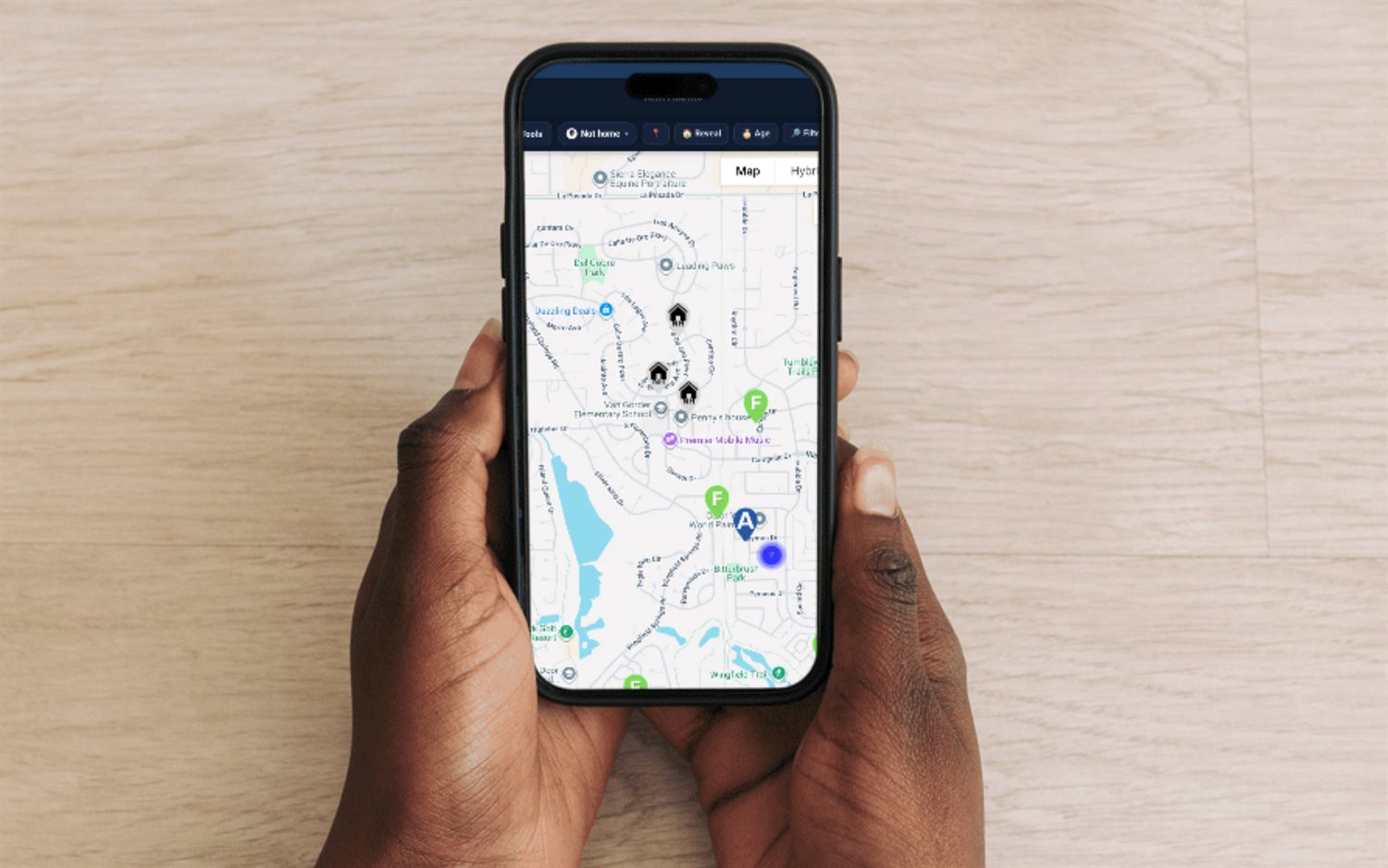
When your area is a live, color-coded map, you always know the next door and never re-cover ground. Cleared streets, not-homes to revisit at a better hour, callbacks to chase — all visible at a glance, so your feet are always pointed at a fresh door instead of a decision.
The fastest way to inflate your door count without adding a single deal is to knock a neighborhood at 1pm when everyone is at work — you will rack up not-homes and feel busy while going nowhere. Point your heaviest knocking at the hours your area answers, and use the empty hours for driving, planning the next territory, and revisiting earlier not-homes. Every area has its own rhythm, and the only way to know yours is to track it. FieldStacker charts your personal prime-time by day and hour from your real knocks, so you spend your peak energy on your peak windows instead of guessing. Go deeper in our guide on the best time to knock doors.
Two failures quietly cap every rep\'s output: re-knocking doors you already worked, and forgetting the not-homes you already paid a knock for. Both come from trusting memory across 40-plus doors, which nobody can do. A tagged map fixes both — worked streets show cleared, so you never waste a knock re-covering them, and every not-home stays on the map to revisit at a different hour, when that Tuesday-2pm empty house is probably home at 6. Working your not-homes at the right time is nearly free volume most reps leave on the table. For the discipline behind this, see our door-knocking tips.
All of this exists to do one thing: give your real conversations their full time by stripping the waste around them. More doors per day should never mean rushing the homeowner who is actually talking to you — that is where deals live. It means the minute you leave a porch, you are already tagging and walking to the next door instead of wandering, deciding, and typing. Fast between houses, patient at the door. That is how you raise volume and keep quality in the same afternoon instead of trading one for the other.
Six habits that add doors without adding effort.
Work one side all the way down, then the other. No crossing back, no skipped houses, no wasted steps.
Finish a defined territory completely. Wandering between neighborhoods is the biggest silent time-leak there is.
Disposition on the porch in a second, not a paragraph in the driveway. Keep the rhythm; the notes can wait.
Knock hard when your area is home; drive, plan and revisit when it isn\'t. Empty houses don\'t count.
A cleared street on the map is a street you never waste a second knock on. Memory can\'t do this; a map can.
Cutting dead time raises your count without raising your heart rate. Same energy at door 90 as door 10.
How the fast reps actually structure a canvassing block.
Pick a dense territory and draw your box. Know your serpentine path in before you knock the first door — no on-the-corner deciding.
Aim your heaviest push at the hours your area answers. Save low-answer hours for driving and working earlier not-homes.
One-tap disposition on every porch, set the go-back if there is one, and you\'re walking to the next door before you\'ve overthought it.
When the peak fades, filter your map to the not-homes and revisit them at the hour they\'re likely home. Nearly free doors.
Raising your door count is worthless if the extra knocks leak straight out the back. Every additional callback, maybe, and not-home you generate has to be captured and worked, or you are just making waste faster. Pair a high-volume route with a tight follow-up loop: a tracked go-back on every warm door, a map you actually revisit, and dispositions that feed your own numbers so you can see which streets and hours pay. The reps who dominate a market are not superhuman — they waste fewer minutes between doors and lose fewer leads after them. FieldStacker is built to run both sides: it runs the street so you hit more doors, and the money so every deal, chargeback, mile, and tax dollar is tracked without a spreadsheet. Knocking alarms specifically? That edition lives at SecurityQS, same engine underneath.
It depends on your area's density and your industry, but a focused rep working a tight suburban grid can realistically hit 80 to 120 quality doors in a solid canvassing block, while a rural rep with long driveways may max out far lower and that is fine. The number that matters is your own baseline and whether it is climbing. Track every door for a week to find your true count, then attack the biggest time-leak — usually walking between houses or fumbling with what to record. Chasing a stranger's "150 a day" from a rural route when you are in dense city blocks is meaningless; beat your own number instead.
Three things, in order: dead walking between low-density houses, indecision about where to go next, and the friction of recording each door. A rep who plans a dense route, always knows the next door, and dispositions in one tap keeps a rhythm; a rep who wanders, backtracks, and stops to type notes loses fifteen to twenty knocks an hour without noticing. Fix the route and the recording friction and your door count climbs before you ever change your pitch. FieldStacker's knock map removes the two biggest ones — it shows your uncovered doors and makes tagging a single tap.
It does not have to, and that is the whole point. More doors per day should come from cutting dead time — walking, wandering, and note-taking — not from rushing conversations or skipping the ones that count. When you strip out the wasted minutes between houses, you hit more doors at the same energy and give every real conversation its full time. The goal is more good knocks in the same hours, not a faster, sloppier version of the same day. Protect the conversation; cut everything around it.
Disposition every door the moment you leave it, and work from a map instead of memory. After 40 doors nobody can remember which houses they hit, which is how reps waste knocks re-covering worked streets or, worse, annoy a customer they already sold. A color-coded knock map turns your whole area into a picture: cleared streets, not-homes to revisit, callbacks to chase. On a team, GPS-verified knocks mean two reps never double-knock the same block. Memory leaks doors; a tagged map does not.
Both, and they are not in conflict — they are two different leaks. Low door count is a volume problem; leaking callbacks and not-homes is a follow-through problem, and most reps have both. Raise volume by planning a dense route and cutting walk-time, then protect every warm lead with a tracked go-back so the extra doors actually turn into deals. A rep who knocks more but forgets every maybe is just generating more waste faster. Fix the volume and the follow-up in the same week.
Load your heaviest knocking into the hours your area is actually home, and use the slow hours for driving, planning tomorrow's route, and working not-homes from earlier. There is no point sprinting through a neighborhood at 1pm when everyone is at work — you will burn energy on empty houses. FieldStacker charts your personal prime-time by day and hour from your real knocks, so you aim your peak effort at your peak windows instead of guessing. See our full breakdown on the best time to knock doors.
Start a 30-day free trial — no credit card — and put your route, your dispositions, and your not-homes on one map that keeps you knocking instead of wandering. Flat month-to-month, cancel anytime.