Field guide · objection handling

Door-to-door sales objections, and how to handle each one

The six lines you'll hear on almost every block — "not interested," "no time," "too expensive," "send me info," "I have to ask my spouse" — with a response to try and the principle underneath it, so you're reframing instead of freezing.

Flat month-to-month from $25/mo · 30-day free trial · no seat minimums, no annual contract

The short version: Almost every objection at the door is a reflex, not a decision. The move is always the same shape — agree, reframe, ask a question — never argue. Handle the first objection, test the second, and walk clean after that. Below is a response for each of the six you'll hear most, plus the reason it works.

Why objections aren't rejections

A homeowner opens the door mid-life — dinner's cooking, a kid's yelling, they were expecting a package — and a stranger is standing there. The brain's first job is to end the interruption, so it grabs the nearest exit line: "not interested." That line arrives before they've processed a single word you said. If you take it literally and walk, you're quitting on a reflex. If you argue with it, you confirm you're the pushy salesperson they were bracing for. The whole craft of objection handling is the narrow path between those two: acknowledge the reflex so they relax, then give them one genuine reason to stay in the conversation a few seconds longer. Do that well and most "no"s soften into "well, what is it?"

Every response below follows the same three beats. Agree — take the pressure off by validating what they said. Reframe — hand them a new, specific reason you're standing there. Ask — end on a question so the ball is in their court and the conversation keeps moving. Memorize that shape, not a script.

The six objections you'll hear most

What they really mean, the response to try, and the principle that makes it land.

🚪

"Not interested"

What it means: a reflex to end the interruption — they haven't heard anything yet.

Try: "Totally fair — most folks say that before they know why I'm here. I'm only on the street because a few of your neighbors just made a switch and I didn't want you left out. Real quick, are you the homeowner?"

Principle: agree first so you're not the enemy, then replace their reason for saying no with a reason to keep listening. Social proof ("your neighbors") lowers the wall.

⏱️

"I don't have time"

What it means: could be true, could be a soft brush-off — treat it as true and shrink the ask.

Try: "I hear you, I'm not here to eat your afternoon. Give me thirty seconds and if it's not for you I'm gone." Or book it: "When's better — tonight around six, or tomorrow morning?"

Principle: a smaller commitment is easier to grant than a vague one. If it's a real no-time, a specific alternative time beats "I'll swing back sometime."

"I already have it"

What it means: they're satisfied enough to not want a hassle — but rarely thrilled with what they pay.

Try: "That's actually why I knocked — most people on this street already have something. I'm not asking you to switch, just to see if you're overpaying for it. What are you on now?"

Principle: reframe "already have it" from a wall into the qualifier. You're offering a second opinion, not a rip-and-replace, which is far easier to say yes to.

💸

"It's too expensive"

What it means: they haven't connected the price to the value yet — or they're comparing to $0.

Try: "Compared to what? Because most people are already paying for a worse version of this every month — I'm trying to show you the same thing for less. Let me put two numbers side by side."

Principle: price is meaningless without a comparison. Anchor it against what they already spend or the cost of doing nothing, and never negotiate against yourself.

📬

"Just send me some info"

What it means: a polite exit 90% of the time — mailed brochures almost never close.

Try: "Happy to — honestly the 'info' is just me showing you two numbers on my phone, takes a minute. Are you the one who'd make this call, or is there someone else too?"

Principle: redirect a stall into a live micro-commitment. If they still want something to hold, send it through your digital card so you capture the contact and can follow up.

🤝

"I have to ask my spouse"

What it means: sometimes real, sometimes a soft no dressed up as a decision-maker problem.

Try: "Makes total sense, big decisions should be a team call. Are they home now so I can give you both the same two minutes? If not, when are you both around — I'd rather you not have to repeat my whole pitch for me."

Principle: get to the real decision-maker instead of leaving your close in someone else's hands. Booking both people beats a game of telephone.
Turn the response into a habit

Knowing the right line and delivering it under pressure are different skills. Reps who handle objections well aren't quicker thinkers — they've drilled the openings until the first sentence comes out on autopilot, which frees their head to actually listen. A few things that separate smooth from stiff:

🧠

Own the first line, improvise the rest

Have the opening reframe for each objection memorized cold so you never freeze. Everything after it should respond to what the person actually said, not recite a paragraph.

🙂

Agree before you redirect

The word "totally," "fair," or "I hear you" before your reframe does more work than any clever rebuttal. It tells their nervous system you're not a threat, and the wall drops.

End on a question, every time

Statements let the door close. A specific question — "are you the homeowner?", "what are you on now?" — keeps the conversation theirs to continue and buys you the next ten seconds.

🚶

Two reframes, then leave clean

Handle the reflex, test the second objection, then respect a real no. Burning a street to win one argument costs you the ten doors you'll knock there next month.

Sharpen it between knocks

Rehearse the lines you actually keep hearing

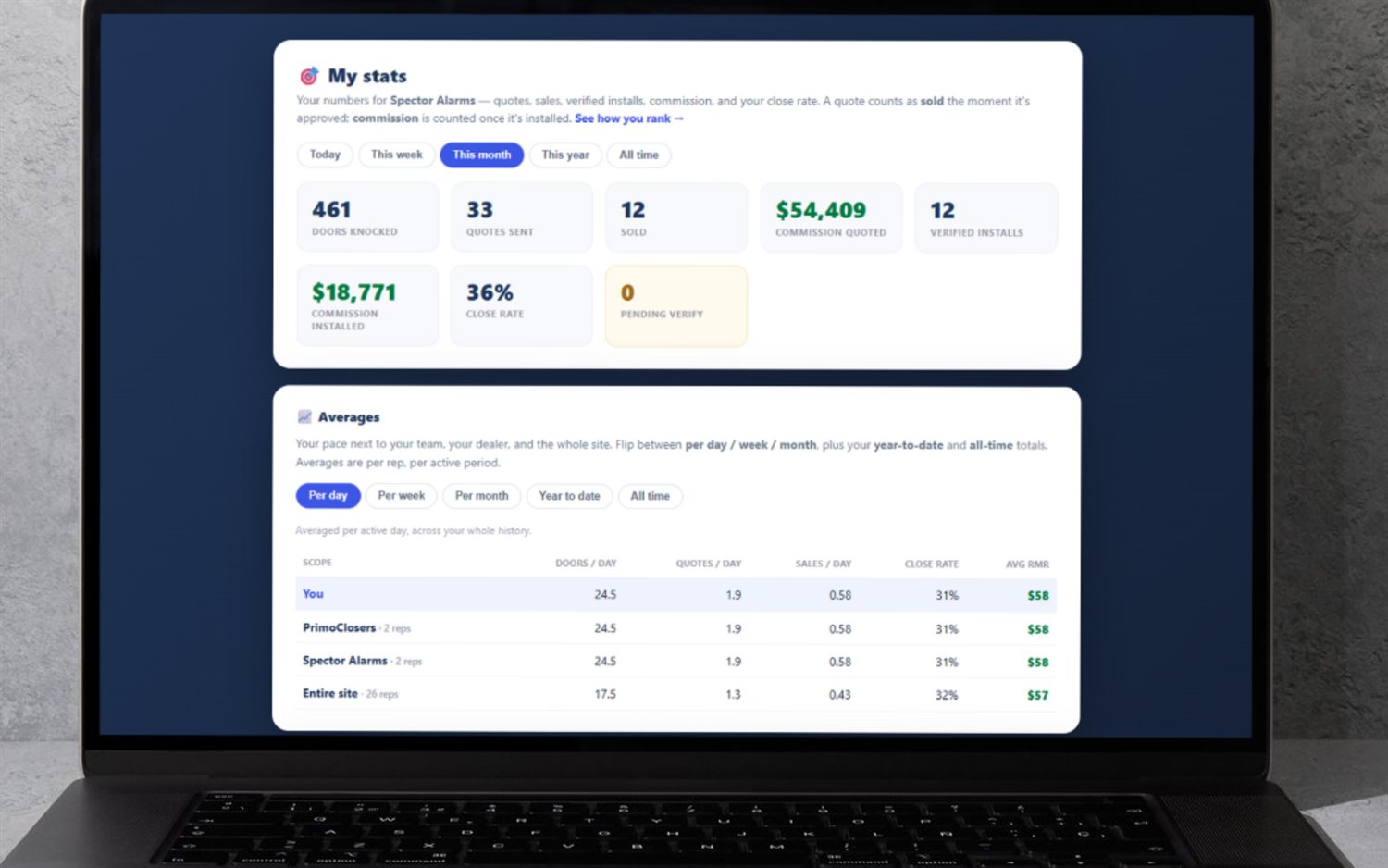
Reading objection responses is one thing; having them ready at the door is another. FieldStacker builds the practice into the app so you improve on the same shift you're working:

  • AI objection coaching — run a quick rep between knocks and rehearse rebuttals for the exact objection giving you trouble
  • Weakest-objection stats — coaching data from your real appointments surfaces the line you lose on most, so you drill what matters
  • Prime-time analytics — see your best days and hours to knock, so you're delivering your best pitch when people are actually answering
  • Objection notes on the door — disposition why a door said no, so the next knock or the callback starts smarter

See every feature →   Best time to knock →

FieldStacker analytics showing a rep's knock and appointment stats used to surface the weakest objection to drill

Where objection handling fits the bigger game

Objections are one link in the chain: get to fresh doors, open well, handle the reflex, set the appointment, and track the deal to paid. A great rebuttal on a cold, badly-timed street still loses. So pair this with the rest of the fundamentals — a clean opener and a memorized flow from the D2D scripts, the field habits in door-knocking tips, and if you're just starting out, the full walk-through for door-to-door sales beginners. FieldStacker keeps all of it — the map, the coaching, and your commission — in one app so you spend your energy on the conversation, not on admin.

Questions reps ask

What is the best response to "not interested" at the door?

Agree, then reframe. "Not interested" is a reflex before the person has heard anything, so don't argue with it — acknowledge it and give them a reason to stay one more sentence: "Totally fair, most people say that before they know why I'm here — I'm only on the block because a few of your neighbors just switched and I wanted you to have the same option. Quick question:" then ask something specific. You're not overcoming the "no," you're making it safe to keep listening.

How do you handle "I don't have time" without being pushy?

Take them at their word and shrink the ask. "I hear you, I'm not here to eat your afternoon — give me thirty seconds and if it's not for you I'm gone." Then actually keep it to thirty seconds. If it's genuinely a bad moment, book a hard time: "When's better, tonight around six or tomorrow morning?" A specific alternative converts far better than "I'll come back sometime," and it respects the person instead of steamrolling them.

What do you say when someone says "just send me some information"?

"Send me info" is usually a polite exit, not a real request — mailed brochures almost never close. Don't fight it; redirect to a live micro-commitment: "Happy to — honestly the info is just me showing you two numbers on my phone, takes a minute. Are you the one who'd make this call, or is there someone else too?" If they still want something in hand, send it through your digital card so you capture the contact and can follow up instead of hoping they read a flyer.

How many times should you push through an objection before walking away?

A good rule is two real reframes, then read the room. The first objection is almost always a reflex and worth handling. The second tells you whether there's genuine friction or a genuine no. Past that, pushing damages your reputation on a street you'll knock again. Leave clean, disposition the door as a callback if there was any warmth, and move on — the math rewards volume and a good name more than winning one argument.

Can I practice objection handling in FieldStacker?

Yes. FieldStacker includes AI objection coaching you can run between knocks to rehearse rebuttals for the exact lines you keep hearing, and the coaching stats surface your weakest objection from real appointments so you know what to drill. Pair that with prime-time analytics — your best days and hours to knock — and you're sharpening the pitch and the timing together instead of just grinding more doors.

Should you memorize objection responses word for word?

Memorize the principle and the first line, then improvise the rest. Reps who recite a script sound like a recording, and homeowners tune out the second it feels canned. Know your opening reframe cold for each common objection so you never freeze, but let the specifics come from what the person actually said. The goal is a natural conversation that happens to have good bones — not a monologue.

Knock smarter, not just harder

Start a 30-day free trial — no credit card — and get the knock map, objection coaching and your 1099 financials in one app. Flat month-to-month, cancel anytime.