Generic CRMs were built for a desk, not a doorstep. Here's what a real D2D CRM needs, the tools worth knowing, and how to pick the one that fits how you knock and how you get paid.
Flat month-to-month from $25/mo · 30-day free trial · no seat minimums, no annual contract
Search "best CRM for door-to-door sales" and half the results are general-purpose CRMs that have never seen a porch. The other half are strong canvassing platforms priced for enterprise sales teams. The right pick depends on one question: are you buying seats for a big org, or are you a 1099 rep — or a crew of them — who needs the street and the money in one app? This guide sorts it out.
Salesforce, HubSpot, Zoho and Pipedrive are excellent at what they were designed for: managing a pipeline of inbound and inside-sales deals from a desk. Drop a door-to-door rep into one and the gaps show up in the first hour. There's no fresh-lead map, so you're knocking blind. There's no way to disposition a door in one tap as you walk. There are no territories to trace and hand off, no live view of where your crew is knocking, and — critically — nothing that tracks your commission, chargebacks, mileage or 1099 taxes. You can rebuild some of that with custom objects, a maps add-on and an admin's time, but you'll pay enterprise money to reinvent what a purpose-built D2D CRM ships on day one.
Before you compare tools, get the checklist straight. A CRM earns the "door-to-door" label only if it does all of this:
Recently-sold and new-mover leads dropped as pins so reps start every block with a plan instead of guessing. What a knock map is →
Tag every door — not-home, callback, appointment, sold, not-interested — in one tap, and see the whole street's status at a glance.
Trace an area on the map and assign the leads inside it to a rep, so neighborhoods stay clean and hand-offs don't turn into a group text.
The whole crew on a live map with verified knocks, so two reps never double-knock the same street and every door is attributed to who worked it.
Real per-deal commission, chargebacks and clawbacks, auto-mileage at the IRS rate, and a quarterly tax set-aside. The piece almost every rival skips.
AI objection coaching between knocks and analytics on your best days and times to knock, so the grind gets sharper, not just longer.
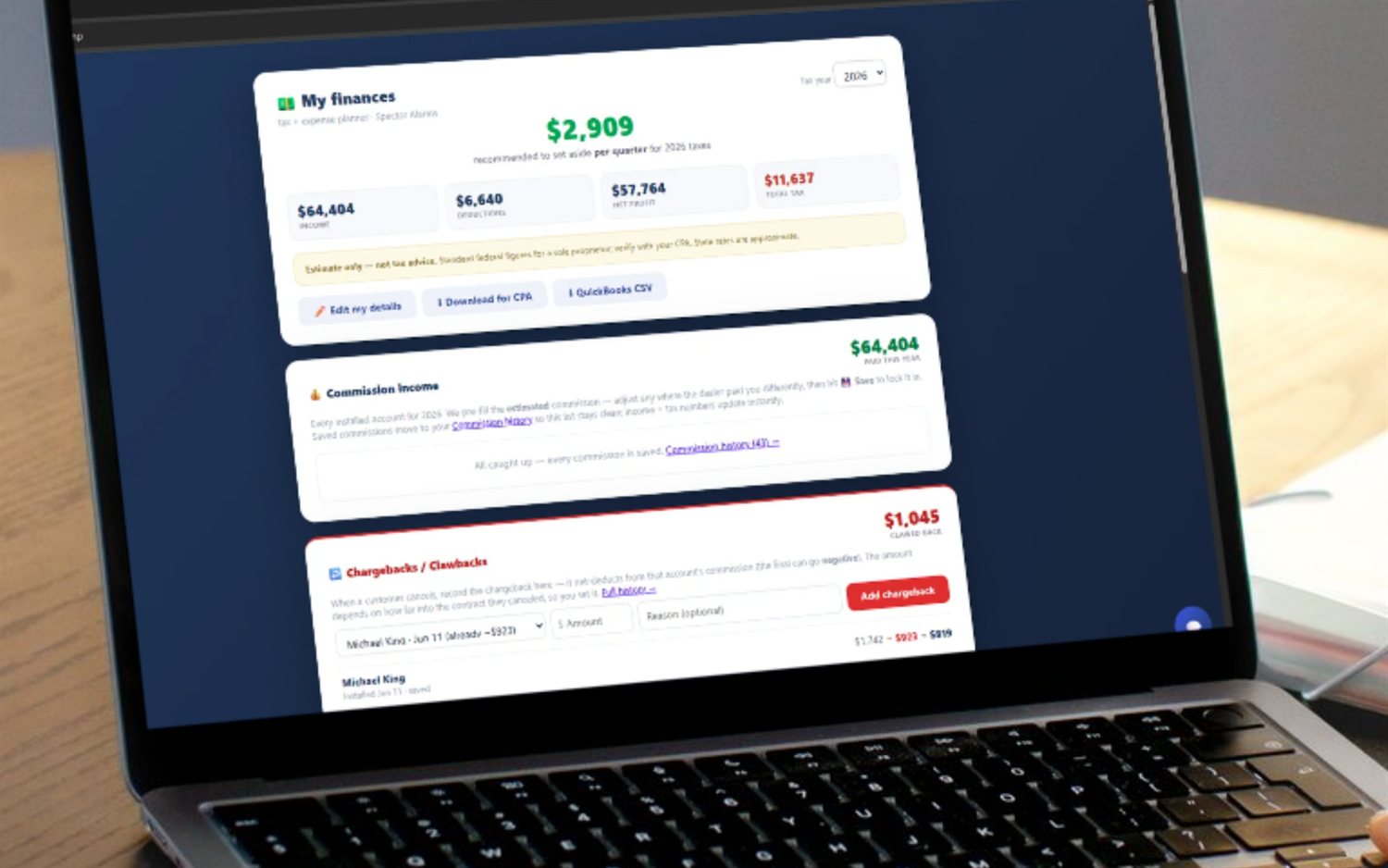
FieldStacker first because it's the only one that pairs canvassing with the rep's money — then fair, one-line takes on the rest. Prices change, so check each vendor's site for current numbers.
Best for solo 1099 reps and growing crews. Multi-industry knock map, dispositions, territories, GPS knocks, leaderboard, objection coaching — plus real commission, chargebacks, mileage and 1099 taxes in the same app. Flat from $25/mo, 30-day free trial, no card, no seat minimums. Honest limit: its built-in doorstep quote builder is alarm-native today; solar/roofing keep their own proposal tools.
Best for large, established canvassing orgs. A mature, feature-deep platform with lead management, digital contracts and a data marketplace. Seat-based and generally quote-based with annual terms and add-ons — leaves rep financials to a spreadsheet. Compare →
Best for outside-sales teams that want deep activity tracking. Strong territory management and manager reporting. Per-seat, typically quote-based with annual contracts; the money side is still on you. Compare →
Best if you're solar-first. A canvassing app that leans into the solar workflow. Good at what it targets; narrower if you sell more than one industry. Compare →
Best for route planning, not canvassing. Optimizes driving routes for outside reps visiting known accounts — it isn't a disposition/knock-tracking tool. Different job. Compare →
Best if you only want a digital business card. Digital cards and automated follow-up. Narrow by design — FieldStacker includes a free card as one feature of the whole stack. Compare →
What each type of CRM actually gives a door-to-door rep. Model-level, not a price sheet — confirm current pricing on each vendor's site.
| Capability | FieldStacker | Canvassing platforms (SalesRabbit / SPOTIO) |
Generic CRM (Salesforce / HubSpot) |
|---|---|---|---|
| Fresh-lead knock map | Yes | Yes | No (add-on) |
| Color-coded dispositions | Yes | Yes | No |
| Territories (trace + assign) | Yes | Yes | No |
| GPS-verified team knocks | Yes | Yes | No |
| Rep commission tracking | Yes | No | No |
| Chargebacks / clawbacks | Yes | No | No |
| Auto-mileage at IRS rate | Yes | No | No |
| 1099 tax set-aside | Yes | No | No |
| Free digital business card | Yes | Varies | No |
| Flat published price | From $25/mo | Quote-based | Per seat + add-ons |
| Free trial, no card | 30 days | Demo / sales call | Varies |
| No seat minimum / no annual lock-in | Yes | Often required | Contract |
Match the tool to your team and how you get paid — not to a feature-count contest.
Every canvassing tool can show you a map. The one that actually changes your year is the one that also knows what you're owed. FieldStacker keeps the street and the money in a single app:
Generic CRMs are built for inside sales — pipelines, email sequences and account records — not for a rep standing on a porch. They have no fresh-lead knock map, no color-coded door dispositions, no territory tracing, no GPS-verified team knocks, and nothing that tracks a 1099 rep's commission, chargebacks, mileage or taxes. You can bolt maps and custom objects onto Salesforce, but you'll spend real money and admin time rebuilding what a purpose-built D2D CRM does out of the box.
Five things a generic CRM never gives you: a fresh-lead knock map with recently-sold and new-mover pins, color-coded custom dispositions on every door, territories you can trace and assign, GPS-verified team knocks on a live map so nobody double-knocks, and rep financials — real commission, chargebacks, auto-mileage at the IRS rate and a 1099 tax set-aside. Objection coaching, a leaderboard and prime-time analytics are the difference between good and great.
It depends on who you are. For a solo 1099 rep or a growing crew that wants flat pricing and their own money tracked, FieldStacker is the strongest fit — canvassing plus financials in one app from $25/mo. SalesRabbit and SPOTIO are mature enterprise-grade platforms if you're a large org buying seats. Knock.io leans solar. Badger Maps is route planning, not canvassing. Match the tool to your team size and how you get paid.
It ranges widely. Purpose-built platforms like SalesRabbit and SPOTIO are seat-based and often quote-based with annual contracts and add-ons — check their sites for current pricing. FieldStacker publishes a flat rate from $25/mo, month-to-month, with a 30-day free trial and no credit card, no seat minimums and no annual contract. A general CRM like Salesforce looks cheap per seat until you add the map, mobile and admin work to make it canvass.
Almost none of the canvassing tools do — they stop at the map and hand your money back to a spreadsheet. FieldStacker is the exception: it tracks real per-deal commission with your own rates, chargebacks and clawbacks that net against your total, auto-mileage at the IRS rate for every driving day, and a quarterly tax set-aside so April isn't a shock. That financial layer is the biggest gap in every other D2D CRM.
No. FieldStacker is a multi-industry canvassing CRM — solar, pest control, roofing, fiber, alarms and more all run on the same map, dispositions and financials. The alarm-specific edition is a separate product, SecurityQS, on the same backend. Turn on the industries you actually sell and work them from one login.
Start a 30-day free trial — no credit card — and work your first block this afternoon. Flat month-to-month, cancel anytime.