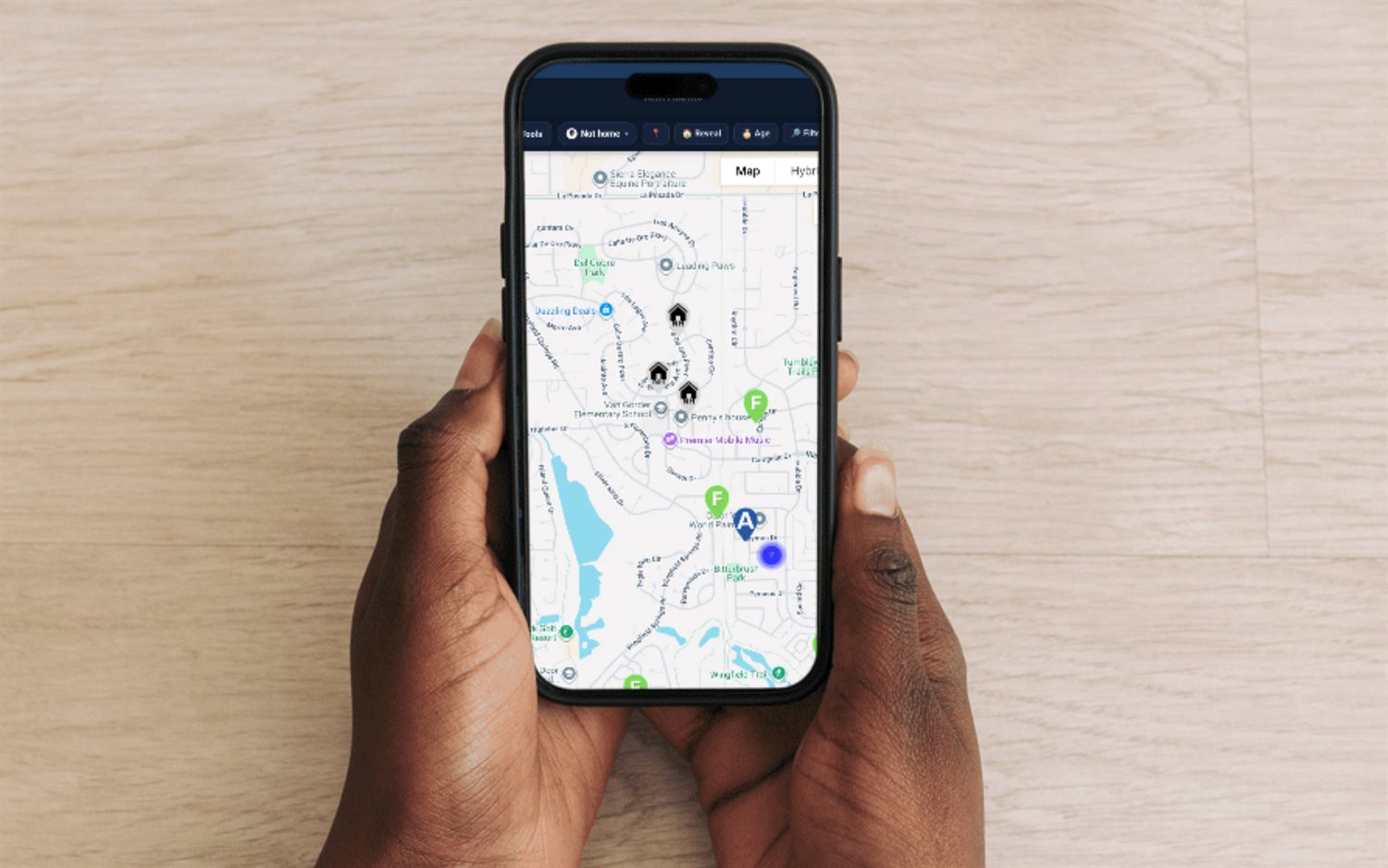
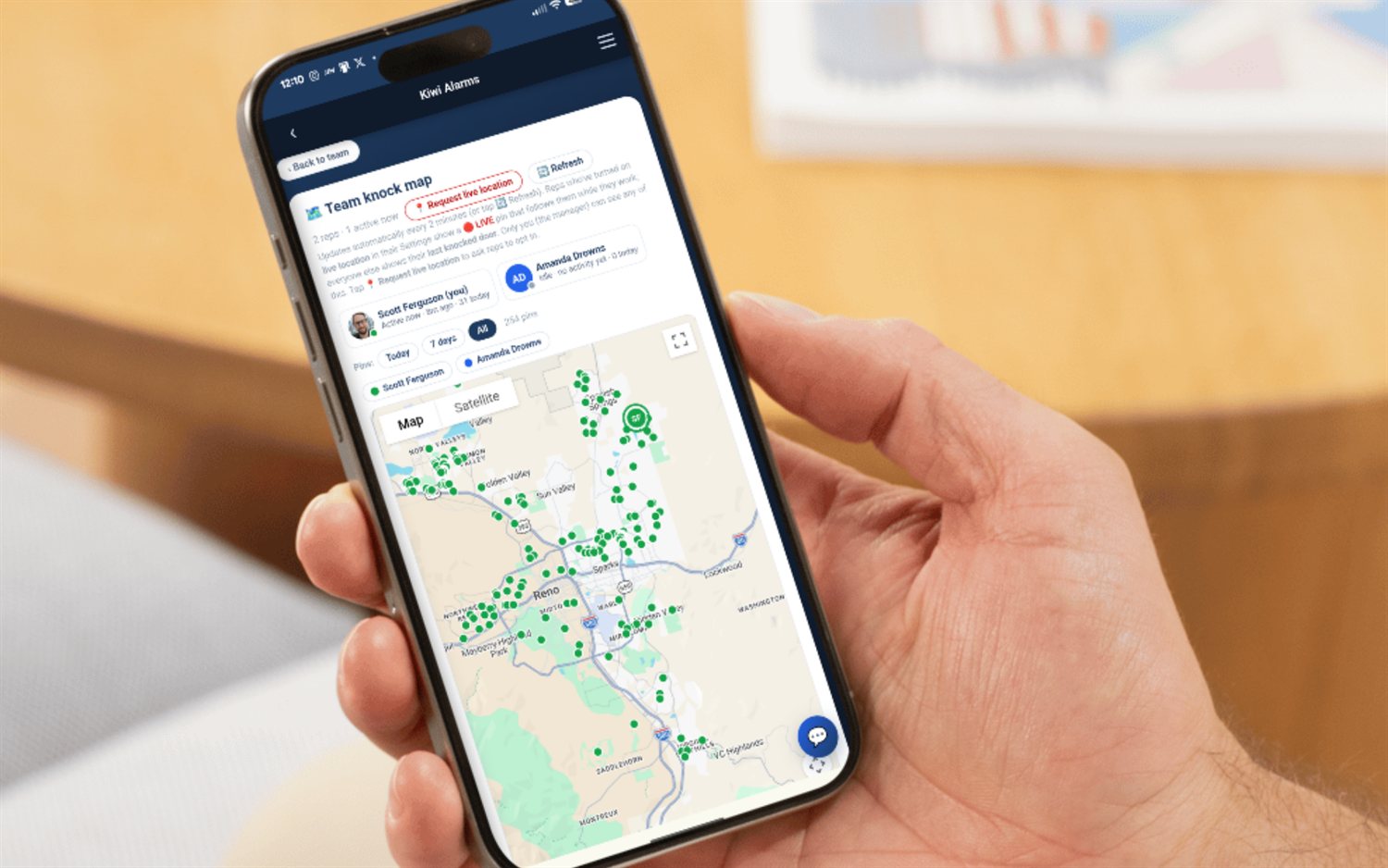
A knock map is a live map of every door you are working, with a color-coded pin on each house for how the knock went. It turns a paper list into a picture of your street — and your pipeline.
Flat month-to-month from $25/mo · 30-day free trial · no seat minimums, no annual contract
Door-to-door reps have always tracked their work somehow — a printed list, notes on a phone, a mental map of "the blue house was interested." A knock map is the modern version of that memory: a map view of the addresses you are canvassing, where each house carries a pin whose color tells you exactly what happened the last time you were there. Instead of reading a spreadsheet row by row, you look at a neighborhood and instantly see which blocks are worked out, where your callbacks are, and which street you never finished.
The whole game in canvassing is not wasting knocks. Every door you re-knock by accident, every callback you forget, every not-home you never circle back to is money left on the sidewalk. A knock map fixes that because it is organized by place, not by row number:
Under the hood a knock map has three moving parts. Get all three and the map stops being a tracker and starts being a plan.
Pins, dispositions, and territory — the difference between a map that records the past and one that plans the day.
Every house you touch gets a pin at its actual location. The strongest maps also drop fresh leads for you — recently-sold homes and new movers — so you are knocking prospects, not blank addresses.
Each pin's color is its status: not-home, callback, appointment set, pitched, sold, not-interested. Rename and recolor them to fit how your team talks, then filter the map to just the doors you need.
Trace a neighborhood into a territory and assign it to a rep. On a team, every knock is GPS-verified and stamped to whoever made it, so the map is trustworthy — not just optimistic self-reporting.
A list knows addresses. A knock map knows geography — and that difference is the whole point. You can route by what is nearby, spot the streets you skipped, and hand a clean area to a teammate without re-typing a thing.
Same neighborhood, one afternoon, three steps.
Fresh leads and the street you are working show up as pins. You start the block with a plan instead of walking in blind.
Drop a disposition on every door as you go — not-home, callback, appointment, sold. The pin's color updates and the crew sees it live.
Filter to callbacks and appointments for your go-back run, hand a cleared territory to a teammate, and let the deals flow into your financials.
FieldStacker is a door-to-door canvassing CRM for solar, pest control, roofing, fiber, alarms and more — and the knock map is its front door. It pulls fresh recently-sold and new-mover leads onto the map, lets you build custom dispositions, trace and assign territories, and run GPS-verified team knocks on a live map.
What most canvassing apps leave out, FieldStacker keeps in the same login: real per-deal commission, chargebacks, auto-mileage at the IRS rate, and a quarterly tax set-aside — because the doors on your map are how you get paid. Selling alarms? That side is powered by SecurityQS on the same backend.
A knock map is a map of the homes you are working, with a pin on every door and a color that shows what happened there — not-home, callback, appointment set, sold, not-interested. It replaces the paper list or spreadsheet a rep would otherwise carry, and it lives on your phone so the whole street's status is one glance instead of a memory test. The good ones also pull fresh leads onto the map for you, so you are pinning real prospects instead of blank addresses.
A spreadsheet knows addresses; a knock map knows geography. Because every disposition sits on the actual house, you can see the shape of a neighborhood — which blocks are worked out, where the callbacks cluster, which street you never finished — and route accordingly. A paper list also cannot update the rest of the crew in real time, cannot stamp a knock with GPS and a timestamp, and cannot tell you that the rep two streets over already hit this door an hour ago.
A disposition is the tag you drop on a door for how the knock went, shown as a colored pin. Typical ones are not-home, come-back/callback, appointment set, pitched, sold, and not-interested, and on a good app you can rename and recolor them to match how your team talks. Dispositions are what turn a map of houses into a map of your pipeline — you can filter to just callbacks for a go-back run, or to appointments you still have to close.
Yes, and that is where a knock map earns its keep for a crew. Everyone knocks on the same live map, so you can see who is on which street, every knock is GPS-verified and attributed to the rep who made it, and two people never burn the same door twice. A manager can trace a territory around a neighborhood and hand the leads inside it to a rep without a group-text argument.
Even a solo rep forgets which houses were not-home at 2pm and which asked for a callback Thursday. A knock map remembers for you, so your go-backs are a filtered list instead of a guess, and it quietly logs the driving miles behind those doors for your taxes. It is built for the solo 1099 rep first — you do not need a team to get value out of it.
Yes. FieldStacker pulls recently-sold homes and new-mover leads onto the map as fresh pins, so you are not just tracking doors you already know about — you are handed prospects to knock. From there you disposition them, set appointments, run territories and team GPS, and the deals you close flow straight into your 1099 financials. The map is the front door to the whole stack.
Start a 30-day free trial — no credit card — and work your first block on a real knock map this afternoon. Flat month-to-month, cancel anytime.