Recruiting, onboarding fast, territories, accountability, coaching and comp — the seven things that turn a few reps into a crew that grows. Works for solar, pest, roofing, fiber, alarms and any industry you knock.
Flat month-to-month from $25/mo · 30-day free trial · no seat minimums, no annual contract
Going from a solo knocker to a sales team is the hardest promotion in door-to-door. The skills that made you a great rep — pitching, closing, grinding — are not the skills that grow a crew. Managing is a different job: you win by making other people productive, and that only scales if the boring stuff is systematized. This guide walks the seven parts of the machine, in the order most owners have to build them.
The best door-to-door reps rarely look impressive on paper. Knocking is emotionally hard and repetitive, so the trait that predicts success is not sales experience — it is the willingness to hear "no" a hundred times and knock the hundred-and-first door anyway. Recruit for work ethic, coachability and a reason to be there (a number they are chasing), and you can teach the rest.
Where crews actually find people: current reps' referrals (your best source — good knockers know other knockers), college students for summer sales, gyms and trades where hard physical work is normal, and other reps burned out on a team that treated them like a seat. Be blunt in the pitch about what the job is — long days, real rejection, uncapped pay — so the people who show up already want it.
The fastest-growing teams get a new rep knocking real doors on day one. Canvassing is a reps game; confidence and skill come from time on the street, not from a week of slideshows. Front-load a little structure, then get out of the way:
Take the new rep out for a morning. Let them watch you knock a dozen doors, then hand them the next dozen while you shadow. Nothing in a training room beats one live block.
Don't drop a rookie on a cold map. Assign a territory of fresh, recently-sold leads so their first days are winnable — early appointments build belief.
Give them your pitch and your answers to the top five objections in the app, plus AI objection coaching to rehearse between knocks. Ramp is faster when the answers are in their pocket.
The moment you have more than one rep, geography becomes your biggest source of friction. Two reps working the same street burns leads, double-knocks homeowners and starts the "that was my block" fights that quietly kill morale. Draw the map first: trace a territory, assign it to one rep, and make ownership obvious to the whole crew.
In FieldStacker a manager traces a territory right on the map and hands the leads inside it to a rep in one action. The live team map then shows GPS-verified knocks from everyone at once, so a worked door reads as worked and every knock is attributed to whoever did it — no double-knocking, no arguments, no guessing who covered what.
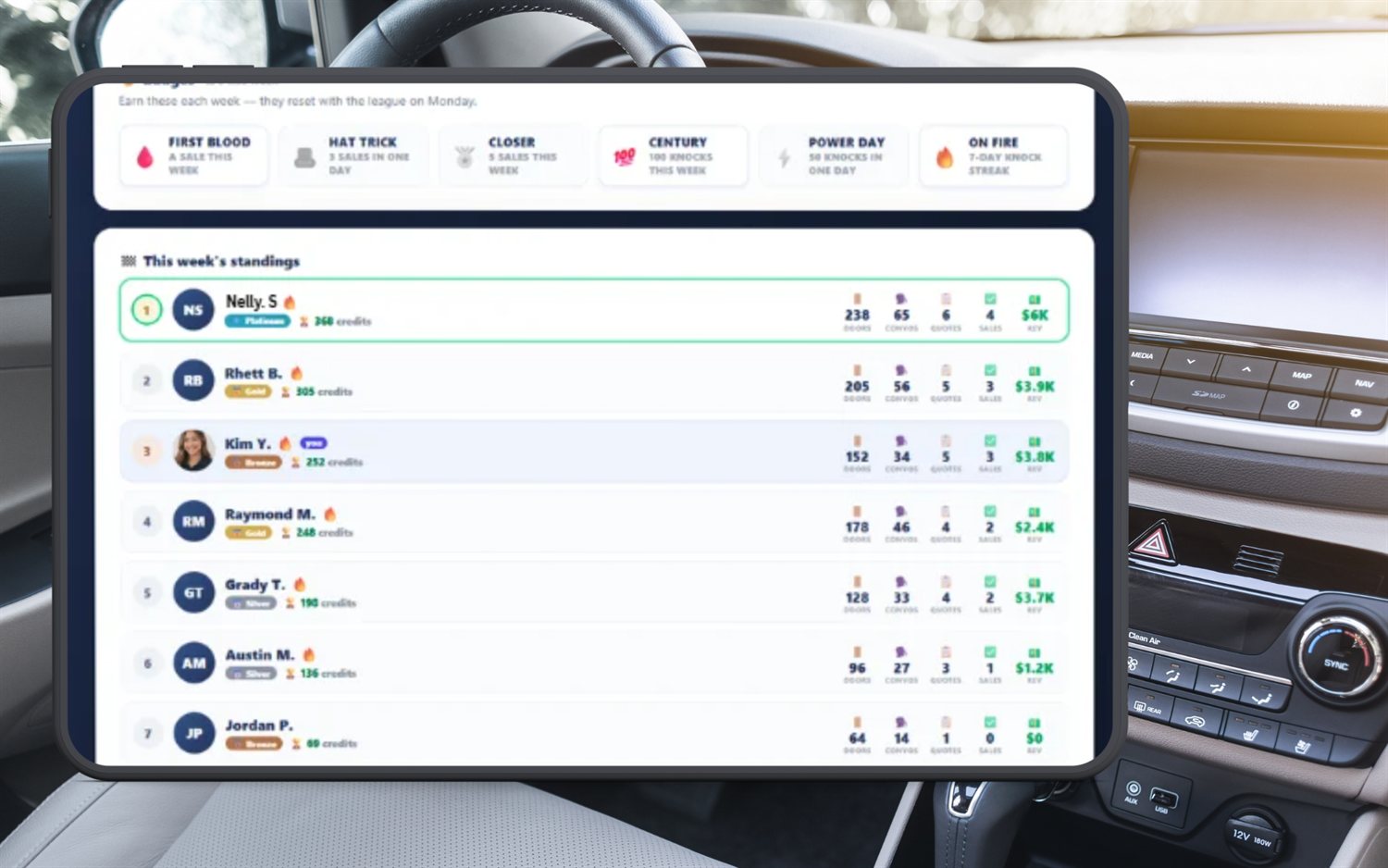
What gets measured gets knocked. A team without visible numbers drifts, because nobody can tell effort from excuses. The fix is not micromanagement — it is transparency. Put doors, dispositions, appointments and sales on a board the whole crew can see, and let competition do the managing for you.
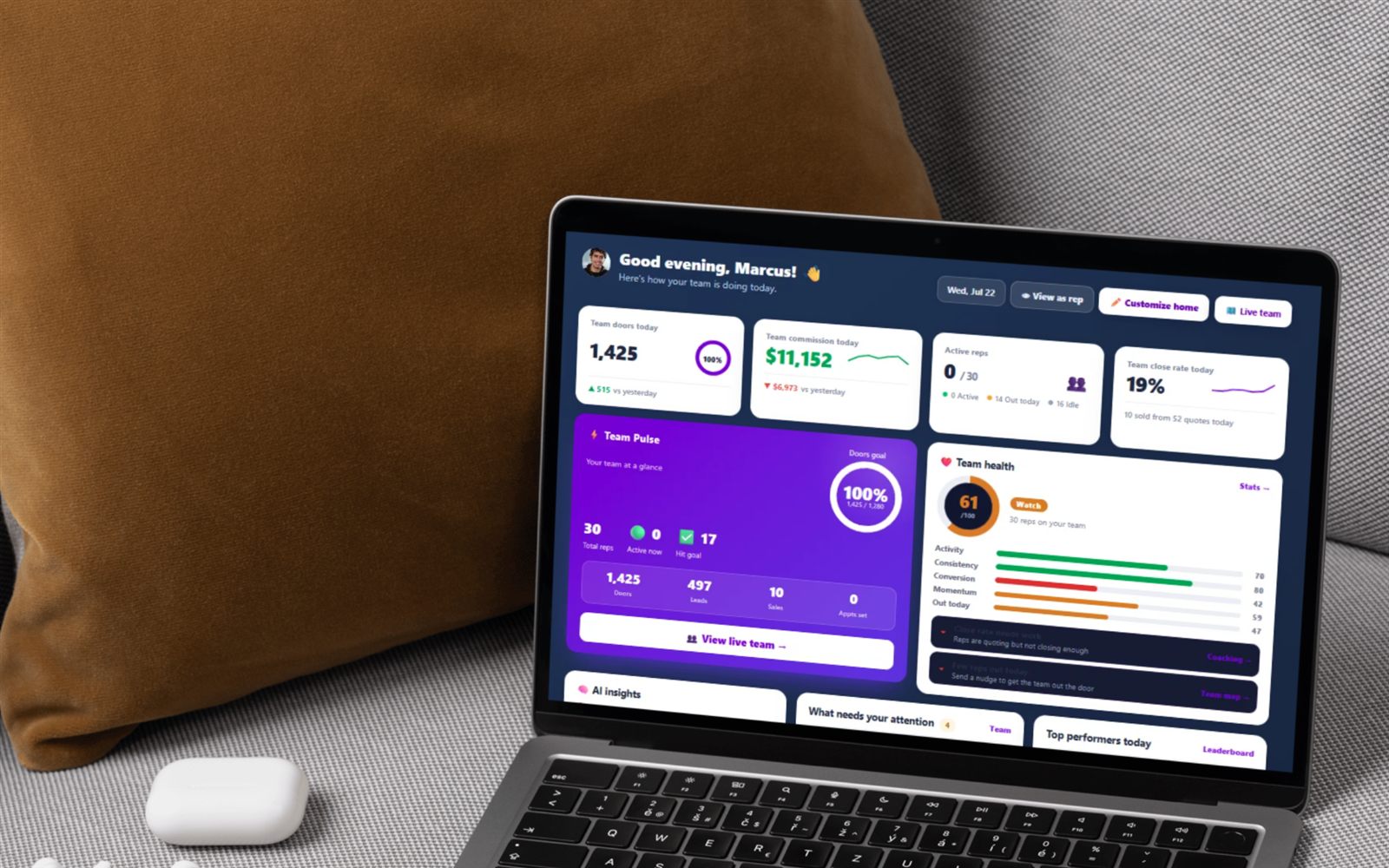
Door-to-door teams run on competition. FieldStacker turns the daily grind into standings, tiers, badges and streaks, so a rep can see exactly where they sit and what it takes to move up. Pair it with a manager dashboard that shows doors and dispositions per rep, appointments set, and live location during a shift for reps who opt in — so your one-on-ones are about real numbers, not vibes.
Feedback that only happens when someone is failing is not coaching — it is discipline. Growing teams run a rhythm so improvement is constant and expected, not a crisis:
Five minutes before the shift: yesterday's numbers, today's territory, one skill to focus on. Fast, in-person or on a call, every day.
Pull up the rep's dashboard together. Celebrate the wins, pick the one objection they're losing on, and set a number for next week.
Between doors, reps rehearse rebuttals with AI objection coaching so the next knock is sharper than the last — coaching that scales past your own hours.
Money confusion is the fastest way to lose a good rep. Door-to-door pay is almost always straight commission or a small draw against commission — contractors who eat what they kill — and as the manager you take an override: a fixed dollar amount or a few points on top of every rep's deal, which is how you get paid for building the team instead of only knocking your own doors. Write it down before anyone knocks, and keep the split boringly transparent. Reps forgive a lean split; they do not forgive surprises.
Because your reps are 1099, the money side is more than a split — it is chargebacks, clawbacks, mileage and quarterly taxes, and most teams leave all of it to a spreadsheet that nobody keeps current. FieldStacker folds the rep's financials into the same app: real per-deal commission with your own rates, chargebacks that net against the total, auto-mileage at the IRS rate for every driving day, and a quarterly tax set-aside. Reps who can see their own money stay longer.
See flat, seat-by-seat pricing →
The last mistake is duct-taping the team together out of a canvassing app, a group chat, a paper territory map and three spreadsheets. Every seam is a place effort leaks and numbers go stale. A team runs cleaner when the map, the dispositions, the leaderboard, the coaching and the money all live in one login — for the manager and every rep.
FieldStacker is built for the solo 1099 rep first and scales straight into a crew: add a seat when you add a rep, drop it when someone leaves, no seat minimum and no annual contract. Reps who started solo roll onto your team without losing their history. And because the whole platform is vertical-agnostic, you can run a solar crew, a pest crew and a roofing crew off the same tools — turn on the industries you sell across the industries you work. Knocking alarms too? That side is powered by SecurityQS on the same backend.
The two questions that decide whether a team grows are who is working and who is winning. A manager dashboard puts both on one screen — doors and dispositions per rep, appointments set, live location during a shift for opt-in reps, and the leaderboard — so managing scales past the reps you can personally watch.
Practically, three. Two reps is a partnership; at three you have a real span of control, a leaderboard that means something, and enough volume to spot who is coachable and who is coasting. Most owners find the jump from solo to a crew of three to five is the hardest one — it is where you stop selling full-time and start managing. Build your systems (territories, a stand-up, a comp sheet) at three so they already exist when you hit ten.
Almost always straight commission or a small draw against commission — 1099 reps are contractors who eat what they kill, and that is the deal most experienced knockers expect. As a manager or owner you typically take an override: a fixed dollar amount or a few points on top of every rep deal, which is how you get paid for building the team instead of only your own doors. Publish the numbers so nobody wonders what the split is, and put the override in writing before anyone knocks.
Assign territories and verify knocks by GPS. In FieldStacker a manager traces a territory on the map and hands the leads inside it to one rep, and the live team map shows verified, GPS-stamped knocks from the whole crew — so a door already worked shows up as worked, and every knock is attributed to who actually did it. That kills double-knocking and the "I swear I hit that block" arguments in one move.
A motivated new rep should be knocking real doors on day one and setting appointments inside their first week — canvassing is a reps game, and reps come from time on the doors, not classroom hours. Speed up onboarding by riding along for a morning, handing them a warm territory of fresh leads instead of a cold map, and giving them scripts and objection answers in the app. The teams that grow fastest get people to the doors immediately and coach on the street.
Only for the reps you want on the shared team tools — the live map, territories, leaderboard and manager dashboard. FieldStacker is flat and month-to-month with no seat minimum and no annual contract, so you add a seat when you add a rep and drop it when someone leaves, instead of pre-buying a block of licenses. A rep can also start solo on their own account and roll onto your team later without losing their history.
It answers the two questions that decide whether a team grows: who is working, and who is winning. You see doors and dispositions per rep, live location during a shift for reps who opt in, appointments set, and the leaderboard standings — so your one-on-ones are about real numbers instead of vibes. It turns "how are you doing out there?" into a conversation you can both see on the same screen.
Start a 30-day free trial — no credit card — and run your team's map, leaderboard and financials from day one. Flat month-to-month, add a seat per rep, cancel anytime.