Guide · summer sales

Summer sales door-to-door, without the hype

Solar, pest, alarms, fiber — a summer of knocking can pay like a full year, or eat you alive. Here is the honest version: what it is, how to pick a company, the 1099 money reality, and how to still be standing in August.

Flat month-to-month from $25/mo · 30-day free trial · no seat minimums, no annual contract

The short version: Summer sales is a four-month, full-time D2D blitz, usually as a 1099 contractor on commission. The money is real but so is the grind. Pick the company on the comp plan and the local office — not the recruiting video — set aside a third of every check for taxes, protect your body and your head, and track your doors and your money from day one so you know your real number.

Every spring, thousands of reps — a lot of them college students — pack up, relocate to a market, and spend the summer knocking doors for a single industry. It is one of the most lucrative and most brutal jobs a young person can take. The recruiting pitch is all lifted trucks and six-figure checks; the reality is 12-hour days, hundreds of no's, and a paycheck that depends entirely on your discipline. Both versions are true. This guide is the honest middle: what summer sales actually is, how to choose well, what the 1099 comp really means, and how to run a four-month season without breaking.

What "summer sales" actually is

Summer sales is a seasonal, full-time selling program that runs roughly May through August, when people are home, yards are green, and buying seasons peak. Reps relocate to an assigned market, live with the crew, and knock doors all day for one product — most commonly solar, pest control, roofing, alarms or fiber. The economics are simple and unforgiving: you are paid on what you sell, so a great four months can out-earn a year of hourly work, and a weak four months can leave you upside down after housing and gas. The people who win treat it like a sport with a preseason, a season, and a scoreboard — not a summer job.

Choose the company on the plan and the office, not the pitch

The biggest decision you make all summer happens before you knock a single door. Recruiters are good at their job; your defense is to ignore the highlight reel and get specifics in writing. Four things decide whether it is a good summer:

  • The comp plan, in writing. Commission per deal, how chargebacks and clawbacks work, and — critically — when you actually get paid. "Paid on install" versus "paid on sale" changes your cash flow for months.
  • Housing and expenses. Who pays for the apartment, how it is split, whether it is deducted from commission, and what you are on the hook for if you leave early.
  • Real training and a mentor. Ride-alongs, a veteran who will actually knock with you, and coaching after the first-week hype fades. A good office invests in rookies; a churn shop does not.
  • The specific local office. A great brand with a bad regional manager is a bad summer. Ask current reps — not recruiters — what they netted last year after chargebacks and costs.

If you are brand new to the door, read our companion guide on door-to-door sales for beginners before you commit, so you know what you are walking into.
The parts nobody puts on the recruiting slide

Go in with your eyes open on all six — they are what separate a paid summer from a wasted one.

📄

You are 1099

No withholding, no benefits, no safety net. You are a business. That is a burden and an opportunity — you deduct real expenses, but you owe your own taxes.

↩️

Chargebacks are real

A deal that cancels or fails to install can claw back your commission months later. Never spend a check as if it is guaranteed money.

🛻

The miles add up

You will drive constantly — to territory, between neighborhoods, to installs. Tracked at the IRS rate, those miles are one of your biggest legitimate deductions.

🏠

Living costs come first

Rent, gas, food and the flight home come out before "profit." Your net is what is left, and a lot of reps never actually calculate it.

🔥

The grind is physical

Heat, hundreds of doors, and a lot of rejection every day. Burnout is the most common reason reps quit — not lack of talent.

📈

Skill compounds fast

Nowhere else do you get 40 sales reps a day. Reps who track and improve their ratios often double their close rate by August.

The 1099 money reality — read this twice

The single most expensive mistake in summer sales is treating gross commission like net income. As a 1099 contractor, nothing is withheld. When a $2,000 commission check hits, a big slice of it is not yours — it belongs to the IRS, to your state, and to self-employment tax, and no one is holding it back for you. The reps who get destroyed in April are the ones who spent every check gross all summer. The fix is boring and it works: set aside roughly 25–35% of every check the moment it lands, in a separate account you do not touch, and keep clean records of your mileage and expenses so your deductions are real and defensible. This is not tax advice — talk to a CPA about your specific situation — but the discipline is universal. We break down the whole picture in 1099 taxes for door-to-door sales reps.

Survive the grind — the season is won in July

Almost everyone can sell for two weeks on adrenaline. The money is made by the reps who are still knocking with the same energy in the ugly middle of the summer, when the newness has worn off and the heat is at its worst. Treat your body like the asset it is: sleep on a schedule, hydrate, eat real food, and do not let one brutal day bleed into the next. Mentally, detach the outcome of any single door from your effort at the next one — most no's have nothing to do with you. And knock when your area is actually home instead of grinding empty streets at noon; timing is a skill, and our guide on the best time to knock doors covers how to find your windows. Small wins keep the tank full: a streak alive, a spot on the leaderboard, a go-back that finally closed.

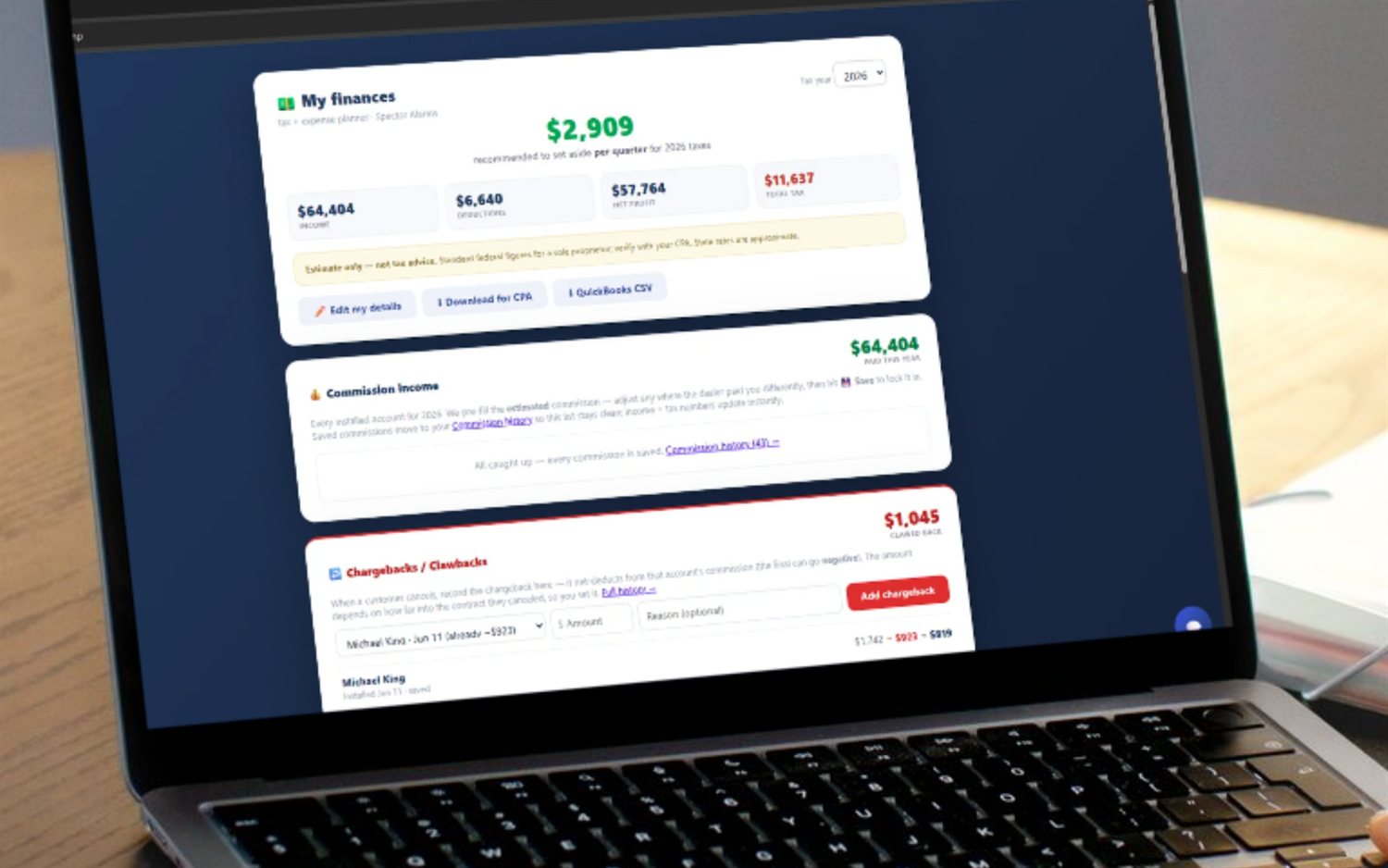
FieldStacker 1099 financials showing real per-deal commission, chargebacks, and a quarterly tax set-aside building through a summer sales season
The part everyone else leaves to a spreadsheet

Know your real number all summer

The recruiting number is gross. Your number is what is left after chargebacks, gas, housing and taxes — and most reps genuinely do not know it until the summer is over. FieldStacker keeps the money in the same app as the map, so your season is never a mystery:

  • Real per-deal commission with your own rates
  • Chargebacks and clawbacks that net against your total
  • Auto-mileage at the IRS rate for every driving day
  • A quarterly tax set-aside so April isn't a gut-punch
  • AI objection coaching to sharpen your pitch between knocks

See every feature →

Run the four-month blitz like a season

A simple arc that turns a chaotic summer into a plan you can execute.

1

Preseason (before May)

Lock the comp plan in writing, learn the product cold, and set up your money system — a separate tax account and a way to track every door and mile from day one.

2

Ramp (weeks 1–3)

Get reps by volume. Disposition every door, ride with a mentor, and stack fundamentals. Do not judge the summer by the hardest, greenest weeks.

3

Push (the long middle)

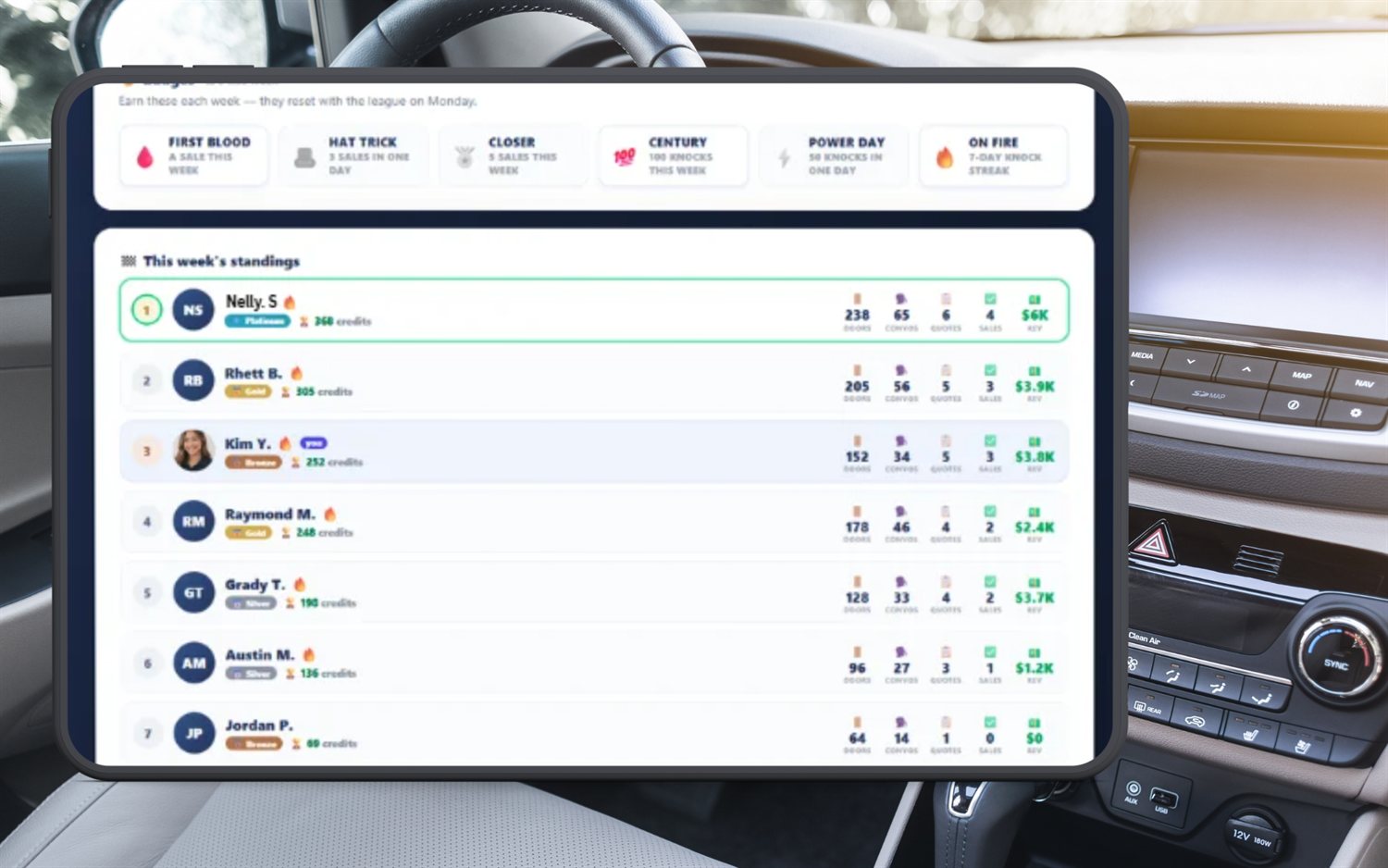
Now optimize. Work your prime-time windows, hammer go-backs and not-homes, and use the leaderboard to keep your energy high when the newness is gone.

4

Close & collect (August)

Finish strong, chase installs to payout, reconcile chargebacks, and confirm your real net after taxes. Leave with your money — and your numbers — clean.

One login for the whole season

The street and the money, in one app

FieldStacker runs the two things a summer rep can never afford to lose track of: the canvassing and the cash. Fresh-lead knock map, color-coded dispositions, GPS-verified team knocks so the crew never double-knocks a street, territories, prime-time analytics, a real leaderboard, and 1099 financials built in. It is built for the solo rep first, then scales to the whole office. If you are knocking alarms, the alarm-native edition is SecurityQS on the same backend, so nothing lives in two places.

Explore all industries →   Handle objections →

FieldStacker sales-league leaderboard with tiers, badges and streaks — the kind of competition that keeps a summer sales crew pushing through July

Questions reps ask

What is a summer sales program in door-to-door?

It is a seasonal, full-time selling blitz — usually May through August — where reps relocate to a market and knock doors all day for a single industry, most often solar, pest control, alarms or fiber. Reps are almost always 1099 independent contractors paid on commission, sometimes with a small base or draw. The appeal is that four focused months can pay like a full year if you are good and you last; the catch is that it is genuinely hard, and a lot of people quit in the first three weeks.

How much money can you really make in a summer of D2D?

Honestly, it is a huge range and any recruiter quoting you a guaranteed number is selling, not informing. Top reps at strong companies can clear well into six figures over a summer; plenty of first-year reps make a few thousand dollars or wash out with nothing after expenses. Your pay is a function of your close rate times your deal value times your volume, minus chargebacks and your own costs (housing, gas, food). Track all of it from day one so you know your real number, not the highlight-reel number on the recruiting slide.

Are summer sales reps employees or 1099 contractors?

Almost always 1099 independent contractors. That means no taxes are withheld from your commission checks, you are responsible for your own quarterly estimated taxes, and you can deduct legitimate business expenses like mileage. It also means you should set aside roughly a quarter to a third of every check for taxes before you spend it. This is not tax advice — talk to a CPA about your situation — but the single most common summer-sales money mistake is spending gross like it is net and getting wrecked in April.

How do I choose a good summer sales company?

Look past the recruiting hype at four things: the comp plan in writing (commission per deal, chargeback terms, when you actually get paid), the housing and expense arrangement, the training and mentorship you will actually receive, and the reputation of the specific office you would join — not just the brand. Ask current reps, not just recruiters, what they netted last summer after chargebacks and costs. A great company with a bad local office is still a bad summer.

How do I survive the grind without burning out?

Treat it like an athlete treats a season: protect your sleep, hydrate, eat real food, and keep a routine so the hard days do not compound. Detach the outcome of any one door from your effort at the next. Knock during the hours your area is actually home instead of grinding empty streets at noon, and use small wins — streaks, a leaderboard spot, a go-back that closed — to keep the game fun when the numbers are quiet. The reps who make money in August are the ones who were still standing in July.

Does FieldStacker work for a summer sales rep?

Yes, and it is built for exactly this person: the solo 1099 rep first. You get a fresh-lead knock map, color-coded dispositions, team GPS so the crew never double-knocks, prime-time analytics, a leaderboard, AI objection coaching, and the money side most tools ignore — real per-deal commission, chargebacks, auto-mileage at the IRS rate, and a quarterly tax set-aside. It is flat month-to-month from $25/mo with a 30-day free trial and no card, so you can run your whole season without a seat minimum or an annual contract.

Run your best summer with the money tracked

Start a 30-day free trial — no credit card — and knock your whole season on a map that also tells you what you actually made. Flat month-to-month, cancel anytime.