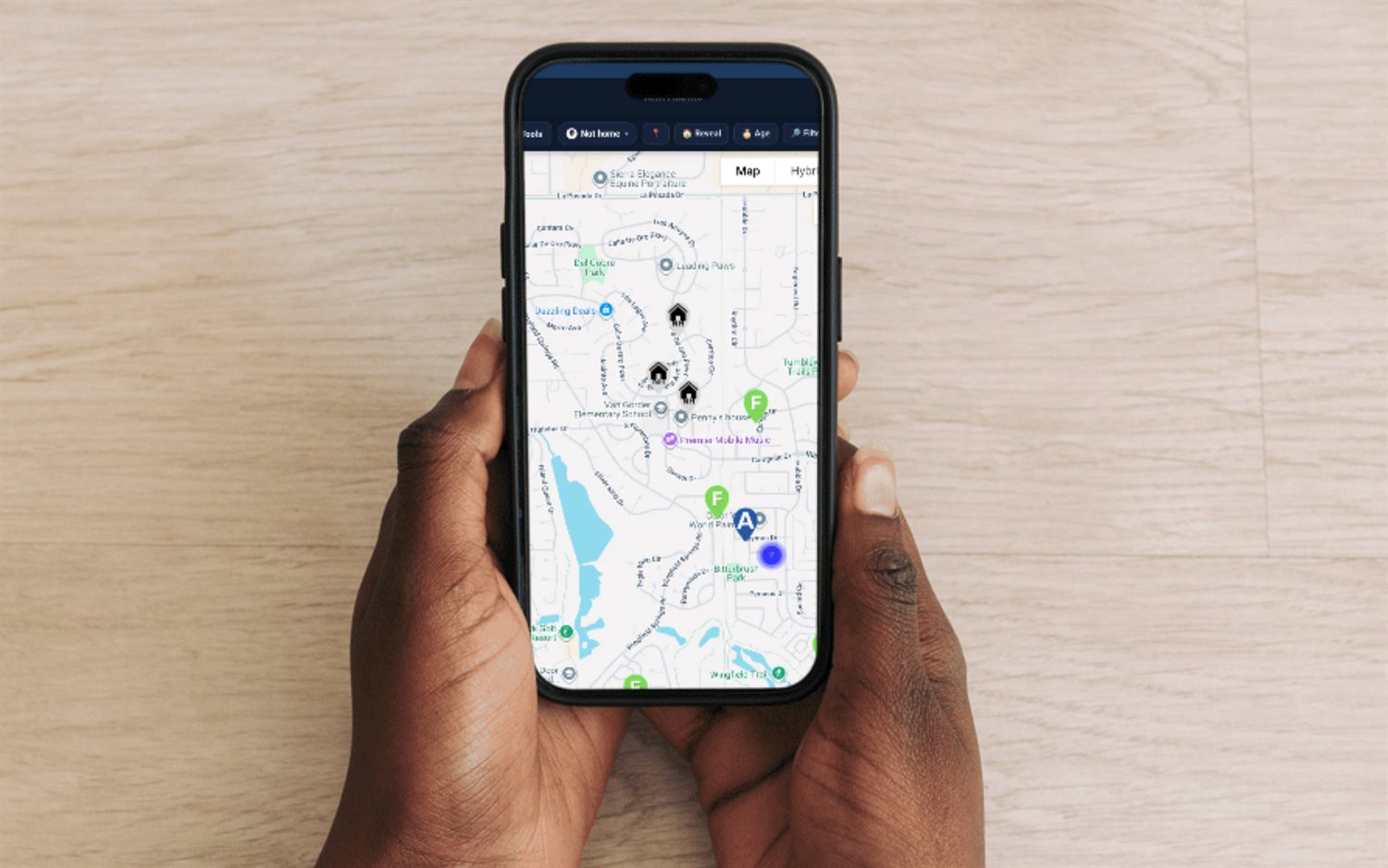
Pick the territory by the water, not the houses. Set the test with both people home. Diagnose before you present. Close on terms instead of price. Then make the 24-hour call that stops the cancel. The whole loop, in order.
Flat month-to-month from $30/mo · 14-day free trial · no seat minimums, no annual contract
In pest control you can walk out the door and start knocking, and the season does most of the qualifying for you. Water treatment does not work like that. Two neighborhoods four miles apart can be on different water systems with wildly different hardness, and the one that looks more affluent is not necessarily the one with the problem. Half a day of research before you knock a new metro is worth more than a week of extra doors, and it is research almost nobody does.
Free, public data that most reps in this trade never look at.
Every community water system in the US publishes an annual Consumer Confidence Report. It is free, it is public, and it lists hardness, disinfectant type and detected contaminants for that district. Read it before you knock it — and pull it up on your phone at the table.
Private-well neighborhoods are the strongest water treatment territory there is, because nobody is treating or testing that water but the homeowner. County health department well records and parcel data will usually show you which subdivisions are unserved by the utility.
Above roughly 7 gpg is hard and above roughly 10.5 gpg is very hard on the common classification. A district in the teens sells itself. A genuinely soft district is a harder living, and it is better to learn that from a report than from three empty weeks.
A point-of-entry system is a landlord decision. Skip apartment blocks and heavy rental streets, and weight your route toward owner-occupied homes — recently sold ones most of all.
Older stock means aging water heaters and plumbing that hardness has been working on for years. It also means existing softeners from ten or fifteen years ago that have quietly stopped regenerating — which is a warmer conversation, not a dead one.
Some municipalities and water districts restrict brine discharge from self-regenerating softeners, and many require a solicitor permit with set knocking hours. Find out before you spend a week building a pipeline you cannot install or a route you cannot legally work.
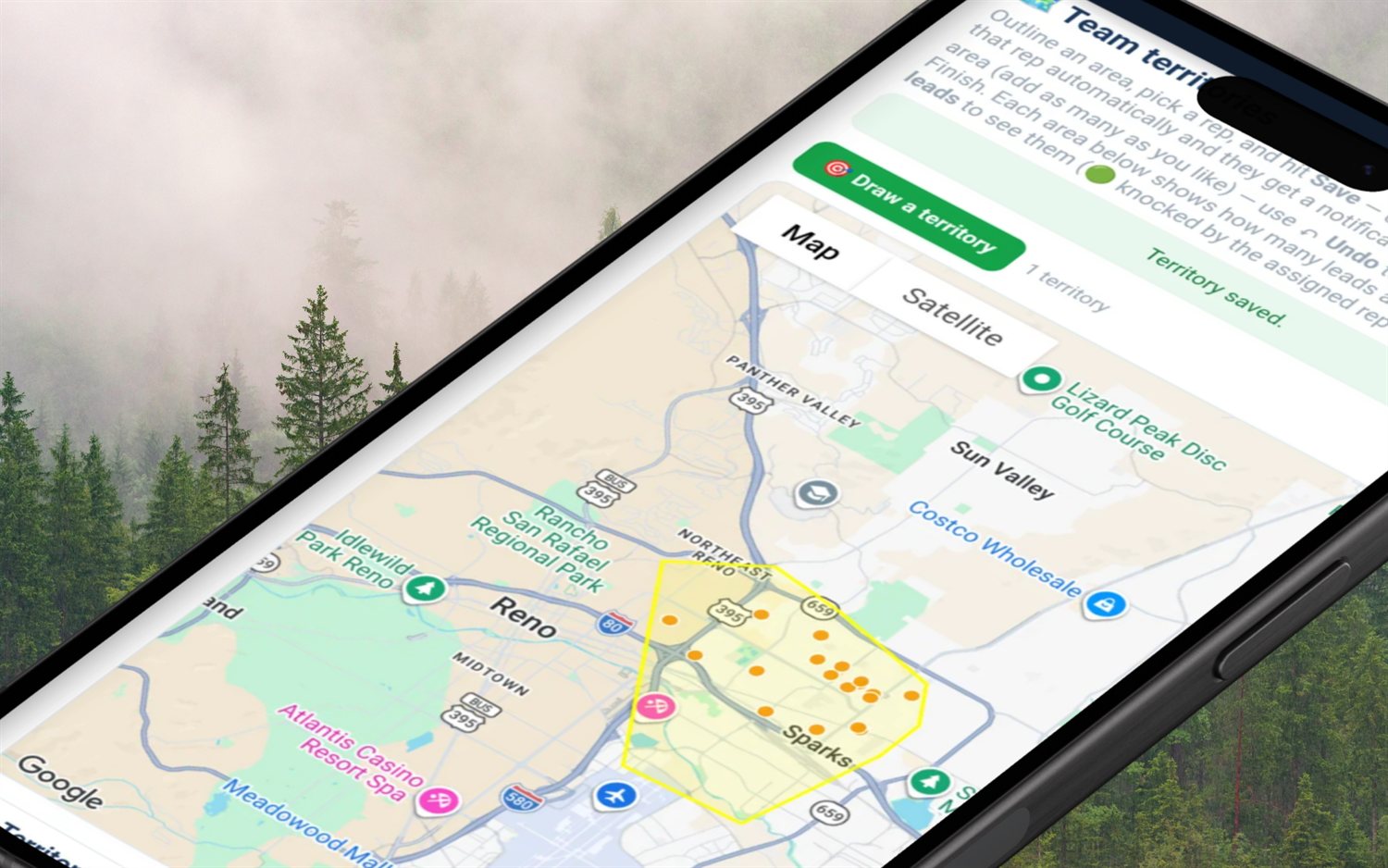
Once you know which districts and which well subdivisions you want, the territory is a shape on a map — and it rarely lines up with any administrative boundary a canvassing app hands you by default. Trace it yourself, assign the leads inside it, and keep two canvassers out of the same cul-de-sac.
Water treatment is close to year-round. What changes is the angle, not the availability.
Moving season starts. A wave of new homeowners who are still buying things for the house and still noticing the water. This is the strongest window for the just-sold lead source.
Longest knocking hours of the year, plus visible symptoms everywhere — spotting on the car after a wash, staining on siding from sprinklers, pool chemistry, and people home in the evening.
The settled-in window. Summer movers have now lived with the water for a few months and can answer "have you noticed the glasses" from experience instead of guessing.
Short knocking days, but dry itchy skin, stiff laundry and heating-season water heater failures are all hardness conversations — and the test itself happens indoors, so a booked appointment is weather-proof.
Nobody buys a whole-home filtration system on a porch. The only thing the door is for is earning a test with both decision-makers present. That reframe fixes more broken water treatment reps than any pitch tweak, because it stops you defending a price you have not earned the right to quote.
Three things have to happen in the first thirty seconds, in this order. Qualify the homeowner — renters cannot buy a point-of-entry system and you should let them go quickly and kindly. Find out city or well — it is the single best qualifying question in this trade because it splits your entire conversation on one word. Attach a symptom — spotting, film, smell, staining, soap that will not lather. Then ask for the test with a specific evening and both names in the sentence.
The in-home test is the actual product you sold at the door, so run it like one. Hardness in grains per gallon, TDS, chlorine or chloramine on municipal supply, and on a well add iron, sulfur odor and sediment — with a lab test where the answer really matters. Show the customer the utility's own report on your phone so they are not taking anything on faith from a stranger.
Then connect every reading to something they have already noticed. "Eleven grains — that's why the shower door films over and why your water heater is working harder than it should." A number by itself is trivia. A number attached to a thing in their house that has annoyed them for two years is a reason to buy.
And be as loud about what this trade does wrong as about what you do right. The electrolysis or precipitator demo — the little machine that turns tap water brown — precipitates dissolved minerals and iron off the electrode and proves nothing about safety. Do not use it. Do not tell anyone their water is poisoning their children. Do not imply you are from the city, the water department or the health department; misrepresenting affiliation is the most common complaint in the industry and it is illegal in many jurisdictions. The reps who explicitly refuse all three convert skeptics that pushy reps never get near.
Because most water treatment comp is a share of gross profit over a house base, a discount is not a company concession — it is a transfer from your own paycheck to the customer's. A rep who reflexively drops four hundred dollars to close eight deals a month is handing back real money every single month. See how the commission structure works if that is news.
So give the customer other things to say yes to:
This is the highest-return ten minutes in water treatment sales and most reps skip it. Within a day of every sale, call or text with no selling in it whatsoever. Confirm the install date, answer anything that came up overnight, say thank you. That is the whole script.
Buyer's remorse grows in silence. A homeowner who has not heard from you since they signed a four-thousand-dollar contract starts constructing reasons to back out, and the cancellation window is right there. A rep who makes the call keeps meaningfully more of what they sold, which shows up directly in the income ranges on the what reps make page.
Your truck sitting outside a house is the best canvassing asset you will ever have. Knock the eight nearest homes the same week — "you probably saw our truck at the corner Tuesday, same water comes into your place" — and ask the customer for two neighbors by name on install day, while they are happiest. Water problems are geographic by definition, so a solved house is proof for every house around it in a way that almost no other trade can claim.
By month three your best leads are houses you already tested. You know the grains, you know whether it was a one-legger, you know why they said not yet. That is a warm knock with data in it — and it is worthless if it lives in your memory of a street you worked in March.
Start with the water, not the houses. Pull the annual Consumer Confidence Report that every community water system publishes for free and find the hardness figure for each district you can reach, then find out which neighborhoods are on private wells — county health department well records and parcel maps will usually tell you. A district running above roughly 10 grains per gallon, or a subdivision on wells with iron, is a territory that sells itself. After that, filter for homes people actually own: skip apartment complexes and heavy rental blocks, and lean toward houses that sold in the last few months.
It is closer to a year-round trade than roofing or pest, which is one of its advantages, but the angles rotate. Spring and summer bring the moving season and a flood of new homeowners, plus visible spotting on cars and sprinkler staining on siding. Late summer and early fall catch people who have settled in and started noticing the water. Winter is the underrated one in cold climates: dry itchy skin and dull laundry are hardness complaints, and the sale happens indoors at a kitchen table anyway, so a scheduled test is weather-proof even when knocking hours are short.
A clean, honest test is a hardness titration or test strip read in grains per gallon, a TDS meter reading, a chlorine or chloramine check on municipal supply, and on a well a look at iron, sulfur odor and sediment, with a lab test where it matters. Pull up the utility's own report on your phone so the customer is not taking your word for anything. Then connect each reading to something in their house they have already noticed — the film on the shower door, the water heater's age, the soap that will not lather. Diagnosis first, product second.
Close on terms and configuration rather than price. Most water treatment reps are paid on the spread over a house base, so a discount is a withdrawal from their own pay — the fix is to give the customer other things to say yes to. Move the financing term, drop or add an under-sink RO, adjust the install date, offer a service plan. Present a good-better-best set so the negotiation happens between three of your options instead of between your price and zero. And ask both people directly, because a sale one spouse has not agreed to is a cancellation with a delay on it.
Prevent them at the table and then again the next day. At the table, make sure both decision-makers actually participated, say the cancellation window out loud yourself rather than hiding it, and never leave someone feeling rushed. Then call or text within 24 hours with no new selling in it at all — confirm the install date, answer any question that came up overnight, and thank them. Buyer's remorse in this trade almost always grows in silence, and a short friendly contact is the highest-return habit a water treatment rep has.
Often yes for the knocking itself, and sometimes for the work. Many cities and counties require a solicitor or peddler permit, some have registered no-knock lists, and hours are frequently restricted by ordinance — check the municipality before you work it, not after. Separately, the install side may require a licensed plumber or a permit depending on jurisdiction, and some water districts restrict brine discharge from self-regenerating softeners entirely. Certification through the Water Quality Association is not usually required but it is common and it helps credibility at the door.
Trace the territory, load the just-sold doors inside it, and work a well route that keeps recording when the signal drops. 14-day free trial, no credit card.