Water treatment · door-to-door

The door-to-door sales CRM for water treatment teams

Draw a territory around the hard-water district, work well routes that have no signal, prove every setter's knock with GPS, and track commission on gross profit — including the three-day cancels and funding fails that quietly eat it.

Flat month-to-month from $30/mo · 14-day free trial · no seat minimums, no annual contract

FieldStacker runs the street for water treatment — territories drawn on water districts, setter knocks, dispositions, routes between demos, and your money. Testing the water, sizing the softener, running the credit app and building the system proposal stay with your test kit, your manufacturer's sizing tool, your dealer proposal software and your lender portal; FieldStacker works alongside them. This page draws that line on purpose.

Water treatment is a two-stage sale, and almost every CRM on the market is built for a one-stage one. A canvasser knocks a street and sets a free water test. A closer sits at a kitchen table for sixty to ninety minutes, runs the hardness titration and the TDS meter, and asks for four thousand dollars. Then the deal has to survive a three-day right to cancel, a lender approval, and an install that needs a drain, a loop and sometimes a permit before anyone gets paid. Three separate places the money can vanish after the handshake.

Most teams patch that together with a canvassing app for the map, a dealer portal for the proposal and financing, and a spreadsheet for whose set it was and what the rep actually earned. FieldStacker collapses the first and third into one app on the phone — the street and the paycheck — and leaves the water chemistry and the proposal to the tools built for them.

What a water treatment D2D team actually gets

Every one of these works today for softeners, whole-home carbon, iron and sulfur filters, UV or under-sink RO — no setup detour required.

🗺️

Fresh-lead knock map

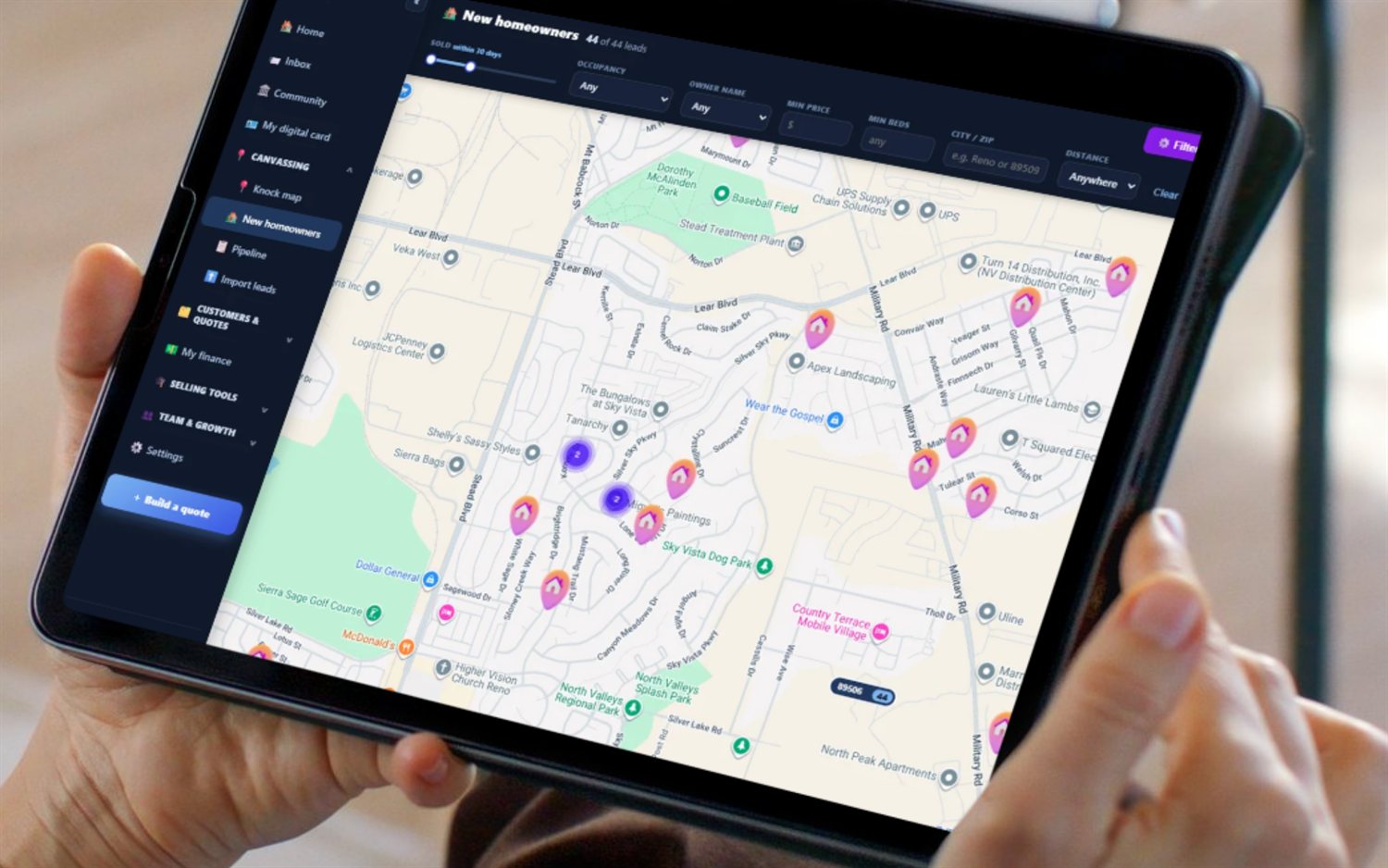
Pull recently-sold homes and other fresh leads onto a map and route the warmest doors first. New homeowners decide about their water in the first ninety days, before they have stopped noticing the spots on the glasses.

🧭

Territories on water districts

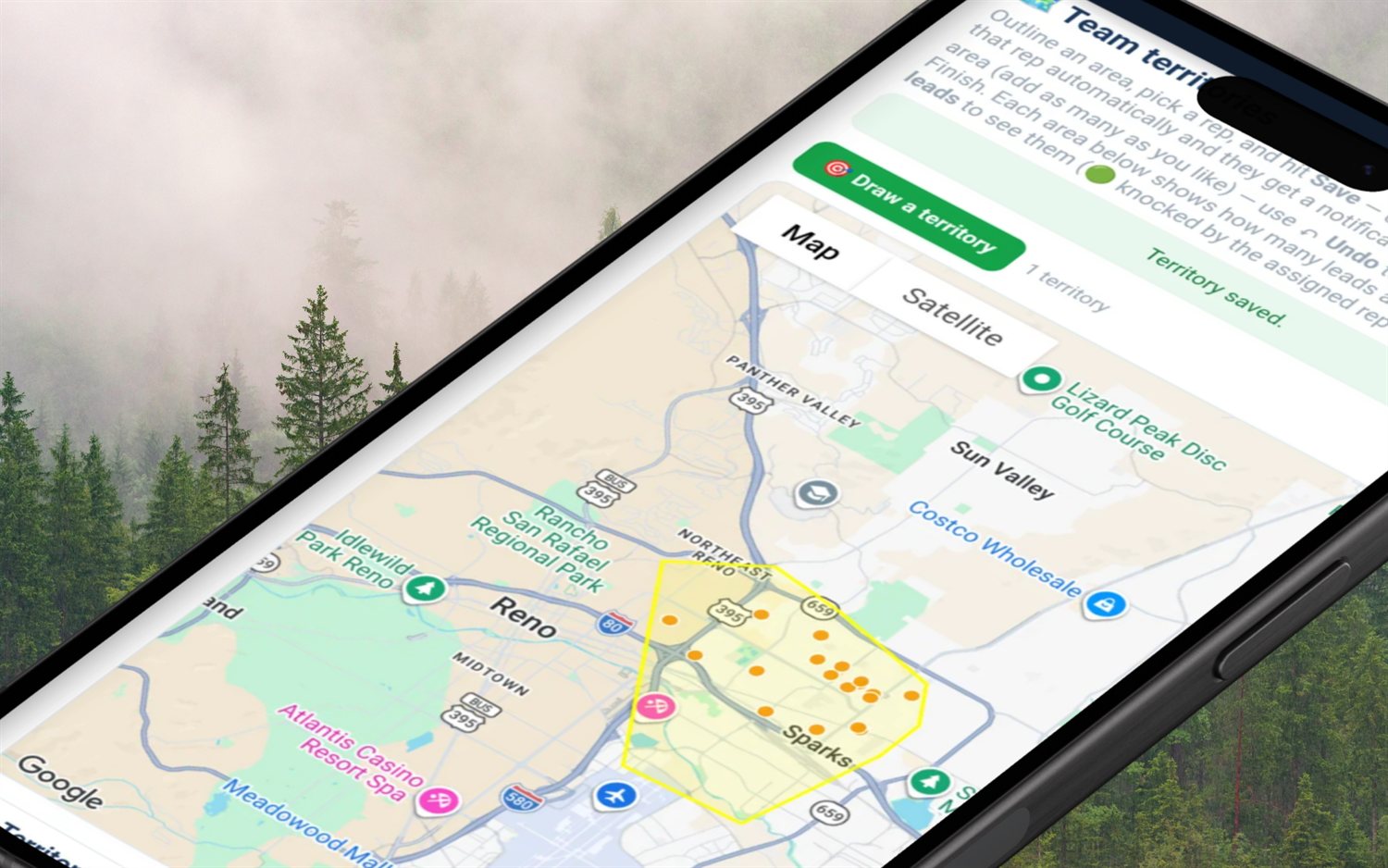
Hardness does not follow zip codes — it follows the utility and the aquifer. Trace the district, the well subdivision or the one neighborhood on a shared system, and assign every lead inside it to a rep.

🎨

Dispositions for a two-stage sale

Name your own stages: test set, tested no sit, one-legger, sold pending funding, sold pending install, in cancel window, renter DQ. Well or city can be a pin color so a route reads at a glance.

📍

GPS-verified setter knocks

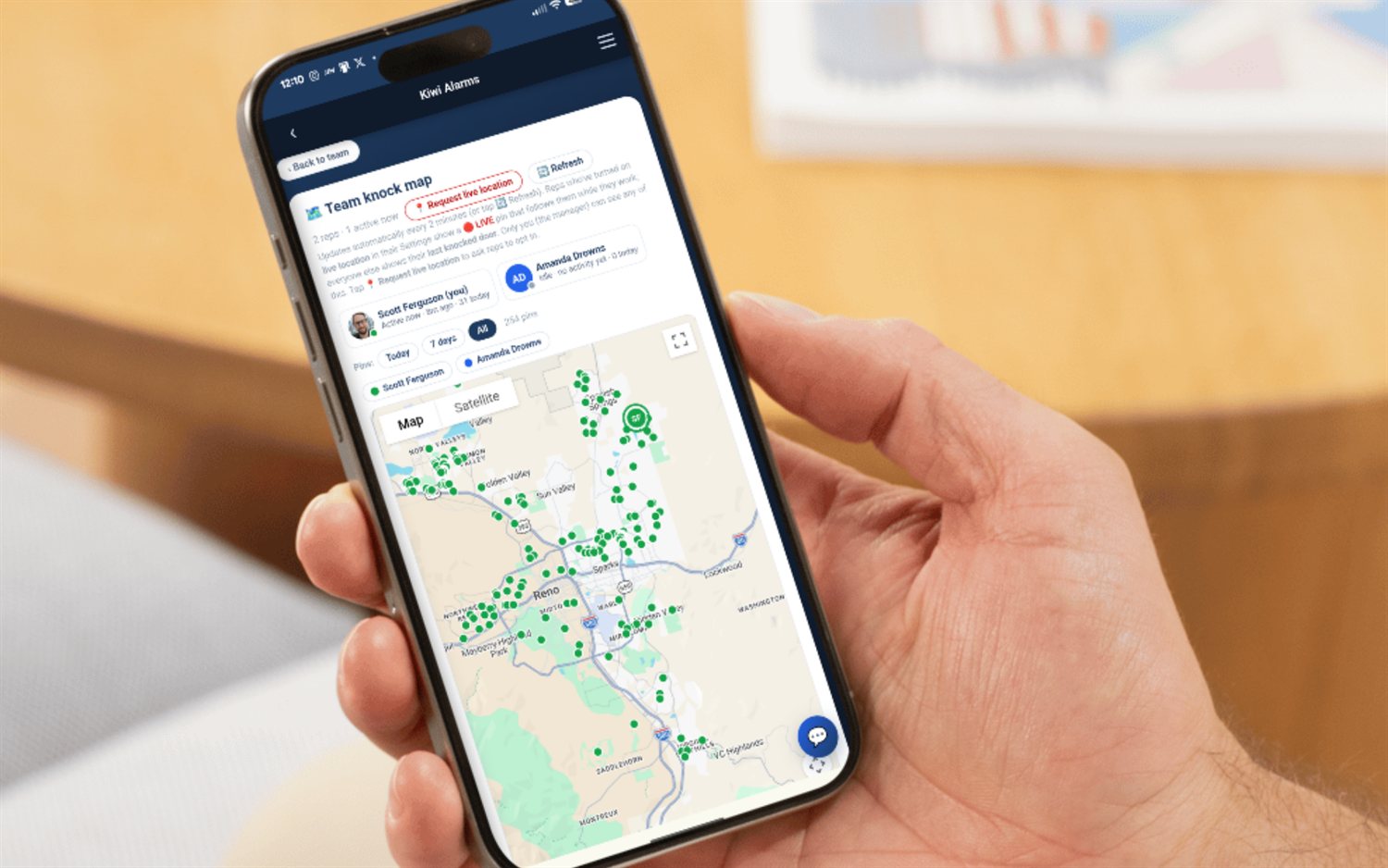
Per-set pay only works if a set has a real door behind it. Every knock carries a verified location and an owner, so two setters never double-knock a street and nobody argues about whose house it was.

📶

Works offline on well routes

The best water in the business to sell against is on private wells, and that is exactly where the bars go away. Knocks, notes and dispositions queue on the phone and sync when signal comes back.

💵

Gross-profit commission and cancels

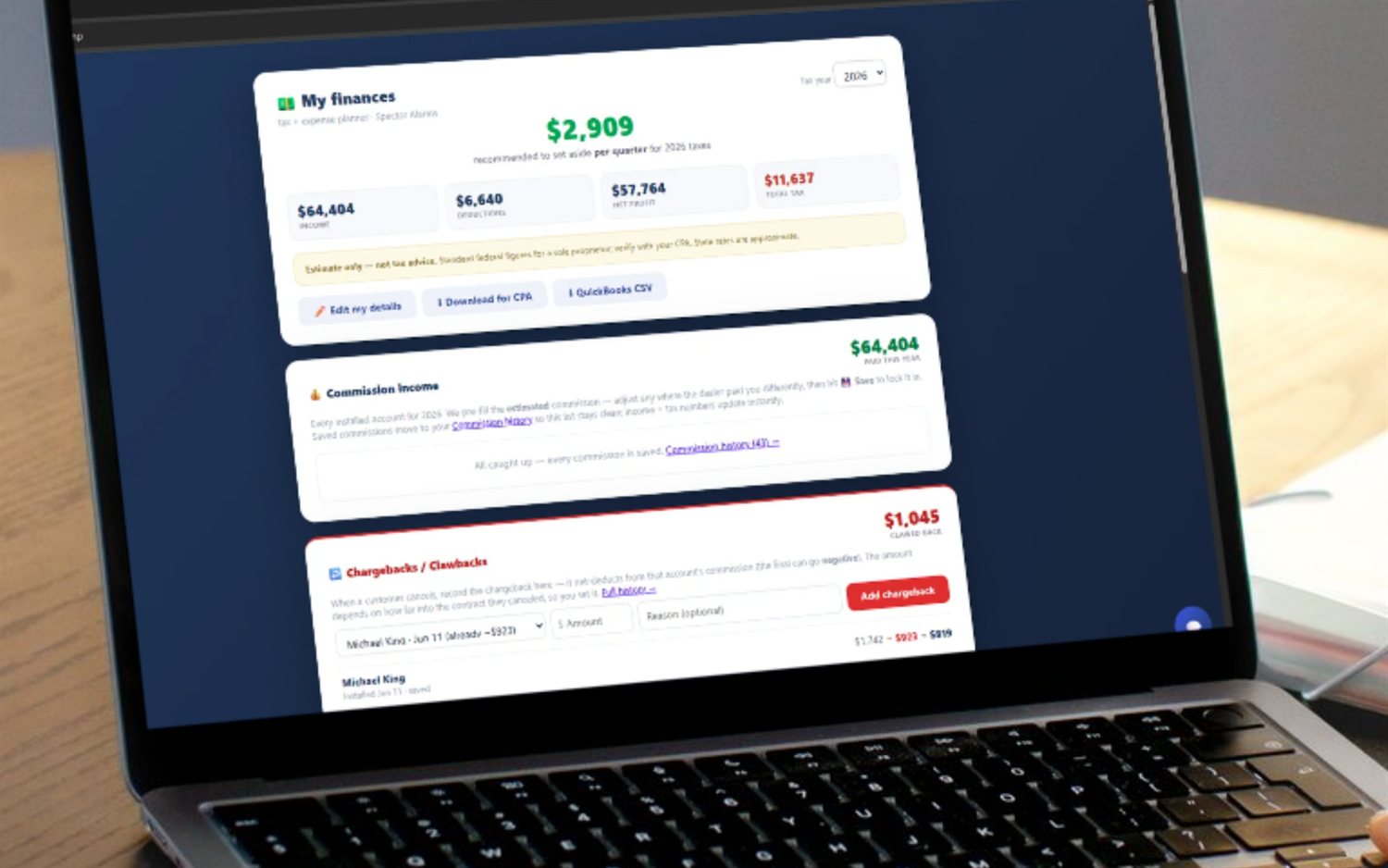
Your real commission on your own spread, clawbacks netted when a three-day cancel or a funding decline lands, auto-mileage at the IRS rate for the demo legs, and a quarterly 1099 tax set-aside.

Where the line falls

How the work splits between FieldStacker and your water stack

Water quality stays with the water stack. Sizing a softener from grains per gallon, compensating for ferrous iron, choosing between catalytic carbon and a salt-free conditioner, and putting NSF/ANSI certified equipment in front of a homeowner is real engineering with real liability. The tools and the certifications that cover it exist for a reason.

  • Hardness, TDS, chlorine, iron and sulfur testing → your field kit, and a certified lab when it matters
  • What is actually in the city supply → the utility's own annual Consumer Confidence Report, free and public
  • Grain-capacity sizing, flow rate, media and pretreatment → your manufacturer's sizing tool and your dealer's techs
  • Good-better-best system proposals and equipment pricing → your dealer proposal software
  • Consumer financing and credit decisions → your lender portal (Aqua Finance, GreenSky, Foundation, Synchrony, Service Finance and the like)
  • Canvassing, water-district territories, setter GPS, routes → FieldStacker, today
  • Your commission, cancels, chargebacks, mileage and 1099 taxes → FieldStacker, today

See every feature →

FieldStacker territory tool tracing a water district boundary on the map and assigning the leads inside it to a water treatment rep

The setter-to-closer handoff, without the group text

Water treatment is the trade most likely to run split roles. That split is where sets get lost, doors get double-knocked and pay disputes start.

1

Setter works a clean territory

Each canvasser gets a drawn area — one water district, one well subdivision, one block of just-sold homes — so nobody burns a street twice. Every knock is GPS-stamped to the person who worked it.

2

The set carries its notes forward

Who answered, city or well, whether both decision-makers will be home, what they said about the taste or the staining. The closer opens the same record instead of re-asking on the doorstep.

3

Sits and closes both get scored

The leaderboard tracks sets and sat appointments, not only sold systems, so a setter who is feeding the board can see it — and so can the person writing the per-set checks.

See the knock map →   How water treatment commission works →

FieldStacker 1099 financials showing real per-deal water treatment commission, chargebacks from three-day cancels, and a quarterly tax set-aside
The part everyone else leaves out

Paid on the spread, clawed back on the cancel

Most water treatment reps are not paid a flat percent of the ticket — they are paid on the gross profit over a house base price. That makes every discount a withdrawal from your own account, and it makes tracking the real number per deal worth actual money. Then there is the back end: the FTC's Cooling-Off Rule gives a homeowner three business days to cancel most sales made in their home, and several states extend that window. A deal is not a deal until it funds and installs.

  • Real per-deal commission on your own spread, not a guess
  • Chargebacks netted against your total when a cancel, a decline or a failed install lands
  • Auto-mileage at the IRS rate — a demo day is three or four legs across a metro
  • A quarterly 1099 tax set-aside so April is not a shock
  • AI objection coaching for the lines this trade actually gets hit with

See flat pricing →   What reps actually make →

Where the leads come from

The just-sold house is the best water lead there is

A homeowner who has lived somewhere eight years has stopped seeing the film on the shower door. Someone who closed six weeks ago is still noticing everything — the smell, the spotting, the soap that will not lather, the well they have never owned before — and is already spending on the house. FieldStacker's new-homeowner lead source puts those addresses on your map as fresh pins, and anything else you already have (a purchased list, an export from your old CRM, a spreadsheet from the dealer) imports from CSV and geocodes itself.

New-homeowner leads →   The field guide →

FieldStacker New Homeowners map with recently-sold homes as fresh-lead pins and filters, used to target new water treatment prospects
FieldStacker live team map showing GPS-verified knocks from each canvasser across a neighborhood
The stack

Sell water treatment and more from one login

Water treatment reps rarely knock only water. Plenty run pest routes in the summer, or pick up solar or roofing in the same territory, and a house that needs a softener is a house that has other problems. Turn on the industries you actually sell and work them from one FieldStacker account — one map, one set of stats, one bill. The alarm side is powered by FieldStacker Security, our alarm edition on the same backend, so nothing lives in two apps.

Explore all industries →   Pest control →   Solar →   Roofing →

Water treatment D2D questions, answered straight

Is FieldStacker a good CRM for water treatment door-to-door?

Yes for the canvassing and the money side of the job. The fresh-lead knock map, drawn territories you can shape around a water district or a well subdivision, your own custom dispositions, GPS-verified team knocks, route building between in-home demos, the leaderboard and the 1099 financials are all vertical-agnostic and work for a softener, whole-home filtration or RO team today. What it does not do is test water or size a system. Your hardness titration kit, TDS meter, the utility's Consumer Confidence Report and your manufacturer's sizing tool keep doing that. FieldStacker runs the street and the paycheck; your water chemistry stays where it belongs.

Does FieldStacker test water, size a softener or write the proposal?

No to all three, and it should not pretend otherwise. Grain-capacity sizing, service flow rate, media selection, iron and manganese pretreatment sequencing, pH correction and the good-better-best system proposal are engineering and dealer-catalog work — they belong in your manufacturer's sizing tool and your dealer proposal software. The built-in doorstep quote builder is tuned for alarm equipment and plans, not water treatment systems. What FieldStacker owns is everything around the appointment: getting qualified doors on a map, remembering what every house said, keeping two setters off the same cul-de-sac, and tracking your commission, cancels and taxes.

Does it fit the setter-and-closer model most water treatment teams run?

That is one of the places it fits best. Canvassers who are paid per set are the easiest comp plan in the trade to argue about, because nobody can prove a door was actually worked. FieldStacker gives every knock a GPS-verified stamp and an owner, so a set has a real door behind it. Setters disposition the house, the closer picks up the same record with the notes attached, and in-app messaging hands the appointment over without a group text. Territories keep two setters out of the same subdivision, and the leaderboard scores sets and sits, not just closes.

Can I track commission on gross profit, three-day cancels and funding chargebacks?

Yes, and this trade needs it more than most. Water treatment reps are usually paid on the spread over a house base price, which means a discount comes straight out of your own pocket, and the deal is not real until it funds and installs. Log the sale, see your actual commission on your own numbers, and net the clawbacks against it when a homeowner uses the three-day right to cancel, when the lender declines, or when the install cannot happen. Auto-mileage at the IRS rate covers the driving between demo legs, and a quarterly tax set-aside builds while you sell.

Does it work on rural well-water routes with no cell service?

It works offline. Well-water territory is where the best water treatment money is and where the bars disappear, so knocks, dispositions and notes queue up on the phone and sync when you get signal back. That matters more here than in a suburban vertical: a county road with a dozen homes on private wells can be a whole afternoon with no data, and you should not lose the record of it because a tower was five miles away.

How is this different from SalesRabbit or SPOTIO for water treatment?

Those are capable canvassing platforms, but they are seat-based and priced for teams, usually with an annual commitment, and they stop at the map — your personal commission on gross profit, your cancels and your 1099 taxes go back to a spreadsheet. FieldStacker is flat month-to-month from 30 dollars a month with a 14-day free trial and no card, no seat minimums and no annual contract, and it folds the rep money into the same app. Check their sites for current pricing before you compare. Team plans here are higher flat tiers, still month-to-month.
Keep reading

Owner data

Know the whole neighborhood before you knock

Draw an area on the map and one pull reveals up to 500 homeowners at once — the owner’s name, mailing address, whether they live there or it’s likely a rental, and their estimated age. Every plan with the owner reveal includes 50 pulls a month — that’s up to 25,000 homeowners of rich data every month. Run out and $10 adds another 50 (about 20¢ a pull).

  • Up to 500 homeowners per reveal, up to 25,000 a month
  • Name, mailing address, owner-occupied vs. likely-renter, estimated age
  • Up to 25,000 homeowner records a month, refilled every cycle

See what each plan includes →

🏘️
up to 25,000 homeowners a month

Put your water district on a map this week

Start a 14-day free trial — no credit card — draw your first territory and run a setter route with GPS-verified knocks. Flat month-to-month, cancel anytime.