Openers for city routes and well routes, the free-test set, the both-present ask, and every objection a water rep hears — "we already have a softener," "isn't salt bad for you," "a guy came by last year and it was a scam" — with a response and the reason it lands.
Flat month-to-month from $30/mo · 14-day free trial · no seat minimums, no annual contract
Most door-to-door verticals sell one thing at the door. Water treatment sells an appointment at the door, and the appointment is forty-five to ninety minutes long, happens inside the house, and usually ends with a four-figure decision and a finance application. That changes what a good script has to do. It does not have to make anyone want a whole-home filtration system on their porch. It has to earn a test, qualify a homeowner, and get two adults in the same room on a specific evening.
It also has to work against a headwind the other trades do not carry. Water treatment has a history of bad actors — fake "city inspector" pitches, the electrolysis demo that makes tap water look like a swamp, scare language about children. A meaningful fraction of the doors you knock have met one of those people. Your script has to be visibly, obviously not that, and the fastest way to do it is to say so before they do.
The universal five-beat door approach still applies: interrupt, reason, question, bridge, ask. Here is what each beat becomes in this trade.
Six real ones. Say them in your own words — the shape matters more than the wording.
Try: "Hey — I am doing the free hardness tests over on Maple this week. Real quick, are you on city water or a well? … City. Okay, so the district here runs pretty hard, which is why glasses come out of the dishwasher spotty. Test takes ten minutes at the sink. Is tonight or tomorrow evening better?"
Why it lands: the offer is a service, the question is trivially easy, and the proof is something they have already noticed and never explained.
Try: "Hi — I have been out with the folks on private wells out this way. Are you on a well too? … Figured. Nobody tests those but you, and most of the ones I have checked out here are showing iron. Have you got the orange staining in the toilet tank or the tub yet?"
Why it lands: well owners know no utility is watching their water, and the iron staining question is one they can verify in ten seconds without you.
Try: "You just closed on this one, right? Congrats. I am the water guy for this area — before you replace the water heater or the dishwasher, it is worth knowing what the water here is going to do to them. Free test, takes ten minutes. Are you two around Thursday?"
Why it lands: new owners are still buying things for the house and still noticing the water. See new-homeowner leads.
Try: "You probably saw our truck at the house on the corner Tuesday. Same water comes into your place, so I am checking the houses on this side of the street while I am here. Are you the homeowner?"
Why it lands: visible social proof they can walk outside and confirm. Knock the eight houses around every install the same week.
Try: "I will be honest with you, I am the water treatment guy, and I know that gets a door closed. I do not do the scare stuff. I test hardness and dissolved solids, I show you your city's own report, and if your water is decent I will say so. Two minutes?"
Why it lands: it disarms the exact objection they were about to give you, which makes it very hard to give.
Try: "Quick question and then I will get out of your hair — do your glasses come out of the dishwasher with a white film on them?" (they answer) "That is hardness. Everybody on this side of town has it. I do a free test that tells you exactly how much."
Why it lands: you led with a symptom instead of a company. They diagnose themselves before you say what you sell.
A one-legger — one decision-maker at a forty-five-minute in-home test — is the most expensive habit in water treatment. It converts far worse, and the ones that do close are the ones most likely to come back as a three-day cancel when the absent partner hears the number. Setters who are paid per set have every incentive to take it anyway, which is exactly why the ask has to be scripted.
Three things happened in that paragraph. You set the length honestly, you told them a decision is coming so it is not an ambush, and you pre-authorized a confirmation text — which turns the confirm from a nag into something they agreed to.
Every one of these is something a homeowner has actually said to a water rep. Agree, reframe, ask — never argue.
What it means: they solved taste at one glass and think the whole problem is handled.
Try: "Perfect, then your drinking water is covered. A pitcher does not do anything for the water going into the water heater or the dishwasher though — that is the hardness side. Do the glasses still come out spotty?"
Principle: do not attack the pitcher. Split the problem into two — point of use versus point of entry — and let them see they only solved one.
Try: "It is fine — they meet the standards, I am not going to tell you otherwise. Safe and hard are different things though. Their own report lists the hardness, and out here it runs high. That is a spotting and appliance problem, not a safety problem."
Principle: agreeing with the utility costs you nothing and buys enormous credibility, because they expected you to argue. Then introduce a distinction instead of a scare.
Try: "Real question and I get it a lot. The salt does not go in your water — it regenerates the resin and rinses to the drain. What ends up in the water is a small amount of sodium that scales with how hard your water is. If it still bugs you, we can run potassium chloride instead, or look at a salt-free conditioner. Are you asking for a diet reason or a taste reason?"
Principle: answer the mechanism honestly, offer two real alternatives, then find out which concern it actually was.
Try: "Good — most people out here need one. How old is it, roughly? … And when did you last put salt in it? A lot of the units I look at stopped regenerating years ago and the owner never knew. Let me test the water coming out of your tap and we will find out in ten minutes if it is still working."
Principle: a dead softener is a warmer lead than no softener, because the need is already accepted. The test becomes a diagnostic, not a pitch.
Try: "I will, and I am not dodging you — it depends on what the test says. Iron changes it, hardness changes it, whether you want drinking water at the sink changes it. Systems around here land in a range and I will show you the whole range Thursday. Fair?"
Principle: a number without a diagnosis gets compared to zero and loses. Name that the price is variable, promise the full range, and move on.
Try: "Was it the one with the little machine that turns the water brown? Yeah. That thing is a chemistry trick, it does the same thing to bottled water. I do a hardness titration and a TDS meter, and I will pull up your utility's own report on my phone so you are not taking my word for anything."
Principle: naming the specific scam proves you are on their side of it. Vague reassurance does not; specificity does.
Try: "So you already decided you do not want to drink what comes out of the tap. What are you spending a month on that? … An RO at the sink gives you the same water out of a faucet for a fraction of that, and it does not involve hauling anything. Want me to price both when I test?"
Principle: they have already bought the premise. You are switching the delivery method and the math, which is a much smaller yes.
Try: "Right, and that is the thing about wells — you get used to it. The staining and the smell are usually iron and sulfur, and both are fixable. Has anybody tested it since you have owned the house?"
Principle: normalization is the enemy on well routes. Name the cause, confirm it is solvable, and find out when it was last measured — usually never.
Try: "Absolutely, this should be a both-of-you thing. That is actually why I do the test when you are both home. Is she around now, or is there an evening this week that works for the two of you?"
Principle: you wanted both of them anyway. Turn the objection into the appointment structure instead of leaving your close with someone who has not heard it.
Try: "The honest answer is a brochure will not tell you anything about your water — every house on this street tests differently. Let me send you my card so you have me, and give me ten minutes at the sink instead. What is a good number?"
Principle: a leave-behind that captures nothing is a polite no. Send a digital card with a QR so you leave with the contact, not just without a sale.
Try: "Good to know — a whole-home system is a landlord decision, so I will not waste your evening. If drinking water bugs you though, there is an under-sink option that comes with you when you move. Want me to leave you that one?"
Principle: disqualify fast and honestly. Renters are the biggest time sink in this trade — but a portable RO is a legitimate small sale and it makes you the person who did not push.
Try: "Makes sense. Two things though — the hardness is doing the damage to the water heater right now, and the free test costs you nothing either way. Let me test it, tell you the number, and if you want to sit on it for a year at least you will know what you are sitting on."
Principle: separate the test from the purchase completely. You are asking for information, not a decision, and a tested house is a go-back with a number attached.
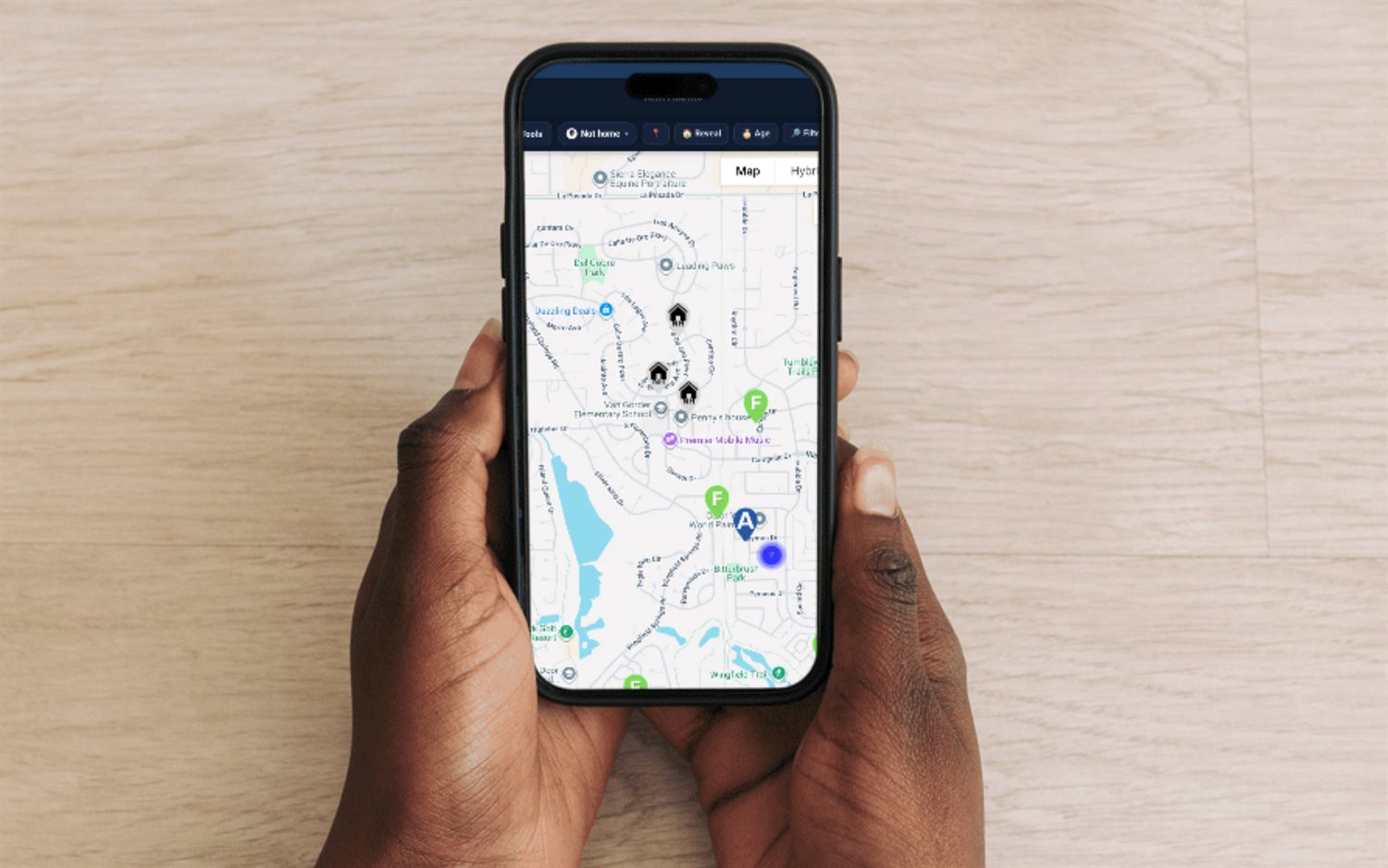
Sets in this trade die between the door and the appointment more than in almost any other vertical, because you asked for forty-five minutes of two people's evening. The confirmation is not optional and it should not sound like you are checking whether they still want to.
And the go-back is where most water treatment income actually hides. "Not right now" on a tested house is not a no — it is a house where you already know the hardness and they already know the number. Six weeks later that go-back sounds like this: "Hey, it's Marcus — I tested your water back in March, you were at eleven grains. I'm doing installs on your street Thursday and had a slot open up." That is a warm knock with a data point in it, and it closes at a multiple of a cold door.
It only works if the door remembers. Disposition every knock, note whether it was city or well, put the grains in the note, and let the callback come due on its own rather than trusting your memory of a street you knocked two months ago.
Water treatment go-backs carry a number — the grains, the iron, the TDS reading, whether they were a one-legger. That is the whole advantage, and it evaporates if it lives in your head. FieldStacker keeps it on the pin.
The strongest openers in this trade offer the free water test, not the system, and they name something true about that specific street — the utility, the aquifer, the fact that the homes are on private wells, or an install you are doing two blocks over. Something like: "Hey, I am with the crew doing the free hardness tests on Maple this week. Quick question, are you on city water or a well?" It works because the first thing out of your mouth is a service and a question, not a product and a price. The goal of the opener is a two-minute conversation, not a sale.
Agree, then separate safe from hard. "Totally fair, and honestly the city does a decent job — it is safe. Safe and hard are two different things though. Their own report says the hardness here runs around X grains, which is why the glasses spot and the soap will not lather. That is what the free test measures." You are not calling them wrong or scaring them, you are introducing a distinction they did not have. Then ask a question about something they can see: the shower door, the coffee maker, the white crust on the faucet.
Own it out loud. This trade has earned some of that reputation, and pretending otherwise makes you sound like the guy they are describing. "Honestly, I get it — there are people who do the fake electrolysis trick to scare folks. I do not do that. I do a hardness titration and a TDS reading, I show you your own utility report on my phone, and if your water is fine I will tell you it is fine and leave." Reps who say that convert skeptics at a rate the pushy ones never touch, because they just did the one thing the last guy did not.
You ask for it at the door, on purpose, in a way that makes it their idea. "One thing — the test takes about forty-five minutes and there is usually a decision at the end of it. I would rather not make you repeat all of it later, so is there a night this week you are both around?" Do not accept a one-legger to protect your set count. A single-person appointment in water treatment converts at a fraction of the rate and produces most of the three-day cancels, because the person who was not there gets a vote after the fact.
You need a different reason and a different proof, and the skeleton stays the same. City water leads with the utility report, hardness in grains per gallon, chlorine or chloramine taste and smell, and the appliance-life argument. Well water leads with what they can already see and smell — rust staining in the tub, the rotten-egg sulfur smell, sediment after a rain, no chlorine at all — plus the fact that nobody is testing their water but them. Same five beats, completely different middle. Ask which one it is in your first question so you know which script you are in.
Never imply you are from the water department, the city or the health department — misrepresenting who you are with is the single most common complaint in this trade and it is illegal in a lot of places. Never use the electrolysis or precipitator demo to make water look dirty; it precipitates dissolved minerals and iron from the electrode and proves nothing about safety. Never tell someone their water is poisoning their children. And never quote a system price at the door before the test, because the number without the context is the fastest way to lose a sit you had already earned.
Disposition every door, keep the grains on the pin, and let your go-backs come due on their own. 14-day free trial, no credit card.