Find the streets that still have original aluminum frames, work every door on them, hold the set until the demo actually happens, and track commission through the rescission window like a business.
Flat month-to-month from $30/mo · 14-day free trial · no seat minimums, no annual contract
Replacement windows is not a product sale, it is a qualification sale. Nothing about the pitch works until you are standing in front of the right house: original single-pane aluminum, or the first generation of builder-grade vinyl that has started fogging between the panes, on a street built somewhere between the sixties and the turn of the century, owned by people who have been there long enough to plan improvements. Knock the wrong subdivision and the best script in the trade gets you nothing but "ours are only six years old."
Then there is the second half of the job that nobody else's software touches. Windows runs on a two-step: the canvasser sets, the closer sits for two or three hours, and the contract is not real until the three-business-day right of rescission expires and financing approves. That means the trade has a set-to-sat leak, a sat-to-sold leak, and a sold-to-kept leak — and reps who cannot see those three numbers cannot fix them. Most windows crews end up with a canvassing app for the map, a presentation app for the demo, and a spreadsheet for the money. FieldStacker collapses the first and the third into one app on your phone.
Every one of these is vertical-agnostic and works for a replacement-window crew today — no setup detour required.
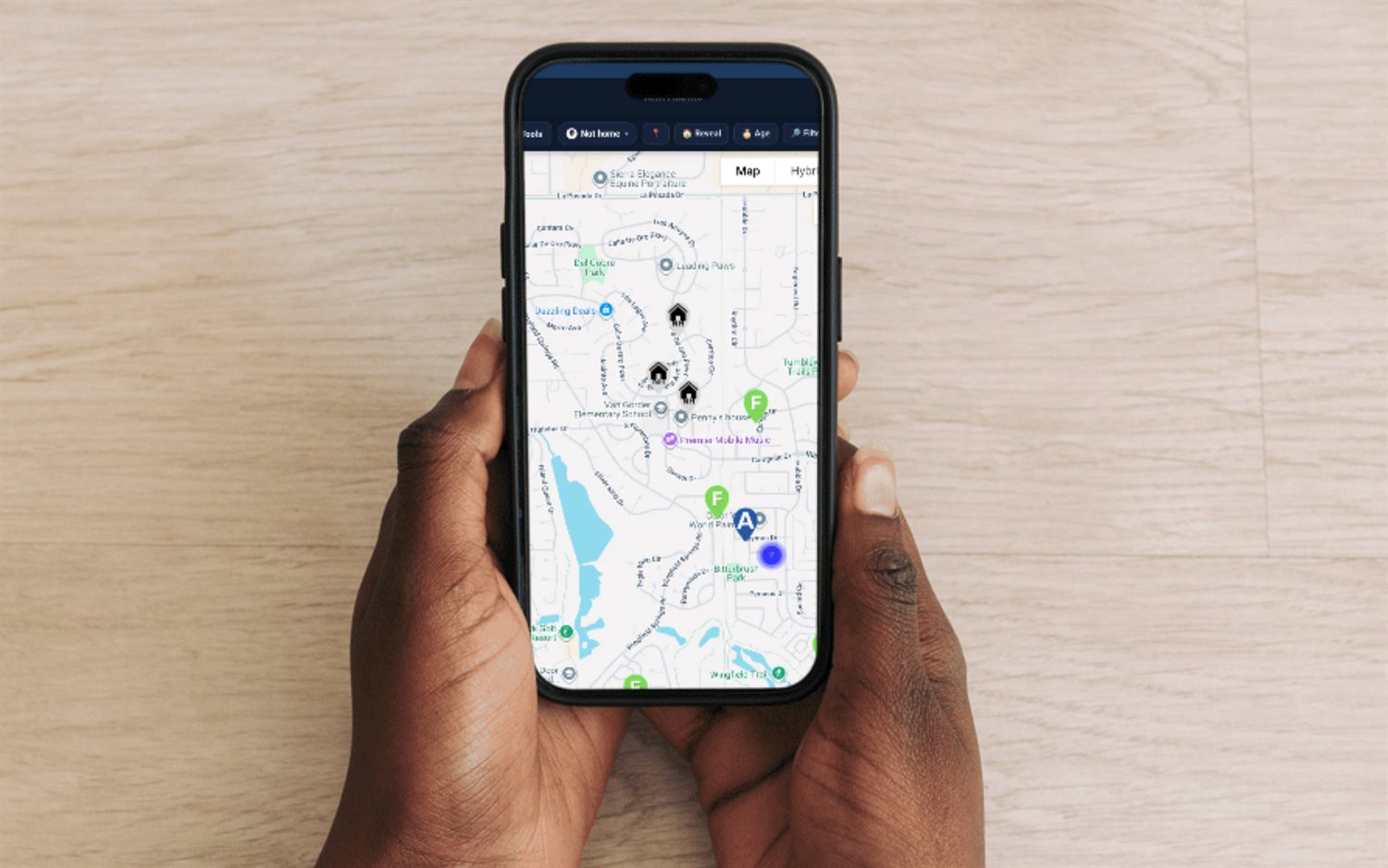
Put the whole block on a map, drop color-coded pins as you knock, and route the street instead of wandering it. Import an old lead list or a quoted-and-lost export as a CSV and the addresses geocode themselves onto the map.
Trace the 1972 ranch tract, the aluminum-window neighborhood, the streets your last three installs came out of — then assign the leads inside to a canvasser so nobody re-knocks a finished block.
Name your own stages: not home, one-legger, renter, set, confirmed, sat, sold, rescinded, final measure, installed. Now you can see where the pipeline actually leaks instead of guessing.
Setters get paid per door and per set, so attribution matters. See the crew on a live map, verify the knock happened where it says, and settle the "who worked that street" argument with data.
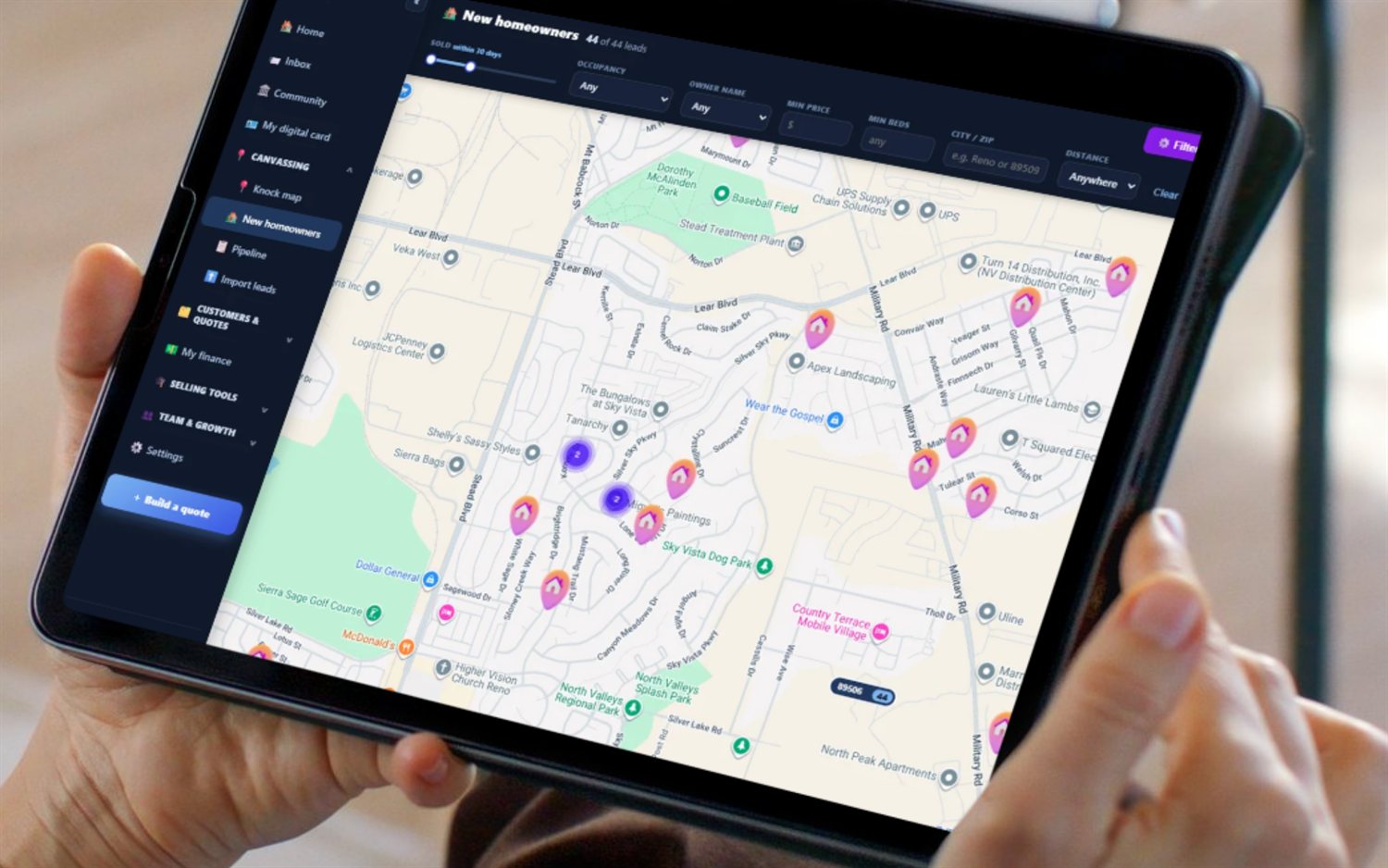
Somebody who just closed on a fifty-year-old house is the warmest window lead in the trade. Pull just-sold homes onto the same map and knock them while the improvement list is still on the fridge.
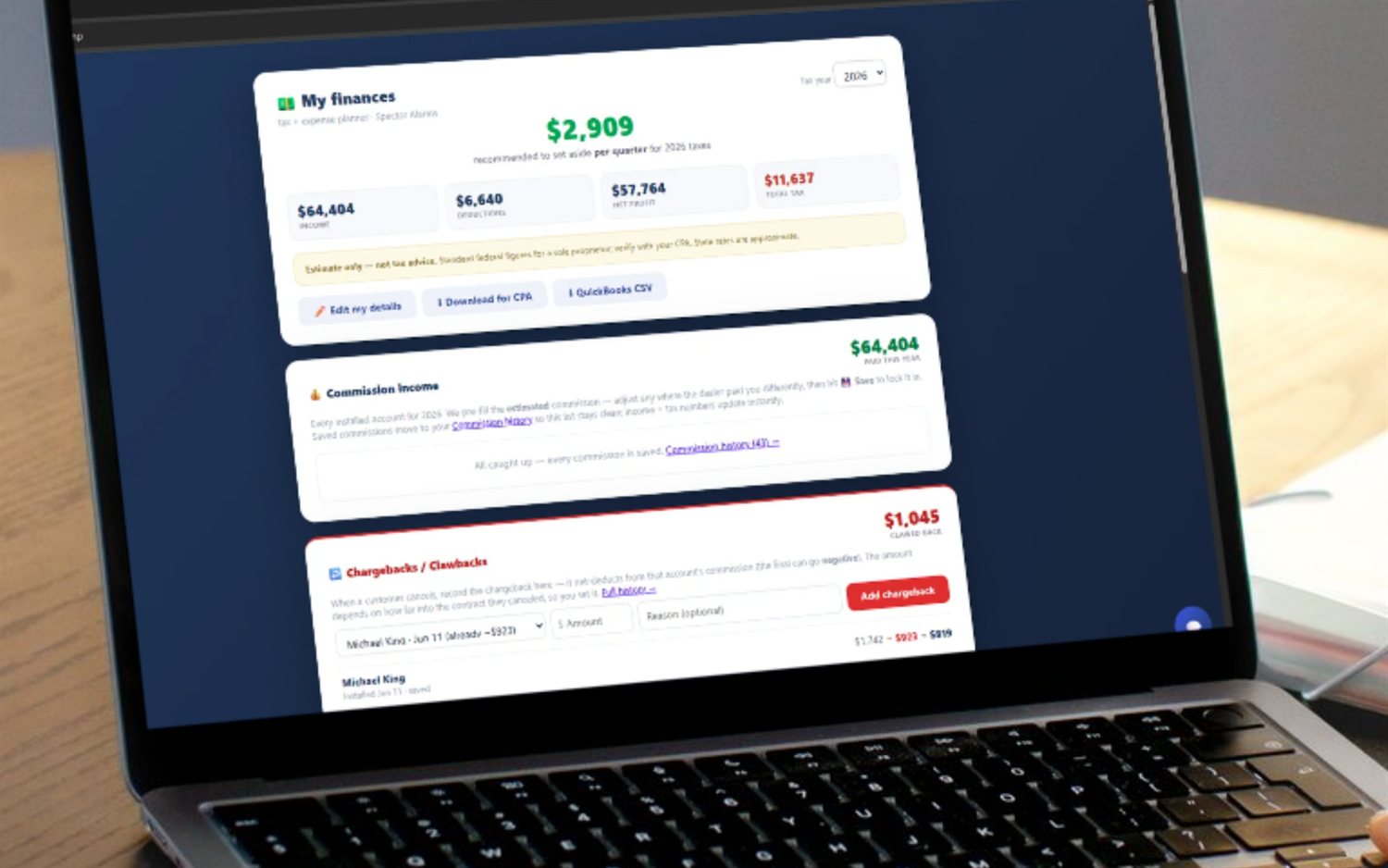
Per-deal commission on your own splits, chargebacks that net against the total when a contract rescinds or credit falls out, auto-mileage at the IRS rate, and a quarterly 1099 tax set-aside.
FieldStacker's built-in doorstep quote builder is tuned for alarm equipment and monthly plans, so what a bay window costs in your line, the egress sizing and the measure sheet stay with your dealer portal and your in-home presentation app. Windows quoting and measurement belong to the tools built for them, and those tools are good at it.
Every dealer loses deals in the same three places. You cannot fix a leak you cannot see — so disposition it.
The set was soft, only one owner was home, or nobody confirmed the day before. Tag set and confirmed as separate dispositions and your no-show rate stops hiding inside your set count. The confirmation call is still yours to make; FieldStacker puts the go-back on your list before the appointment goes cold.
A three-hour demo that ends in "we need to think about it" is not a dead lead, it is the most qualified name on your board. Disposition it, set the go-back, and knock it again in the spring with a number they already understand.
Three business days of rescission, then credit approval, then final measure. Deals die at all three gates. Track the deal past the signature so your commission number is the one that survives, not the one you wrote on Saturday.
Windows pay is written in tiers, splits and deductions. Sell above the base price sheet and your rate goes up; discount to close and it goes down. Sign a $19,000 job on Saturday and it can be worth nothing by Wednesday if the homeowner rescinds. Put it on a long zero-interest plan and the dealer fee comes off the commissionable amount. A canvassing app that stops at the pin cannot help you with any of that.
You can read a window job from the curb: aluminum frames with a thin sightline, condensation trapped between two panes, sills that have gone soft, sashes painted shut, a storm window still hanging over the original, a steel entry door streaked with rust, a patio slider that has been "fixed" with a stick in the track. Drive it once, draw the territory around it, and load the doors.
Four companion guides written for this trade, not adapted from someone else's.
Real openers and the actual objection branches — "how much is a window," "we just had three companies out," "my wife isn't home."
Percent of sale, percent of margin over base, the discount slide, setter spiffs, and every clawback in the trade.
Honest ranges for setters, first-year closers and veterans, plus what actually drives the spread.
Territory selection by housing stock, season and timing, the door pitch, the set, and the follow-up that pays.
Exterior remodeling rarely stays in one lane. The same 1975 street with failed seals usually has a twenty-year-old roof and original siding, and plenty of windows crews knock roofing or solar on the same block. Turn on the industries you sell and work them from one FieldStacker account — one map, one set of stats, one bill. The alarm side is powered by FieldStacker Security, on the same backend, so nothing lives in two places.
Yes for the canvassing and the money side of a replacement-window operation. The fresh-lead knock map, drawn territories, custom dispositions, GPS-verified team knocks, route building, leaderboard and 1099 financials are all vertical-agnostic and work for a windows and doors canvassing crew today. Opening measurements and price-book quoting stay where they already live — your measure sheets, dealer portal and in-home presentation app keep doing that. FieldStacker runs the street and the set; your price book runs the kitchen table.
Those two stay in your dealer portal and on your measure sheet. Opening measurements, insert versus full-frame decisions, egress sizing, DP ratings, glass packages and per-SKU pricing out of an Andersen, Pella, Provia, Simonton or Alside dealer portal are a separate discipline, and the tools built for them — dealer configurators, Paradigm Vendo, Leap, improveit 360, MarketSharp, a visualizer like Renoworks — do it properly. FieldStacker earns its keep everywhere around that: finding the 1970s aluminum-frame street, working every door on it, keeping two canvassers off the same block, holding the set until the demo happens, and tracking your commission, clawbacks, miles and 1099 taxes.
Yes, and that is the normal shape of a windows operation. Canvassers work drawn territories on the knock map with GPS-verified knocks, disposition every door, and tag the ones that become appointments. Because dispositions are yours to name, the real stages of this trade fit: not home, one-legger, set, confirmed, sat, sold, rescinded, final measure, installed. The closer picks the sit up from there. The in-home presentation stays where it is: the good-better-best price book, the financing calculator and the signed contract with the rescission notice still live in the tool you already use for the demo.
Yes, and this trade needs it more than most. A windows sale is not real until the three-business-day right of rescission expires and the credit or deposit clears, so a rep can watch a five-figure contract evaporate a week after they wrote it. FieldStacker tracks per-deal commission on your own splits, nets chargebacks and clawbacks against your total when a job rescinds, cancels or falls out on credit, captures mileage automatically at the IRS rate for all the driving between demos, and builds a quarterly 1099 tax set-aside. It works from what you log rather than connecting to your lender portal or order-entry system — you log the deal, it does the money math.
Those are capable canvassing platforms, but they are seat-based, generally sold with a per-user minimum and an annual commitment, and they stop at the map — your personal commission, your rescission clawbacks, your mileage and your 1099 taxes go back to a spreadsheet. FieldStacker is flat month-to-month from $30/mo with a 14-day free trial and no credit card, no seat minimums and no annual contract, and it keeps the rep financials in the same app. Built for the 1099 rep or setter first, then scales to the crew. Check their sites for current pricing before you compare.
That is the point of the stack. A lot of exterior-remodeling crews knock windows, doors, siding and roofing off the same street, and the qualifying signal is the same: an older house with original everything. Turn on the industries you actually sell and work them from one login, with one map, one set of stats and one bill. The alarm side is powered by FieldStacker Security, our alarm edition, on the same backend, so nothing lives in two apps.
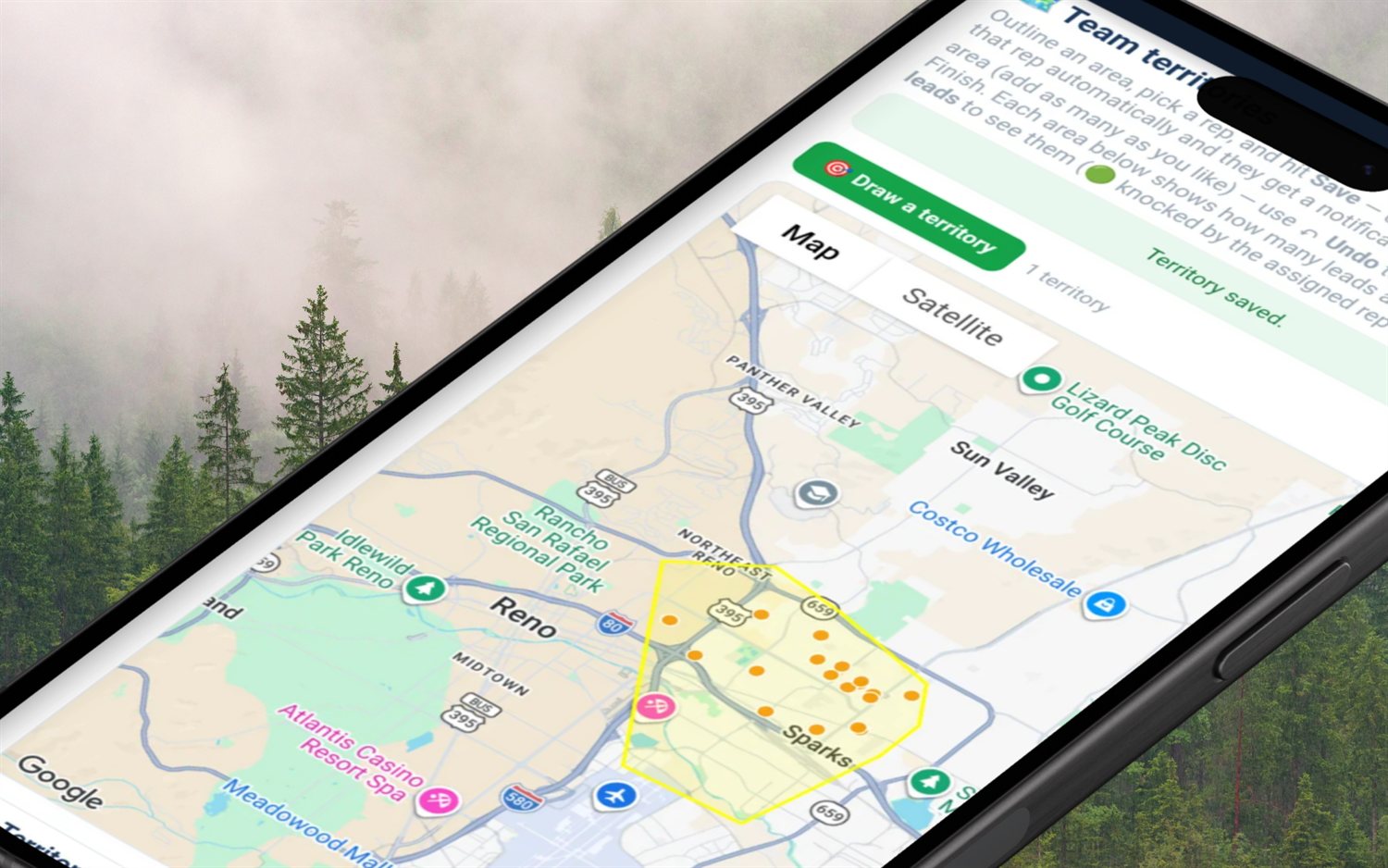
Draw an area on the map and one pull reveals up to 500 homeowners at once — the owner’s name, mailing address, whether they live there or it’s likely a rental, and their estimated age. Every plan with the owner reveal includes 50 pulls a month — that’s up to 25,000 homeowners of rich data every month. Run out and $10 adds another 50 (about 20¢ a pull).
Start a 14-day free trial — no credit card — draw your first territory tonight and knock it tomorrow. Flat month-to-month, cancel anytime.