Five openers that work on a siding door, the chalk-rag demo that ends the "my siding is fine" conversation, the storm-knock language that keeps you legal, and a branch for every objection a homeowner really gives you.
Flat month-to-month from $30/mo · 14-day free trial · no seat minimums, no annual contract
Most door-to-door verticals sell a decision one adult can make in a doorway. Siding cannot. The ticket is large — retail exterior jobs commonly run from around ten thousand dollars into the forties depending on material, house size and how much trim, soffit and fascia is hiding behind the panels — and it is nearly always a two-signature purchase. That single fact reshapes the whole script. You are not closing at the door; you are earning a walk-around, and then a time when both people are home.
The second difference is the one to build everything on: siding is visible. You can point at the problem. No other trade gets to hand a homeowner physical evidence inside the first ninety seconds — a furnace rep has to describe a failure, and you can rub a rag on a wall and put the chalk in their palm. A script built around that advantage beats a script built around adjectives every time.
The third is that your best territory is manufactured by your own crew. A house being wrapped generates the warmest doors in the neighbourhood for the four or five days the trucks are parked there, and those doors cool the moment the dumpster leaves. Everything below assumes you are knocking with that clock running. For the underlying five-beat structure these are all built on, see the general door-to-door sales scripts guide.
Say them in your own words. What matters is that the reason you are on this street today is true and obvious.
"Hey — I'm with the crew doing the house on Larch with the scaffolding on it. Boss has me knocking the block while our trucks are still here. Quick one: how long have you been in the house?" The highest-converting knock in the trade. Use it every day you have an install running.
"I saw you all closed on the place back in the spring — congratulations. We do exteriors, and I'm going round the houses in here that are hitting the age where the siding starts going. Have you got a list going for the outside yet?" New owners of older homes sit right in the exterior-project window.
"I'm going to show you something weird and then I'll get out of your hair." Rub a clean white rag on the sun-facing wall, hold it up. "That white powder is the finish. It's chalking, which means the colour layer is basically gone. Can I show you what the back of the house looks like?"
"We've been on this side of town since the hail on the 14th. Roofs get all the attention, but siding takes it worse on whichever wall faced the storm — usually cracks about the size of a dime. Mind if I take one look at your west side?" Then be honest about what you find, including nothing.
"Do you know the Kowalskis two doors down? We just finished their place — the grey with the white trim. They asked me to check with a few of the neighbours while we're here because the crew's already staged." Only ever use a real name, with permission. One invented reference ends you on a street.
"Hey — I stopped by a couple of weeks back and missed you, I'm the one who left the card about the house on Larch. Did you and your husband ever get round to the outside?" Warmer than any first knock, and it only exists if you logged the door.
Every argument you make with adjectives, a competitor can make too. The things below cannot be argued with, which is why the reps who carry them out-convert the reps who talk.
One rule governs all of it: show what is fine as readily as what is not. A rep who finds catastrophic damage on every house on a block is known for it on that block within a week, and the reputation outlasts the commission.
Everything worth having in a siding sale happens away from the front door. The front elevation is the one the household sees every day and has already decided is acceptable. The north wall, the storm side, the wall behind the fence — that is where the cracking, the chalking, the woodpecker holes, the warp near a neighbour’s low-E window and the soft fascia actually live. Your entire doorstep objective is thirty seconds around the back.
The transition sounds like this: “Look, I’m not going to stand on your porch and try to sell you siding — that would be ridiculous. Give me thirty seconds, walk round back with me, and I’ll either show you something you should know about or I’ll tell you your house is in good shape and leave. Either way you find out.” A small ask with a genuine exit in it, which is why it converts — there is no trap to detect.
While you are back there, narrate what you see and name what you do not. “Honestly, your south wall is holding up fine, but look at this fascia” gets believed, and gets the appointment, precisely because you were willing to say the first half.
An appointment that runs with one decision-maker present is a wasted evening for the closer and, on most plans, an unpaid set for you. So book it properly the first time rather than optimistically.
Give the reason plainly: “The reason I’m asking whether you’ll both be around is that we go through material options, colours and an actual number, and it isn’t fair on either of you if one person has to relay all of that secondhand.” Honest, and it gets an answer rather than a brush-off.
Then lock it down. Two specific options rather than an open calendar. Say how long it takes and what will happen. Tell them nobody has to decide anything that evening — which is true, and which converts more maybes than any other sentence available to you. Then log the appointment and the context immediately, while you still remember that she raised the HOA colour rules and he complained about the draught in the back bedroom.
What they say, what is usually underneath it, and a response that does not turn into a fight.
| What the homeowner says | What it usually means | A line that works |
|---|---|---|
| "How much is it?" | They are pricing you out of their evening in five seconds, not asking for a quote. | "Range on a house this size is usually low teens to high twenties, and the whole spread is material and how much trim is behind it. I'd be making that up until I walk it — can I take two minutes out back?" |
| "My siding's fine." | They have only ever looked at the front, from the driveway, in the afternoon. | "Might be. Do me a favour —" (rag on the wall) "— see that powder? That's the finish. Come look at the north side with me for thirty seconds and then I'll get out of your hair." |
| "I'm just going to paint it." | Reasonable, and sometimes correct. They are comparing a $4,000 job against a $25,000 one. | "Painting is genuinely the right call on some houses. The thing to know is you're signing up to do it again in five to eight years, and paint doesn't fix what's behind it if the sheathing's soft. Let me look — if paint's the answer I'll tell you." |
| "We've already had three guys out here." | Post-storm saturation, or they are genuinely mid-decision. Either way you arrived late. | "Then you already know more than I do about what's wrong with it. What did they say the number was? … Here's the only thing I'd add —" then contribute something the others did not, or walk. Do not out-shout three bids. |
| "My husband isn't home." | Half true, half brush-off, and the number-one killer of exterior demos. | "Good — honestly this isn't a decision one person should make alone. What works better for the two of you, a weeknight around six or Saturday morning?" |
| "We're not putting thirty grand into this house." | Sticker shock at a figure they invented, or a genuine ceiling. | "That's fair, and thirty might not be the number — vinyl and fiber cement are very different projects. Can I at least tell you what your house actually needs, so whenever you do it you're not guessing?" |
| "We're going to sell in a couple of years." | Legitimate, and easy to lose by overclaiming what siding returns. | "Then I'd be careful — nobody gets every dollar back on siding. What I'd want to know is whether an inspector's going to flag anything. Let me look and tell you if it's a fix-it or a leave-it." |
| "Just leave me some information." | The polite no. Paper is in the recycling before you reach the pavement. | "I'll do you one better —" (QR card) "— scan that, it's got everything and my direct line. But while I'm standing here, thirty seconds around back?" |
| "I don't do business with people who knock." | A boundary, and usually a firm one. Respect it and go. | "Completely fair, I hear that a lot. I'll leave you alone — if you ever want a second opinion on the outside, the card's got my number. Have a good one." Then disposition it and never knock it again. |
| "My brother-in-law does siding." | Frequently true, occasionally a shield. Either way you are not winning on price. | "Then use him — family beats a stranger every time. Only thing I'd say is make sure whatever he installs carries a manufacturer warranty in your name. Want me to tell you what I'd be looking at on this house so you can ask him?" |
| "I'm not financing anything." | Debt aversion, often deeply held. Arguing loses the room. | "Then don't. Plenty of our jobs are cash. I only ever bring it up because some folks would rather not move money out of savings — but if that's not you, it's not you." |
| "Insurance denied our claim." | Storm work. Could be a bad inspection, could be genuinely no damage. | "Do you still have the denial letter? Sometimes they scope the roof and never look at the elevations. I can tell you in five minutes whether there's anything worth a re-inspect — and if there isn't, I'll say so." |
| "Not right now. Maybe in the spring." | The standard exterior soft no, and frequently sincere rather than evasive. | "Spring's fine — that's most of our schedule. The one thing I'd tell you is spring books out fast and material pricing resets. Can I come back through in February before the calendar fills, and just get you a number to sit on?" |
Look at what none of those lines do. Not one of them tells a homeowner they are wrong, and not one invents a deadline that does not exist. Exterior buyers on a street talk to each other and they are gathering bids for weeks. Being straight at the door is what puts you first in mind when the other two companies stop returning calls.
After a hail event a market fills with reps, and a proportion of them say things that are illegal. Here is the language that keeps you on the right side of it while still winning work — and it is worth memorising, because the wrong sentence in this section is not a lost sale, it is a prosecution.
Roughly nothing in exterior remodeling closes on a first knock. A household saying "maybe in the spring" in September is not a no; they are a February appointment nobody has booked yet. The rep who wins it knocks warm, by name, referencing the earlier visit. The rep who loses it cold-knocks their own lead six months later because nothing was written down.
All five depend on the same unglamorous thing: dispositioning every door with a note and a date, then letting the callback come due on its own. Do that and go-backs quietly become the best-converting knock you have. Skip it and you are a stranger again every spring.
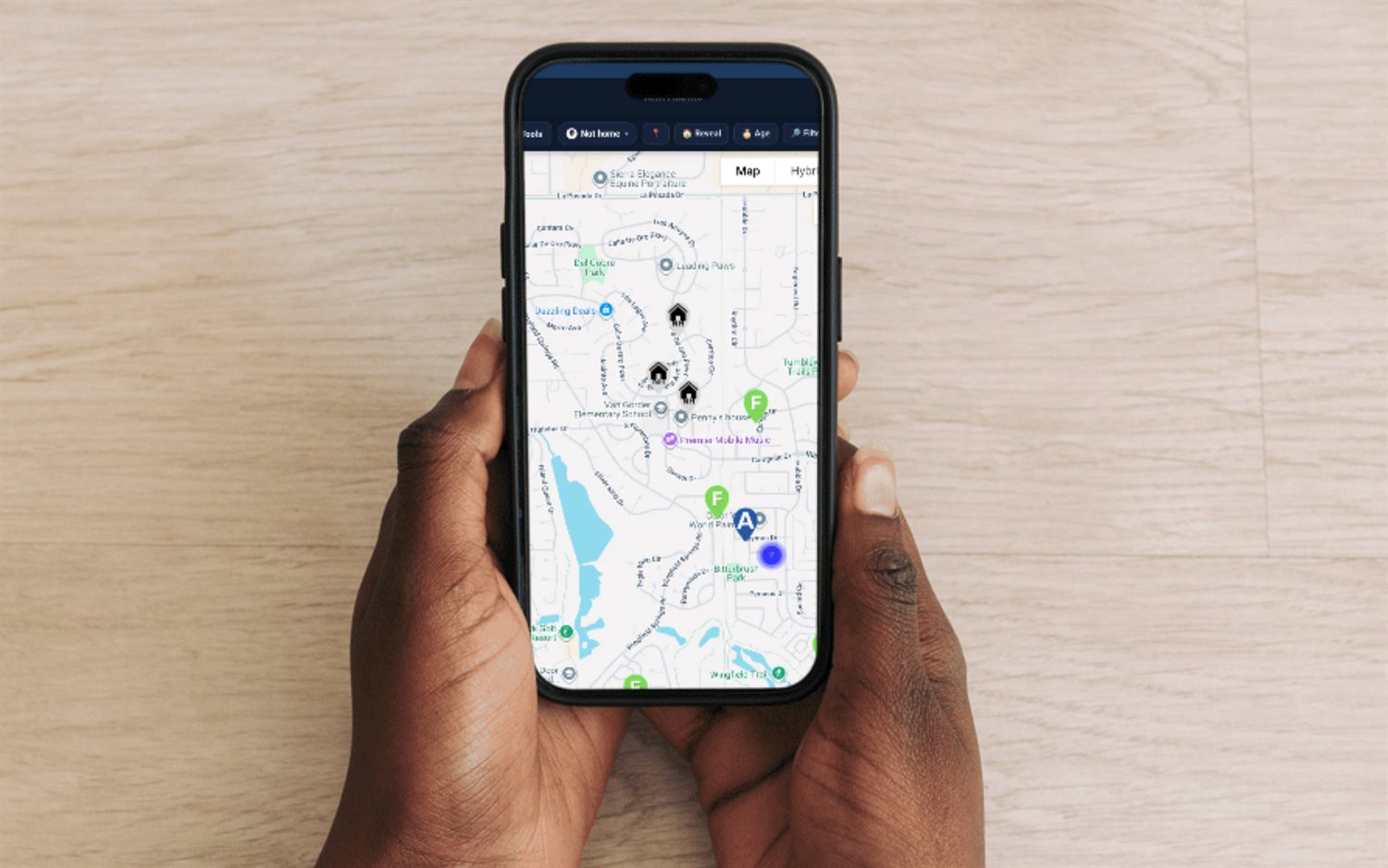
The scripts above assume you can still recall, six months on, that the woman at 412 said her husband handles it and to try again in spring. FieldStacker keeps that honest: fresh-lead pins and just-sold homes on a knock map, dispositions you define yourself so a decision-maker gap reads differently from a hard no, callbacks that come due, territories thrown around an active job site, GPS-verified team knocks, and objection coaching between sits.
The rest of the trade, one guide at a time.
The full field guide: which streets, which season, the walk-around, the close and the follow-up.
Per-set, percent of contract, percent of gross profit, overage — and the re-measure clause.
Roofing, solar, pest, fiber and alarms — the same street work, a different reason at the door.
The job-site opener, by a wide margin. If your crew is wrapping a house on the next street you are not a stranger — you are the company with the trucks and the dumpster the whole block has been staring at for three days. Something like: "Hey, I am with the crew doing the house on Larch with the scaffolding. My boss has me knocking the block while the trucks are here — quick question, how long have you been in the house?" It is true, it is local, it explains why you are here today, and it lands on an easy question instead of a pitch. Nothing you generate cold converts like the twenty doors around an active install, and the effect expires the day the scaffolding comes down.
Give a real range with a real reason, then trade the number for a look at the walls. Refusing makes you sound like a closer concealing a price; blurting a figure gets you compared against a bid nobody has seen. Try: "Honest answer, on a house this size it usually lands somewhere between the low teens and the high twenties, and the gap is almost entirely material — vinyl versus fiber cement — plus how much trim and soffit is behind it. I would be guessing until I actually measure it. Can I take two minutes and look at the back of the house?" You keep your credibility and you move the conversation to the elevation, which is where it needed to go anyway.
Do not argue. Take them to the evidence. Most homeowners genuinely believe it is fine because the only wall they ever look at is the front elevation from the driveway. Rub a clean white rag on the sun-facing wall and show them the chalk on it — that powder is the finish that is no longer there. Or walk them to the storm side and point at the cracking at the corners, the woodpecker holes in the soffit, the warp near the neighbour reflective window. The line is: "It might be. Do me a favour though — come around back with me for thirty seconds, because the side you never look at is the side that ages first."
Treat it as a scheduling problem rather than an objection, because in exterior remodeling it is the single most common reason a demo dies. You are not selling a twenty-five thousand dollar exterior to half a household, and pressing on usually costs you the job twice. Book a window when both people are genuinely there: "Totally fair — this is not a decision one person should make alone anyway. What is better for the two of you, a weeknight around six or a Saturday morning?" Then disposition the door as a decision-maker gap so it comes back to you, and confirm the day before.
Memorise the opener and the transitions, improvise the middle. The first eight seconds need to be automatic so nerves do not show, and you want a fixed line ready for the four objections you hear every single day. Everything in between is a conversation about somebody house, and a recited paragraph makes that impossible — you cannot read a half-open door while retrieving line five from memory. Drill the beats out loud, record yourself, and role-play the pushback with a teammate until the branches are reflex rather than recall.
Generally yes, with two things worth knowing. Many cities and towns require a solicitor permit and set knocking hours, and plenty of subdivisions post no-soliciting rules — respect the signs and the ordinance, both because it is right and because one complaint can close an entire municipality to your company. Second, the federal cooling-off rule gives a homeowner three business days to cancel most sales of $25 or more made at their home, and you are required to tell them. Say it out loud and use it as reassurance rather than hiding it. It also means a signed contract is not a paid contract until that window closes, which is exactly why cancels need tracking.
Disposition every knock, let the spring callbacks come due on their own, and canvass the block around your next job site. Start a 14-day free trial — no credit card.