HVAC · scripts

Door-to-door HVAC sales scripts, with the real objections

Seasonal openers that give a true reason, the one discovery question that turns "it’s working fine" into a conversation, and word-for-word branches for everything a homeowner actually says to an HVAC rep.

Flat month-to-month from $30/mo · 14-day free trial · no seat minimums, no annual contract

The short version: HVAC has no visible damage and no urgency, so your opener has to supply a reason the homeowner can verify. Never quote a system price on the porch. Never attack their current company. Ask about the room that never gets comfortable. And treat the appointment — not the sale — as the thing you are closing for.

Why HVAC scripts are different from every other door

A roofer can point at a roof. A solar rep can point at a power bill. An HVAC canvasser is standing in front of a homeowner whose house feels fine right now, asking about a machine they have never thought about, that costs as much as a used car, and that they will only care about on a day you are not there. That combination breaks most generic D2D scripts, and it is why HVAC reps burn out on borrowed pitches from other verticals.

Three constraints drive everything below. One: there is no pain, so you have to create a timeline instead of a problem. Two: the ticket is high enough that both decision-makers have to be present, so the appointment is a two-person appointment or it is a wasted one. Three: nearly every homeowner already has a company they call, so your job is rarely to displace someone — it is to find the gap between "I have a guy" and "anyone has actually looked at it."

The skeleton, before the words

Every script below is the same five beats you would use in any vertical — interrupt, reason, question, bridge, ask — flavored for HVAC. If you want the general framework first, the door-to-door sales scripts guide lays it out. The HVAC-specific part is what goes in the reason slot and how you handle the pushback, and that is what the rest of this page is.

Six openers that give a real reason

Say them in your own words. What matters is that the reason is specific, seasonal and true.

🍃

Shoulder season — the tune-up run

"Hey, I’m with [Company], we’re the ones running the spring check on Aspen and Cedar this week. Not selling you anything — before it gets hot, we’re getting eyes on systems while the schedule is still open. Quick question: when’s the last time anybody actually looked at your AC?"

📅

The age of the block

"I’ll be straight with you — this whole neighborhood went up around the same time, so every system out here is right about the same age. I’m just finding out which ones are original and which ones have already been done. Is yours still the one that came with the house?"

🚚

The neighbor proof

"We were on this street yesterday — did the system at the gray house on the corner. While the crew’s out here I’m checking who else is running an original unit. Any rooms in your place that never really keep up in the summer?"

🔥

Peak season — capacity

"I’m not going to keep you — it’s brutal out. We’ve had three units on this street go down this week and our board is booked into next week. If yours is running rough, I’d rather get you looked at now than have you calling on a Sunday. How’s it holding up?"

🪟

Window units — the ductless door

"Saw the units in the windows — is that because the house never had ductwork, or just because a couple of rooms never cool off? Reason I ask is we do ductless now, so you can cool a room without tearing the house apart. Ever had anybody price that for you?"

🔑

The new owner of an old house

"Congrats on the place — I saw it sold recently. I do the HVAC side for [Company]. When your inspector went through, did he say anything about the age of the furnace or the AC? Nine times out of ten it’s the one line on the report nobody knows what to do with."

Say the disclaimer before they ask for it. "Just so you know — I’m not with the power company, I’m with [Company], we’re the ones on the [local ad]." Homeowners have been burned by people claiming to be from the utility. Volunteering it makes you the exception in about four seconds.

The discovery question that beats every other one

After the opener, most reps ask "how old is your system?" It is a fine question and it gets a shrug, because most homeowners genuinely do not know. Ask this instead:

"Is there a room in the house that never really gets comfortable?"

Almost every house has one — the bonus room over the garage, the back bedroom, the upstairs in July. It is the one HVAC complaint homeowners are happy to volunteer, because it is not about money and it is not admitting the system is dying. And the moment they answer it, the conversation has quietly moved from "everything is fine" to "here is a thing my house does wrong." That is all you needed.

Follow it with two more, in this order, and stop:

  • "Is it the original system from when the house was built?" — establishes age without asking them to know a number.
  • "Gas furnace or heat pump, do you know?" — tells you what you are dealing with, and if they do not know, that itself is your reason to send someone out.
  • "What does a bad summer month run you on the power bill?" — only if cooling cost is the angle. Do not stack it on top of the other two.

Three questions, then bridge. Any more and you are interrogating a stranger on their own porch.

The objection branches, in the words they actually use

Every one of these is something an HVAC rep hears in a normal week. Read the intent under the sentence before you answer the sentence.

"It’s working fine."

What they mean: nothing is broken, so there is nothing to discuss. This is the defining HVAC objection and arguing with it loses.

Say: "Good — genuinely, that’s the best time to look at one. The ones we end up rushing out to at nine at night were all working fine the day before. I’m not trying to tell you something’s wrong with it. I’m trying to tell you how much life is left in it, so it’s your decision and not the weather’s." Then go straight to the comfortable-room question. You have moved from broken to timing, which is the only frame this trade sells in.

"I already have a guy."

What they mean: I am loyal, and you are asking me to betray someone. Attack the incumbent and you lose the door permanently.

Say: "That’s more than most people on this street have, honestly. Are they doing the seasonal check for you, or do you just call them when something goes wrong?" A large share of homeowners with "a guy" have zero maintenance. If they genuinely are on a plan, stop selling: "Perfect — when’s it renew?" Then note the month on the door and come back the month before. That is not a lost door, it is a scheduled one.

"How much is a new system?"

What they mean: give me a number so I can end this. It is a trap even when they are sincere, because the honest range is enormous.

Say: "I could throw a number at you but I’d be making it up, and you’d be right not to trust it. It swings on your ductwork, the electrical, the size the house actually needs — I can see none of that from here. That’s the whole reason the assessment is free and takes about an hour. Are evenings or Saturday mornings easier for you both?" You have refused to lie and converted the question into the appointment in one move. If they push, give the shape rather than the number: "It’s the price of a used car, not a kitchen, and almost everybody does it on a payment."

"We just had it serviced."

What they mean: someone already checked this box.

Say: "Nice — who’d you use? ... Did they leave you anything in writing, like the readings or the capacitor numbers?" Plenty of cheap tune-ups are a rinse and a sticker. If they have a report, respect it and pivot to age and the go-back. If they do not, you have your opening without ever calling the other company bad: "The reason I ask is that the check is only worth what got written down."

"I’m not spending ten grand on a furnace."

What they mean: that is a lump sum I do not have, and I am reacting to the shape of the number.

Say: "Nobody has ten grand sitting in a drawer for a furnace — that’s not how anybody does this. Almost everyone we work with does it on a monthly payment, and the number that actually matters is what that payment is next to what you’re already paying to run the old one." Do not promise an approval, an interest rate, a rebate or a tax credit at the door. Incentive programs and financing terms change and are not yours to guarantee — get the assessment set and let the proposal do it properly.

"I’ll just repair it when it breaks."

What they mean: replacement feels optional, repair feels controllable.

Say: "That’s completely reasonable and for a lot of systems it’s the right call. The place it stops being the right call is when the repair is a big-ticket part on an old unit — a lot of us use a rough rule of thumb where you multiply the age by the repair cost, and once that gets past about five thousand you’re throwing money at something on its way out. All I’d want is for you to know which side of that line you’re on before the part fails." Call it a rule of thumb, because that is what it is.

"Are you with the power company?" / "Is this a scam?"

What they mean: someone has already tried this on me.

Say: "No — and I’m glad you asked, because people do pull that. I’m with [Company], here’s my card, scan that and it’ll pull up who we are. No affiliation with the utility, and nothing about this is required." Then hand them something scannable and take a half step back. This objection is fully winnable and reps who handle it cleanly often get a better conversation than they would have had otherwise.

"I need to talk to my husband / wife."

What they mean: in HVAC this is usually literally true. At this ticket size, both people decide.

Say: "Of course — honestly I’d rather you both hear it at the same time so I’m not the game of telephone. When are you both actually in the same room? Thursday evening, or is Saturday morning easier?" Never set a one-person appointment to protect the number. A sit with one decision-maker is the single biggest source of wasted comfort-advisor time in this industry.

The quick ones

  • "We’re selling next year." → "Then you definitely don’t want to replace it. What you want is a clean service record so the buyer’s inspector doesn’t use the system to knock five grand off your price." Sell the tune-up, not the system.
  • "We rent." → Get the owner or management company’s name and disposition the door as a renter so nobody on the crew wastes a knock there again. Some of those turn into multi-property accounts.
  • "Now’s not a good time." → "Totally fair, I picked the worst possible moment. I’m back through here Thursday — mornings or evenings better?" Then actually set the callback so it comes due.
  • "We just replaced it." → Congratulate them, ask what they put in, and pivot to the maintenance plan and indoor-air-quality side. Then mark the door with the year so nobody re-knocks it for a decade.
The close: you are selling the appointment, not the system

Almost nothing in HVAC closes on the porch, and reps who try to close the system there lose the appointment they could have had. The ask should be small, specific and two-person:

  • Two-option assumptive: "I’ve got Thursday at six or Saturday at ten left this week — which is easier for you both?"
  • Shrink the commitment: "It’s about an hour, there’s no charge, and you’re not committing to anything. Worst case you find out you’ve got five good years left and you stop worrying about it."
  • Confirm both people, out loud: "And [spouse] will be there too? Perfect — I’ll put you both on it." Say it so the confirmation is theirs, not yours.
  • Then stop talking. The first person to speak after the ask usually loses the point.

The go-back script — where HVAC canvassing actually pays

In this trade the "no" is almost never a no. It is a not yet with a date attached to it, and the date is usually a season away. That makes the go-back script more valuable in HVAC than in any other vertical, because your best doors are the ones you already walked.

Seasonal go-back: "Hey — I stopped by back in the spring, I’m the one who asked about the room over your garage. I told you I’d swing back before it got cold. Did that room ever get sorted out?" You have proved you remembered, which almost no canvasser does, and you have reopened on their complaint rather than your product.

Renewal go-back: "Last time we talked you were on a plan with [competitor] and you said it renews in March. That’s why I’m back — figured I’d earn a shot before you re-up."

Failure go-back: "Two units on this street went down last week. Yours is the same age as both of them. Still running?"

All three depend on one thing: that the door remembers what happened last time. Which is a software problem, not a scripting one.

Where the script meets the street

A go-back script is worthless if the door forgot the conversation

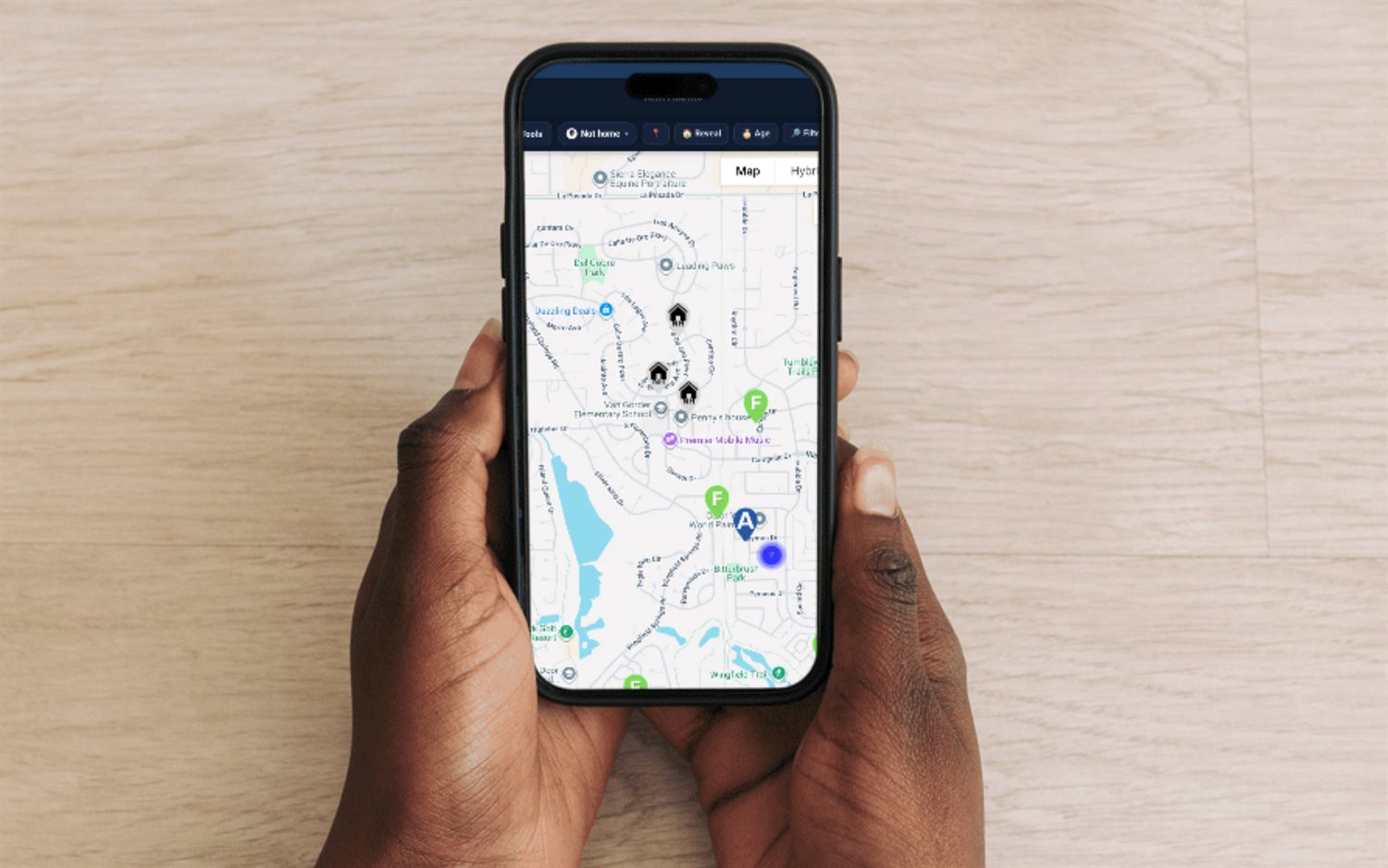
Every strong HVAC script above depends on remembering something months later — the room over the garage, the renewal month, the age of the unit, the spouse who was not home. FieldStacker holds that on the map so the next knock starts warm:

  • Custom dispositions that describe equipment, not just outcomes
  • Callbacks that come due at the right time — including a season out
  • A free digital business card with a QR code for every no-answer
  • AI objection coaching to rehearse "it’s working fine" until it stops rattling you
  • Works offline, because half of these blocks have no signal

See the knock map →   HVAC CRM →

FieldStacker knock map with color-coded dispositions so an HVAC canvasser remembers each door for the seasonal go-back

Drill it before you burn a territory on it

🎙️

Record the opener

Say it into your phone and play it back. Anything that sounds like a commercial gets cut. HVAC homeowners are unusually allergic to polish.

🤝

Role-play the two hard ones

"It’s working fine" and "I already have a guy" are most of your day. Drill those two until they are reflex. More at D2D objections.

Knock when both are home

HVAC needs two decision-makers, which pushes you to evenings and Saturday mornings. See the best times to knock.

Questions HVAC reps ask

What is the best door-to-door opener for HVAC?

The one that names a reason tied to their equipment rather than your company. HVAC has no visible damage and no urgency, so a generic "we are in the neighborhood" opener dies instantly. What works is a specific, true reason: the seasonal tune-up run happening on this street this week, the age of the outdoor units in a subdivision that all went in at the same time, the system you just replaced two doors down, or the fact that they only just bought the house. Then ask one easy question — the strongest in this trade is whether any room in the house never gets comfortable — because every homeowner has one and answering it quietly admits a problem.

How do I answer "it is working fine"?

Agree with them first, because they are usually right, and then change the subject from broken to timing. "Good — honestly that is the best time to look at it. The ones we end up rushing out to are the ones that were working fine right up until the first ninety-degree Saturday." Then move to a diagnostic question rather than a pitch: how old is it, is it the original from when the house was built, is there a room that never keeps up. You are not arguing that it is broken. You are establishing that it has a remaining life, and that it is worth knowing what that is before it decides for them in August.

Should I quote a price for a new system at the door?

No, and reps who do it lose the sale twice. HVAC replacement pricing depends on load, ductwork, electrical, line set, permits, equipment tier and access — none of which you can see from the porch — so any number you say is either too high and kills the appointment or too low and makes you a liar when the real proposal arrives. The honest answer is also the better one: give an honest reason you cannot answer, then trade the number for the appointment. "I would be making it up. It swings a lot depending on your ductwork and the size the house actually needs. That is the whole reason the assessment is free."

How do I handle "I already have an HVAC company"?

Never attack the incumbent — the homeowner picked them, so criticizing them is criticizing the homeowner. Compliment the relationship, then narrow to a gap. "Good, that is more than most people have. Are they doing the seasonal check for you, or just coming out when something goes wrong?" A surprising number of homeowners have a company they call and no maintenance at all. If they genuinely are on a plan with someone, stop selling and get the renewal month, note it on the door, and come back before it renews. That is a lead, just not a today lead.

Do HVAC door scripts change by season?

More than in any other trade, because the reason has to be seasonally true. Spring and fall are tune-up and maintenance-plan language — get ahead of the season, get a technician on the equipment while the schedule is open. Peak summer and winter are urgency and capacity language — units are failing on this street, the dispatch board is full, here is how to not be stuck in a line. Mid-winter is heating and safety, mid-summer is cooling and power bills. Using an August script in March is the fastest way to sound like you are reading something.

How do I keep from sounding like a scam at the door?

Say what you are not, before they ask. HVAC and energy canvassing has a real impersonation problem — plenty of homeowners have had someone claim to be from the utility — so lead with your company name, say plainly that you are not with the power company or the gas company, wear branded gear, and hand over something scannable they can look up while you are standing there. If your company advertises locally, name the ad. And never imply a government or utility program requires them to do anything. Being the rep who volunteers the disclaimer is a trust advantage, not a cost.

The rest of the HVAC set

🧭

Field guide

Territory, season, routing and follow-up. How to sell HVAC door to door →

💵

Commission

Per-set fees, gross-profit plans and clawbacks. HVAC sales commission →

📊

Income

Honest ranges, first year vs experienced. What HVAC reps make →

All industries →   Pricing →

Bring the script to a map that remembers

Disposition every door, let the seasonal go-backs come due on their own, and stop re-cold-knocking your own best leads. 14-day free trial, no credit card.