Work the subdivisions where the equipment is aging out together, log what you saw in the side yard, book the tune-up at the door, and track every spiff and chargeback like a business. Built for canvassers, setters and comfort advisors.
Flat month-to-month from $30/mo · 14-day free trial · no seat minimums, no annual contract
HVAC is the strangest door in the trades, because the product almost never sells on the day you knock. Nobody wakes up wanting a $12,000 changeout. They want it at 4pm on the first 98-degree Saturday of the year, and the company they call is the one whose name is already sitting somewhere in the house. That is why HVAC canvassing is not really a closing motion — it is a coverage and memory motion. You knock a block where every system was installed in the same eighteen months, you find out which houses are on borrowed time, you book the seasonal tune-up that gets a technician inside, and you make sure your name is the one on the fridge when the unit finally quits.
Most HVAC canvassers try to run that with a clipboard, a group text and the company FSM platform they cannot really see from the sidewalk. FieldStacker takes the two parts nobody else covers — the street and the rep’s money — and puts them on the phone in your pocket.
All of it ships today, none of it needs a trade-specific setup detour.
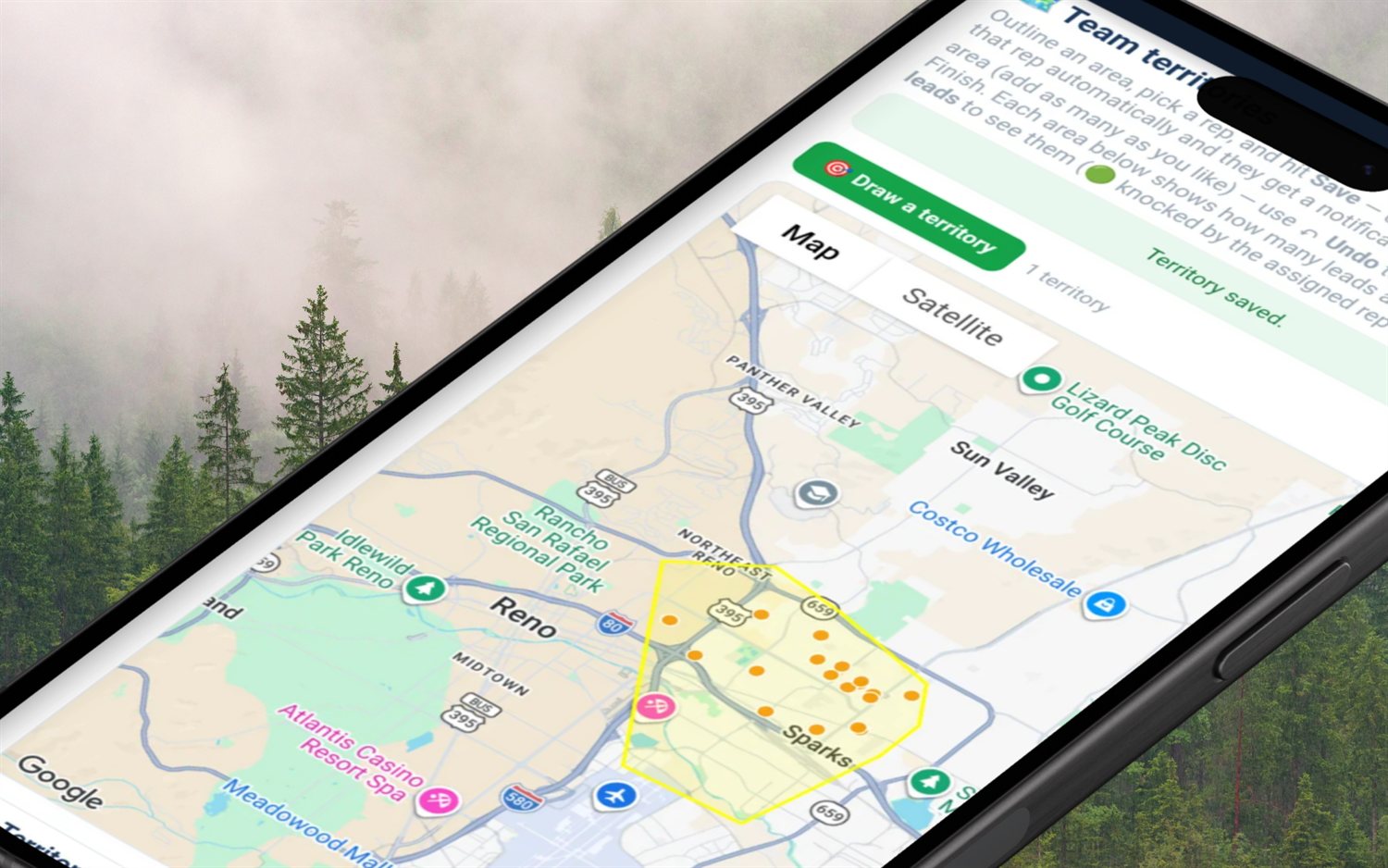
Trace the subdivision, not a random radius. A neighborhood built across two years has equipment that ages out together — when one condenser dies, the block is due. Draw it, assign it, work it before the competition figures it out.
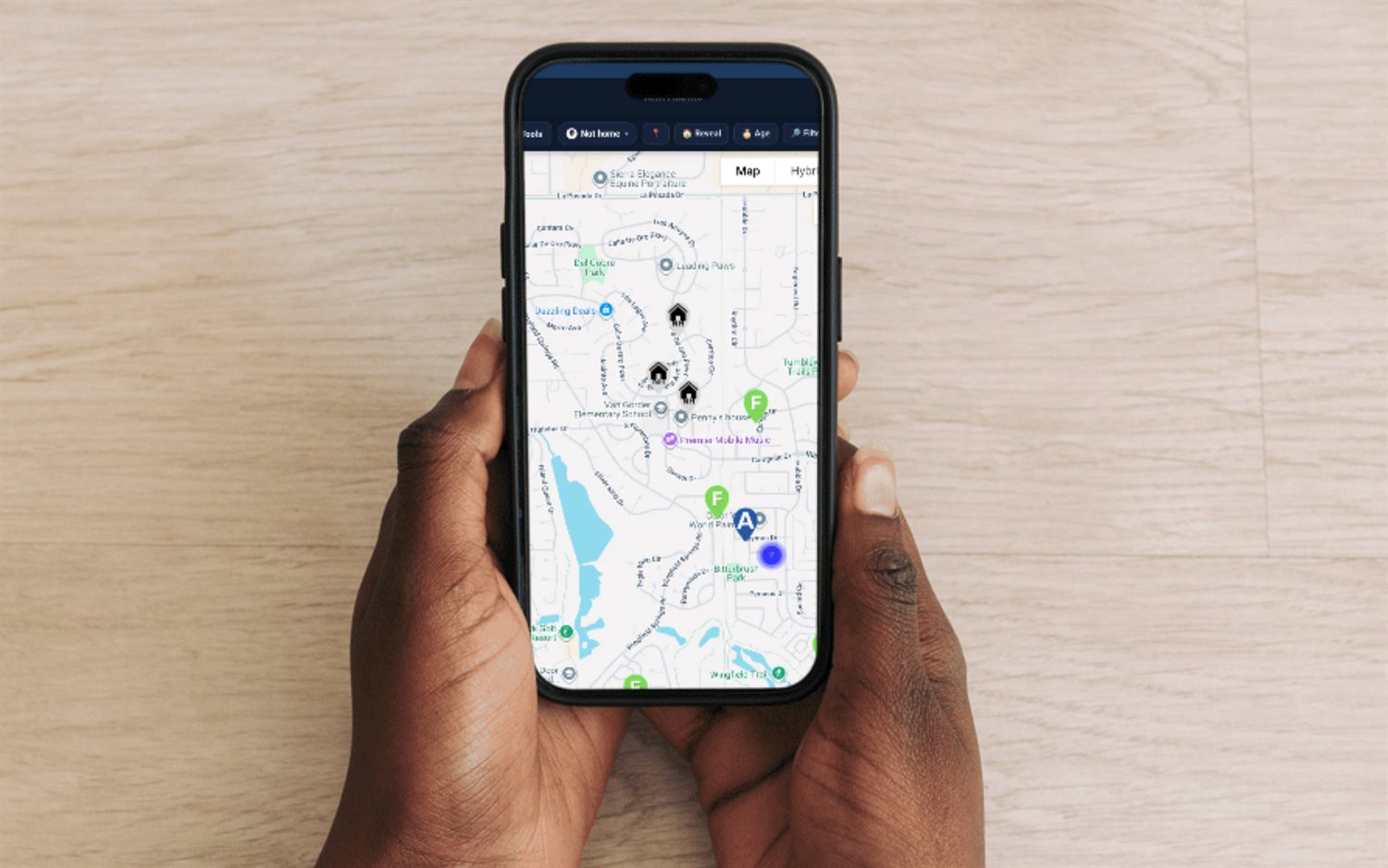
Name your own: system 15+ years, R-22 unit, window units — no ductwork, recently replaced, on a competitor plan, tune-up booked, assessment set. Your pin colors end up being an equipment survey of the whole street.
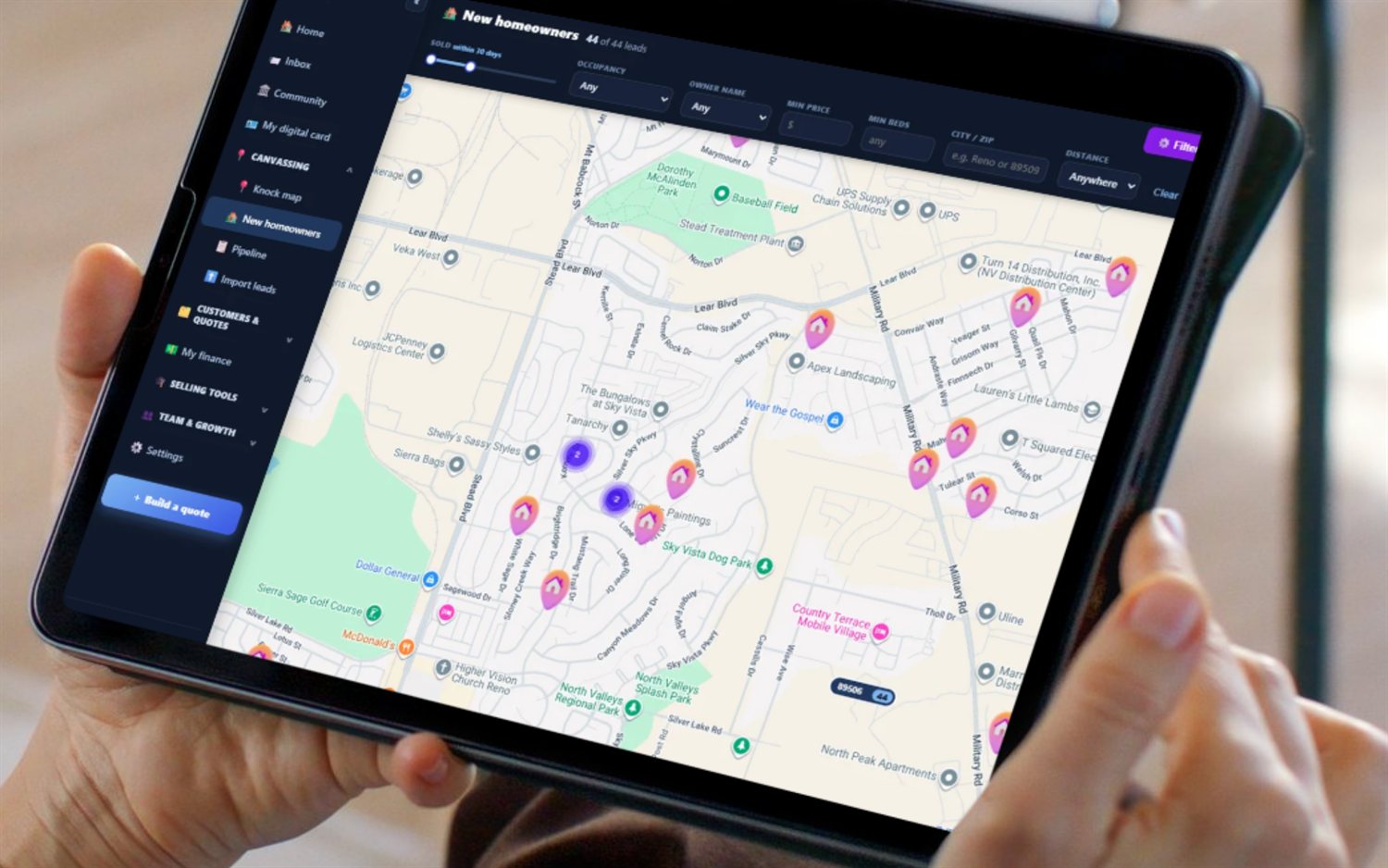
Pull just-sold homes and other fresh leads onto the map and build a route so a canvasser walks the block in order instead of driving in circles between the good doors.
See the crew live and know a door was actually knocked. In a trade where one canvasser can cover 80 houses a day, attribution matters — especially when a set turns into a system four months later.
HVAC’s buying trigger arrives months after your knock. Leave a scannable card at every no-answer so the panicked August search starts with your name instead of a Google ad.
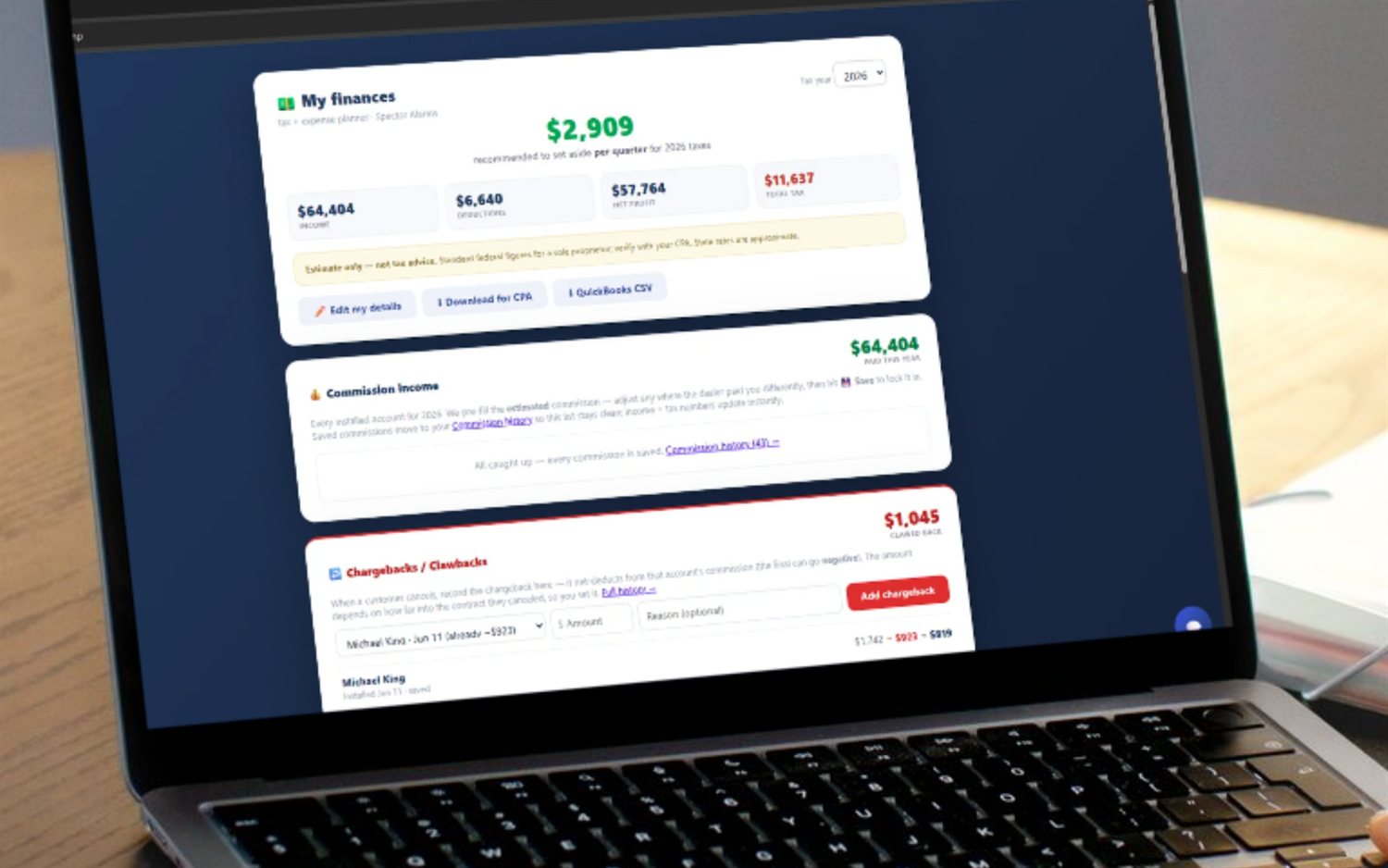
Per-set fees, membership spiffs, IAQ add-ons and system commission in one place, with chargebacks netted out, mileage captured at the IRS rate, and a quarterly tax set-aside building all season.
System sizing and the proposal live in software built for them, and that software is better at it than anything a canvassing app would bolt on. HVAC has real engineering and a real back office behind it. Here is the split, plainly:
Almost every HVAC canvass is one of these. They want different seasons, different pins and different pay.
Spring and fall, ahead of the peak. You are not selling a system, you are selling a seasonal check for a modest fee — or a maintenance membership — and the real product is a technician standing next to the equipment. Pins: tune-up booked, plan sold, callback. Pay is usually a flat per-booking spiff plus a bonus if it turns into a job.
You are hunting equipment at end of life and setting a free in-home comfort assessment for a comfort advisor. Pins describe the outdoor unit and the house. Pay is a set fee, plus a much larger bonus or percentage when the system actually installs — which can be weeks later, which is exactly why it needs tracking.
The reason both belong on the same map is that they feed each other. A tune-up you booked in April becomes a red-tagged heat exchanger in November, and the door you dispositioned system 15+ years last spring is the one you call first when the utility opens a heat-pump rebate window. Nothing gets lost between the two because nothing ever left the map. Full playbook: how to sell HVAC door to door.
A roofer reads the roof from the street. An HVAC canvasser reads the outdoor unit — and unlike a roof, it usually has a rating plate on it with a serial number that encodes when it was built. Log what you saw and your territory turns into a database no competitor has:
One caution worth putting in your training: read what is visible from the street, driveway or an open side yard. Do not walk a fenced back yard to find a data plate without asking first.
From an aging subdivision to a spiff you can actually verify got paid.
Draw the subdivision built 12 to 20 years ago, load the doors inside it, and build a walking route. Import a list from a CSV or your company’s CRM and the addresses geocode themselves.
Every door gets a disposition — including the no-answers, which get a QR card. Interested doors get a booked tune-up or a set assessment with both decision-makers home.
The job gets created and run in your FSM platform. The load calc and the proposal happen where they should. Your door keeps its history on the map.
Sets, installs, spiffs and chargebacks all land against the right door, mileage logs itself, taxes get set aside, and the leaderboard sorts out who is really working.
Canvassing apps stop at the map and hand your money back to a spreadsheet. HVAC comp is messier than most: a per-set fee now, a membership spiff, an add-on spiff, a percentage of the system weeks later, and a season where half your income arrives in two months. FieldStacker keeps all of it in the same app:
The just-sold lead source matters to HVAC for a reason that has nothing to do with new construction. Someone who just closed on a house built in 2004 has three things no other door has: a home inspection report that almost certainly flagged the age of the equipment, a mental list of everything they intend to fix, and a spending window that closes within about a year of move-in. Filter for recent sales inside your older subdivisions and you are knocking the warmest HVAC doors in the metro.
Plenty of HVAC canvassers also knock solar, roofing or alarms — and a lot of doors are open to more than one.
Heat-pump and electrification conversations sit right next to a utility-bill pitch. Solar CRM →
The alarm edition is FieldStacker Security, on the same backend — nothing lives in two apps. All industries →
Yes for the canvassing and the rep money side. The knock map, custom dispositions, drawn territories, GPS-verified team knocks, route building, leaderboard, in-app messaging and 1099 financials are all vertical-agnostic and work for an HVAC canvass crew today. Equipment sizing and the system proposal stay where they belong — Manual J load calculations, AHRI matched-system lookups and good-better-best presentations live in the tools built for them. FieldStacker runs the street; your HVAC stack runs the job.
No, and you should not want it to. Those are field service management platforms — dispatch boards, price books, job costing, membership billing, invoicing and install scheduling. FieldStacker sits in front of that, on the street, where none of those tools were designed to live. The canvasser books the tune-up or sets the comfort assessment at the door in FieldStacker, and the job itself gets created and run in your FSM platform. Two tools, one clean handoff, no overlap.
No — those stay in the software built for them. Manual J load calculations, Manual S equipment selection and Manual D duct design are an engineering discipline with real software behind them — Wrightsoft, Elite RHVAC, CoolCalc or your distributor's design desk. Good-better-best proposals with financing options belong in ServiceTitan Sales Pro, Housecall Pro or your OEM dealer portal. FieldStacker's built-in quote builder is alarm-native today, so pricing a 4-ton heat pump changeout stays with them. We would rather be genuinely useful in one lane than vague in five.
Those are the two real HVAC door motions and it handles both, because the dispositions are yours to name. A shoulder-season tune-up canvass runs on stages like tune-up booked, assessment set, callback and not home. A replacement canvass runs on what you actually saw in the side yard — system 15+ years, R-22 unit, window units so no ductwork, recently replaced, or on a competitor's plan with the renewal month noted. Same map, same crew, different pin colors and a different territory.
Yes, and HVAC needs it more than most trades because the pay is layered — a percentage of revenue or gross profit on the system, a flat spiff per membership or IAQ add-on, and a set fee for the canvasser who found the door. Log the deal, see your real commission on your own splits, and net out chargebacks when a customer cancels inside the three-day window, financing falls through or a job blows its install budget on a gross-profit plan. Mileage captures automatically at the IRS rate and a quarterly tax set-aside builds as you go.
Those are capable canvassing platforms, but they are seat-based, usually sold to teams with an annual commitment, and they hand your personal commission, spiffs, mileage and 1099 taxes back to a spreadsheet. FieldStacker is flat month-to-month from $30/mo with a 14-day free trial, no credit card, no seat minimums and no annual contract, and the rep's money lives in the same app as the map. Check their sites for current pricing — it moves. Built for the one-truck canvasser first, then it scales to the crew.
Real openers and the objection branches this trade actually gets. HVAC door-to-door scripts →
Draw an area on the map and one pull reveals up to 500 homeowners at once — the owner’s name, mailing address, whether they live there or it’s likely a rental, and their estimated age. Every plan with the owner reveal includes 50 pulls a month — that’s up to 25,000 homeowners of rich data every month. Run out and $10 adds another 50 (about 20¢ a pull).
Start a 14-day free trial — no credit card — and walk your first build-year territory with real pins instead of a clipboard. Flat month-to-month, cancel anytime.