HVAC · field guide

How to sell HVAC door to door

Pick the block by build year, read the outdoor unit from the driveway, knock the right season with the right message, and set appointments that actually sit. The whole motion, start to finish.

Flat month-to-month from $30/mo · 14-day free trial · no seat minimums, no annual contract

The mental model: you are not selling a system at the door. You are buying position for a failure that has not happened yet. Everything below — territory, season, pitch, follow-up — is in service of being the name already in the house on the day the unit quits. Reps who try to close a changeout on a porch fail; reps who accumulate position win the neighborhood for a decade.

HVAC breaks the standard door-to-door playbook in one specific way: there is no visible problem. A roofer points at hail damage. A solar rep points at a power bill. You are asking somebody to think about a machine in the side yard that is, at this exact moment, working. That means urgency has to come from timing and age, not from pain — and it means the thing you are closing for is an appointment, not a signature.

The good news is that HVAC rewards patience better than almost any trade. The equipment on a given street has a knowable, finite life. Nobody declines to replace a dead furnace in January. If you build a real record of what is out there and stay in front of it, the neighborhood pays you out over years rather than in a single storm cycle.

Step 1 — pick territory by build year, not by radius

This is the highest-leverage decision in HVAC canvassing and most crews get it wrong on day one.

🎯

Target: built 12–20 years ago

Equipment installed with the house is at or past its expected service life. Better still, a subdivision built inside one two-year window has systems that age out together — one failure on the block is a signal about every house on it.

🚫

Skip: new construction

Everything is under warranty and the builder’s contractor already owns the relationship. Beautiful streets, zero HVAC opportunity, and canvassers love them because the doors are easy. Do not let the crew live there.

🏢

Skip: renter-dense blocks

The person answering cannot buy. Not worthless — capture the owner or management company and disposition the door — but it is a different, slower play and should never be your primary route.

🔑

Overlay: recent home sales

Filter for just-sold homes inside your older subdivisions. That homeowner has an inspection report that flagged the equipment, a fix-the-house list, and a spending window that closes about a year after move-in.

🌡️

Overlay: climate stress

Within a metro, the blocks that run their equipment hardest fail first — full-sun exposure, older single-pane housing stock, homes with obvious additions the original system was never sized for.

🗺️

Then draw it and assign it

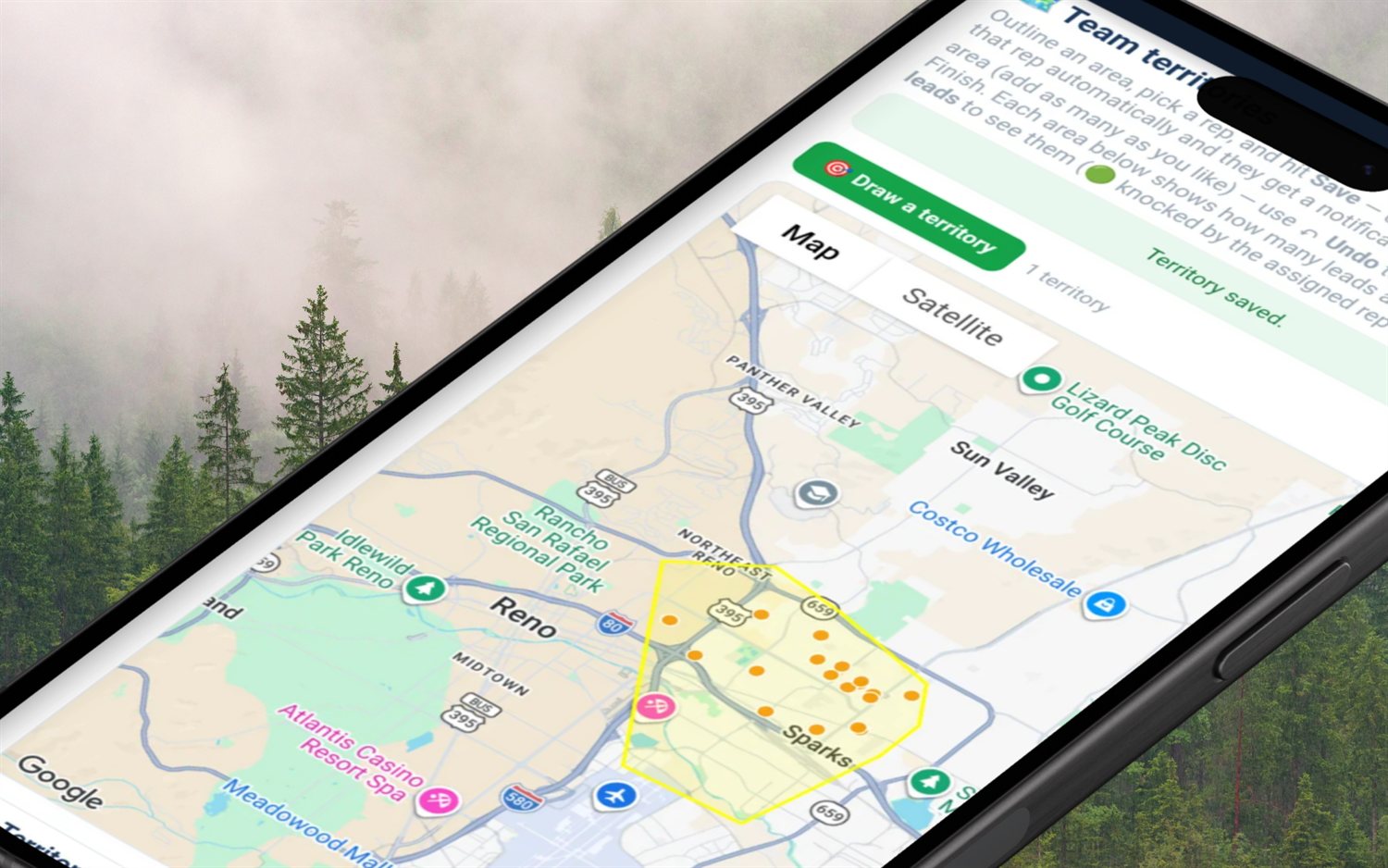
Trace the subdivision boundary, assign it to one canvasser, and keep everyone else out of it. Overlapping crews in HVAC is worse than in most trades because the same door gets re-pitched months apart and remembers.

See how territories work →

Step 2

Learn to read the outdoor unit from the driveway

This is the HVAC canvasser’s real skill, and it is the closest thing this trade has to a roofer spotting hail. Unlike a roof, the outdoor condenser or heat pump usually sits in plain view — and it tells you most of what you need before you knock.

  • Age. The rating plate carries a serial number that encodes the build date on most brands, though the decode differs by manufacturer. Learn the two or three brands common in your market and you can date half a street from the sidewalk.
  • Refrigerant. An R-22 system is a genuine conversation — it has not been produced or imported in the US since 2020, so only reclaimed supply remains and pricing moves. Check current supply and cost before you say anything specific about it.
  • Condition. Rust at the base, a crushed or bent coil, a unit sitting in a flowerbed with no clearance, insulation stripped off the line set.
  • Mismatch. A new-looking outdoor unit with an obviously ancient furnace, or vice versa. Half a system replaced is a strong lead for the other half.
  • Window units or wall shakers. No ductwork, or ductwork that never reached those rooms — that is a ductless mini-split conversation, not a changeout.

Two rules that matter more than any of the above: read only what is visible from the street, driveway or an open side yard — never walk a fenced back yard uninvited. And never touch, open or diagnose the equipment. You are a canvasser, not the license holder. Observe, ask, set the appointment.
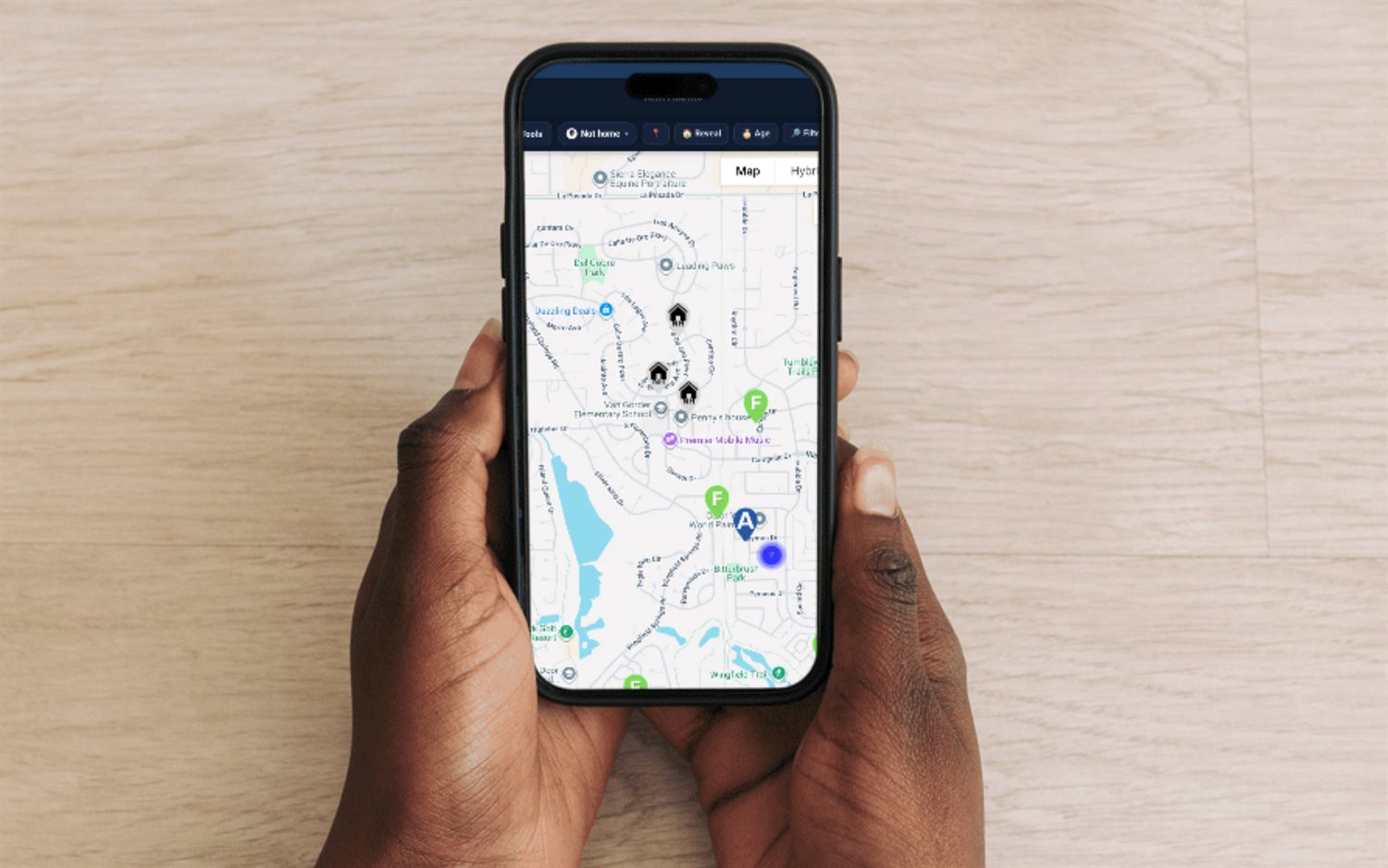
FieldStacker knock map with color-coded dispositions recording the age and condition of HVAC equipment across a subdivision

Step 3 — the season decides the message

HVAC is twice-peaked. Using the wrong season’s pitch is the fastest way to sound like a script.

1

Spring shoulder (~Mar–May)

Sell: cooling tune-ups and memberships. The board is open, homeowners are receptive, and every tune-up puts a technician next to the equipment. This is the highest-value canvassing window of the year.

2

Summer peak (~Jun–Aug)

Sell: urgency and capacity. Units are failing on your street, the dispatch board is full. Catch the no-cool calls before they Google someone. Do not push maintenance the company cannot schedule.

3

Fall shoulder (~Sep–Nov)

Sell: heating checks, safety and memberships. Combustion safety is a legitimate, non-manipulative reason to get inside before the first cold snap. Second-best window of the year.

4

Winter peak (~Dec–Feb)

Sell: failures and comfort complaints. Cold rooms, systems that run constantly, red-tagged furnaces. Emergency replacement closes fast, and the block ages together — one failure means several.

The shoulder seasons are the ones that pay for themselves. That is counterintuitive to reps coming from storm trades, who assume you canvass hardest when demand is highest. In HVAC, peak season is when the company cannot absorb what you bring — the shoulder is when a booked tune-up actually gets scheduled, actually gets a technician inside, and actually turns into a replacement.

Step 4 — the daily plan

The territory and the season do the strategic work. The day is about density and timing.

  • Route the block, do not wander it. Build the walking route before you start. A canvasser who drives between good doors loses an hour a day and does not notice.
  • Knock when both people are home. HVAC needs two decision-makers, which pushes your best hours to weekday evenings and Saturday mornings. A perfect pitch to one spouse at 1pm is a wasted door.
  • In summer, work late afternoon. You can hear whether the condenser is running and how hard, and homeowners are actively thinking about the temperature in the house.
  • Expect 60–100 doors on a full shift, with roughly a quarter to a third answering. Those numbers move with density, weather and season — track your own rather than trusting anyone’s average.
  • Disposition every door, including the no-answers. In HVAC a no-answer is not a wasted knock, it is a record of a house whose equipment you already assessed from the driveway.
  • Leave something scannable. A QR business card at a no-answer costs you nothing and works months later, on the day the unit fails, which is exactly when this trade converts.

For the exact language at each of these doors — the seasonal openers, the discovery question and the objection branches — go to the HVAC door-to-door scripts. The short version: give a specific, true reason for being on their street, then ask whether any room in the house never gets comfortable.

Step 5 — close for the sit, and protect it

Your deliverable is an appointment with both decision-makers present. Nothing else counts, and the industry wastes enormous amounts of comfort-advisor time on appointments that were never real.

  • Two options, not a yes/no. "Thursday at six or Saturday at ten — which is easier for you both?"
  • Name the second person out loud and get them confirmed by the homeowner, not assumed by you.
  • Set expectations honestly: about an hour, no charge, no obligation, and they may well be told they have years of life left.
  • Never quote a system price to protect the set. A number invented on a porch either kills the appointment or makes your advisor a liar. Trade the number for the sit.
  • Confirm the day before. A confirmation text or call is the single cheapest improvement to sit rate available to any crew.

Step 6 — the follow-up engine is the actual business

Here is what separates an HVAC canvasser who makes a living from one who quits in November. In this trade the "no" is almost always a "not yet" with a date attached, and the date is usually a season away. Your territory is not a list of doors you burned — it is an appreciating asset, if you record it properly.

  • Seasonal go-backs. "I stopped by in the spring and asked about the room over your garage — did that ever get sorted?" You remembered. Nobody else did.
  • Competitor renewal months. When a homeowner says they are on a plan with someone else, get the renewal month and knock the month before. That is a scheduled lead, not a lost door.
  • Age-band callbacks. The door you tagged system 12 years two years ago is now a 14-year door. Let it come due on its own.
  • Failure sweeps. When one unit on a block dies, re-knock the neighbours the same week. The equipment is the same age and the proof is sitting in a driveway two houses down.
  • Post-install sweeps. After your crew installs on a street, work both directions from that house while the truck is still there.

All five depend entirely on the door remembering what happened last time — which is a tooling problem, not a discipline problem. Nobody remembers 400 conversations across two seasons.

Stay clean — the compliance bits reps skip

HVAC and energy canvassing has a reputation problem. Being visibly the exception is a competitive advantage.

🪪

Say you are not the utility

Volunteer it before they ask. Impersonating a utility is a real problem in this space and homeowners have been burned. Lead with your company name and something scannable.

📜

Permits and no-knock lists

Many cities require a solicitor’s permit, some maintain no-knock registries you must honor, and HOAs frequently ban soliciting. Check locally before the crew walks — enforcement varies by jurisdiction.

The three-day cancellation right

Sales made at a customer’s home are generally covered by a federal cooling-off rule giving three business days to cancel, with state rules layered on top. Know it, disclose it properly, and expect it to affect your commission timing. Confirm current rules with your company.

🎁

Do not promise rebates or tax credits

Utility rebates and federal efficiency credits change, and eligibility depends on the specific equipment and the customer’s situation. Say they may qualify and that the assessment will confirm it. Never quote an amount on a porch.

🔧

Do not diagnose

The contractor license is the company’s. Do not open a panel, do not touch the equipment, and do not tell someone what is wrong with their system. You observe and you set the appointment.

🚧

Respect the property line

Read what is visible from the street, driveway or an open side yard. Walking a fenced back yard to find a data plate is how a canvasser becomes a police call and a one-star review.

The numbers to track

Track five, not fifteen. In order, because each one diagnoses the step before it.

  1. Doors knocked — effort. If everything else is broken, check this first.
  2. Contact rate — are you knocking at hours when people are home? If this is low, the problem is your schedule, not your pitch.
  3. Sets per contact — is your opener and discovery working? This is the number your scripts move.
  4. Sit rate — the percentage of sets that actually happen with both decision-makers present. The most under-tracked metric in HVAC canvassing and the one your comfort advisors care about most.
  5. Installs per hundred doors — the only number that ties the street to revenue. Slow to accumulate, because the install can be weeks after the knock. Worth waiting for.

A canvasser with a great set rate and a terrible sit rate is not a good canvasser — they are setting appointments to hit a number, and the company will figure it out by the second month. Measure the sit.

FieldStacker territory tool with a subdivision traced and assigned to a single HVAC canvasser
The tooling

None of this survives on a clipboard

A build-year territory, an equipment survey of 400 doors, a callback due in eight months and a spiff that pays six weeks after the knock — that is a database, not a notebook. FieldStacker runs the street side of it:

  • Drawn territories assigned per canvasser, with GPS-verified knocks so coverage is real
  • Custom dispositions that describe equipment, plus routes so the block gets walked in order
  • Seasonal callbacks and go-backs that come due on their own
  • Lead import from a CSV or another CRM, with addresses geocoded automatically
  • A free digital business card with a QR code for every no-answer
  • Commission, spiffs, chargebacks, IRS-rate mileage and a 1099 tax set-aside
  • Works offline, because half these subdivisions have no signal

Your load calculations, proposals and dispatch board stay in the HVAC stack you already run; FieldStacker works the street around them. The HVAC CRM page maps exactly where that line sits.

See flat pricing →

HVAC canvassing questions, answered straight

Is door-to-door still worth it for HVAC?

Yes, but not for the reason most people assume. You are almost never closing a system on the porch — the value is that HVAC demand is triggered by a failure that has not happened yet, and canvassing is the cheapest way to be the name already in the house when it does. It is also the only way a comfort advisor escapes the ceiling set by the service department's lead flow. Companies that canvass in the shoulder seasons have a calendar in the peak; companies that only wait for the phone are at the mercy of the weather.

What is the best neighborhood for HVAC canvassing?

A subdivision built roughly 12 to 20 years ago, where the whole street went up inside the same two-year window. That matters because the original equipment was installed at the same time and is aging out together — when one condenser fails, the block is genuinely due. Skip new construction, where everything is under warranty, and skip anything dense with renters, where the person answering the door cannot buy. The other high-value overlay is recent home sales inside those older subdivisions: a new owner of an older house just read an inspection report that flagged the equipment.

What is the best time of year to canvass HVAC?

The shoulder seasons — roughly March through May and September through November — are where canvassing earns its keep. Those are the months when the company can actually fit tune-ups in, when homeowners are willing to think about the system before they need it, and when the sales calendar is otherwise thin. Peak summer and winter are different work entirely: the message shifts from prevention to capacity and urgency, and the canvasser's job becomes catching failures on the street rather than booking maintenance. Both are productive. They are just not the same canvass.

How many doors does an HVAC canvasser knock in a day?

A full shift on a tight residential route commonly runs somewhere in the range of 60 to 100 doors, with roughly a quarter to a third answering, and a productive canvasser converting a handful of those conversations into booked tune-ups or set assessments. Those numbers vary hugely by density, season, weather and time of day. The number that matters more than doors is your sit rate — the percentage of appointments you set that actually happen with both decision-makers present — because a set that does not sit costs the company a comfort advisor's afternoon and pays you nothing.

Do I need a permit or license to canvass for HVAC?

Very possibly for the permit, and you should check before you knock. Many municipalities require a solicitor's or peddler's permit, some maintain no-knock registries you are legally required to honor, and plenty of HOAs prohibit soliciting outright. Ask your company what they carry and verify locally — enforcement varies and a citation on a canvasser reflects on the contractor. As for licensing: the HVAC contractor license belongs to the company, not to you. Do not diagnose equipment, do not touch or open a unit, and do not tell a homeowner what is wrong with their system. Observe, ask, and set the appointment.

Should I offer a tune-up or a free assessment at the door?

It depends on what your company actually needs and what season you are in. A paid seasonal tune-up gets a technician physically next to the equipment, which is the single highest-converting path to a replacement lead, and it filters out people who are not serious. A free comfort assessment is easier to give away and better in peak season or on an obviously aging system, but it attracts tire-kickers and burns advisor time when it is offered indiscriminately. Many strong crews lead with the tune-up in the shoulder and the free assessment when the outdoor unit is visibly at end of life.

The rest of the HVAC set

🗣️

Scripts

Seasonal openers and every objection branch. HVAC door-to-door scripts →

💵

Commission

Set fees, gross-profit plans, clawbacks. HVAC sales commission →

📊

Income

What it adds up to in a real year. How much HVAC reps make →

🗺️

The map

Territories, pins and routes. Knock map →

🏭

Other trades

Solar, roofing, pest, fiber, alarms. All industries →

🔑

Fresh leads

New owners of older houses. New-homeowner leads →

Own a neighborhood instead of knocking one

Draw your first build-year territory, record what is actually in every side yard, and let the seasonal go-backs come due on their own. 14-day free trial, no credit card.