Tree service · rep money

Tree service sales commission, explained honestly

The percentage is the least important part of your comp plan. What it is a percentage of, when it pays, and what gets taken back are what decide your year.

Flat month-to-month from $30/mo · 14-day free trial · no seat minimums, no annual contract

Ranges, not promises. Everything below is typical of what tree companies pay and varies enormously by market, company size, storm exposure and whether you carry a base. No two shops in the same city pay the same way. Use these as questions to ask, not numbers to expect.

Three numbers decide your comp plan, and the percentage is the third

New tree sales reps compare offers by percentage, which is exactly backwards. A 6% plan and a 12% plan can pay identically, or the 6% can pay more, depending on two things nobody puts in the job posting: the basis — the pool the percentage comes out of — and the trigger — the event that makes the money yours. Get those two straight and the percentage becomes easy to evaluate.

The basis is usually one of three things: total invoiced revenue, revenue net of certain pass-through costs, or gross profit after direct job costs. The trigger is usually one of three too: signed, produced, or collected. In tree service, that gap matters more than in almost any other trade, because a job sold in March in a healthy market may not be produced until May and not collected until June. A "12% paid on collections" offer and a "12% paid on signing" offer are not the same job.

The five plans you will actually be offered

Most tree companies run one of these, or a blend of two.

📄

Percent of sold revenue

The most common plan for a straight-commission sales arborist. You get a cut of the invoice on jobs you sell and produce. Simple to understand, easy to track, and the plan most likely to have a hard clawback attached — because the company carries all the risk that the job costs more than you said it would.

📈

Percent of gross profit

Paid on what is left after crew hours, equipment, disposal and any subbed crane time. The headline rate is higher because the pool is smaller. Aligns you with the business and punishes lazy discounting — but ask precisely which costs are loaded in and whether overhead is included, because that is where these plans get quietly stingy.

🏦

Base plus commission

Common for W-2 sales arborists, especially where a truck and a phone come with the job. Base covers the slow stretch and the weather weeks; the commission rate drops accordingly, often into the mid single digits. Ask whether the base is a true salary or a recoverable draw — a draw you have to earn back is a loan, not a floor.

🪜

Tiered by monthly production

Your rate steps up once you clear a monthly or quarterly revenue threshold — for example a lower rate to the first tier, a better rate above it. Great for a high producer, brutal in February. Ask whether tiers reset monthly, quarterly or annually. Annual tiers reward a whole good year; monthly tiers punish one bad ice week.

🎯

Setter / canvasser fee

If you knock but do not close, you are usually paid a flat fee per qualified estimate booked, sometimes plus a small percentage of anything that sells, or an hourly rate against that. The whole plan hinges on the definition of "qualified" — get it in writing, in specifics, before your first shift.

🌿

PHC renewal commission

The nearest thing tree care has to residual income. Plant health care programs renew every season, so a book you build compounds. Some shops pay a smaller renewal rate on that book, some pay year one only. Nobody volunteers the answer — ask.

The basis, side by side

Same $6,000 removal, three plans. The numbers below are illustrative arithmetic, not a claim about what any company pays.

PlanWhat it is paid onRough effectWhere it bites
Percent of revenueThe full $6,000 invoiceA mid-single-digit to low-teens rate on the whole ticketYou get paid the same whether the crew took 8 hours or 16 — until the clawback for the overrun lands
Percent of gross profitThe $6,000 minus crew, equipment, disposalA visibly higher rate on a much smaller poolA discount you give to win the job comes almost entirely out of your own pocket
Base plus commissionSalary, plus a lower rate on the invoiceLower ceiling, much steadier floorIf the base is a recoverable draw, a slow month is debt, not a cushion

The pattern is consistent: the more risk the plan hands you, the higher the rate. That is not a trick — it is the trade. What matters is knowing which one you signed, because the sales behaviour that wins on a gross-profit plan (bid it properly, walk away from the impossible access job) is different from the behaviour that wins on a revenue plan (sell volume). Reps get frustrated when they are running the wrong playbook for their own comp plan.

What gets clawed back

Tree clawbacks are operational, not contractual. They come from the job going sideways, not from a customer cancelling a subscription.

⏱️

The overrun

You bid eight crew-hours, the rear-yard access turned out to be a 36-inch gate and it took fourteen. Many plans recalculate commission against actual cost, or split the overage with you. This is the number one reason tree reps lose money they thought they had earned.

The cancel

Sold, scheduled, never produced — the homeowner got a cheaper bid, the permit was denied, or the tree came down on its own in the meantime. Commission on unproduced work almost always reverses. Ask whether a deposit protects any of it.

🧾

The unpaid invoice

The job got done and the customer went quiet. On paid-on-sold plans this reverses when the invoice ages out or goes to collections. On paid-on-collected plans you simply never see it. Either way, how you handle the deposit conversation at the door is your own money talking.

🗣️

The verbal promise

"Yeah, of course we will grind the stump." "Sure, we will take the wood." If it is not on the estimate, it comes out of the job margin, and on most plans a chunk of that lands on you. Write the scope. Every time.

🚧

The damage claim

Ruts across a lawn, a crushed irrigation head, a fence panel nobody agreed to remove. Some plans charge a share of small claims back to the rep who planned the access. Ask where that line is drawn and whether there is a cap.

🕳️

The silent one: unbilled extras

Not a clawback exactly, but it eats the same money. Work the crew performs that never got added to the invoice because nobody told the office. Chase your own change orders — nobody else is paid to.

When it actually hits your account

This is the part that surprises reps coming from solar or alarms, where funding events are the whole conversation. In tree service the lag is operational. A job sells on a Tuesday in April. It is scheduled behind a five-week backlog because your crews are booked. It is produced in late May. The invoice goes out, the customer pays in two weeks, and the commission appears on the pay cycle after that. That is a sale in April and money in mid-June.

In storm season the lag stretches further, because everyone sells more than the crews can produce and the backlog balloons. In the dormant stretch it collapses, because the crews are hungry and the job you sell Monday may be produced Thursday. A tree sales rep with no cushion feels both of those swings hard, and the fix is boring: know your trigger, know your backlog, and set money aside during the fat months. If you are 1099 there is a second layer — read 1099 taxes for D2D reps before you spend a commission that was never fully yours.

Fourteen questions to ask before you sign

Print these. Ask them out loud. A good company answers every one without flinching, and the ones that get cagey have told you something.

  • Is my commission paid on revenue, revenue net of costs, or gross profit?
  • If gross profit — exactly which costs are subtracted, and is any overhead loaded in?
  • Is it earned when signed, when produced, or when collected?
  • What is the current average backlog between sold and produced?
  • Is the base a salary or a recoverable draw?
  • Do tiers reset monthly, quarterly or annually?
  • What happens to my commission when a job overruns the bid?
  • Is there a cap on how much a single overrun can cost me?
  • Who owns the estimate if a job is reassigned to another rep?
  • Do I get paid on work the crew adds on site that I did not sell?
  • Is there any commission on plant health care renewals?
  • Am I W-2 or 1099, and is a vehicle or mileage reimbursement included?
  • Do I get credit for inbound calls in my territory, or only doors I knock?
  • Can I see a real pay statement from a rep at my level, with the name removed?

That last one separates the shops that are proud of their comp plan from the ones that are hoping you do not do the math.

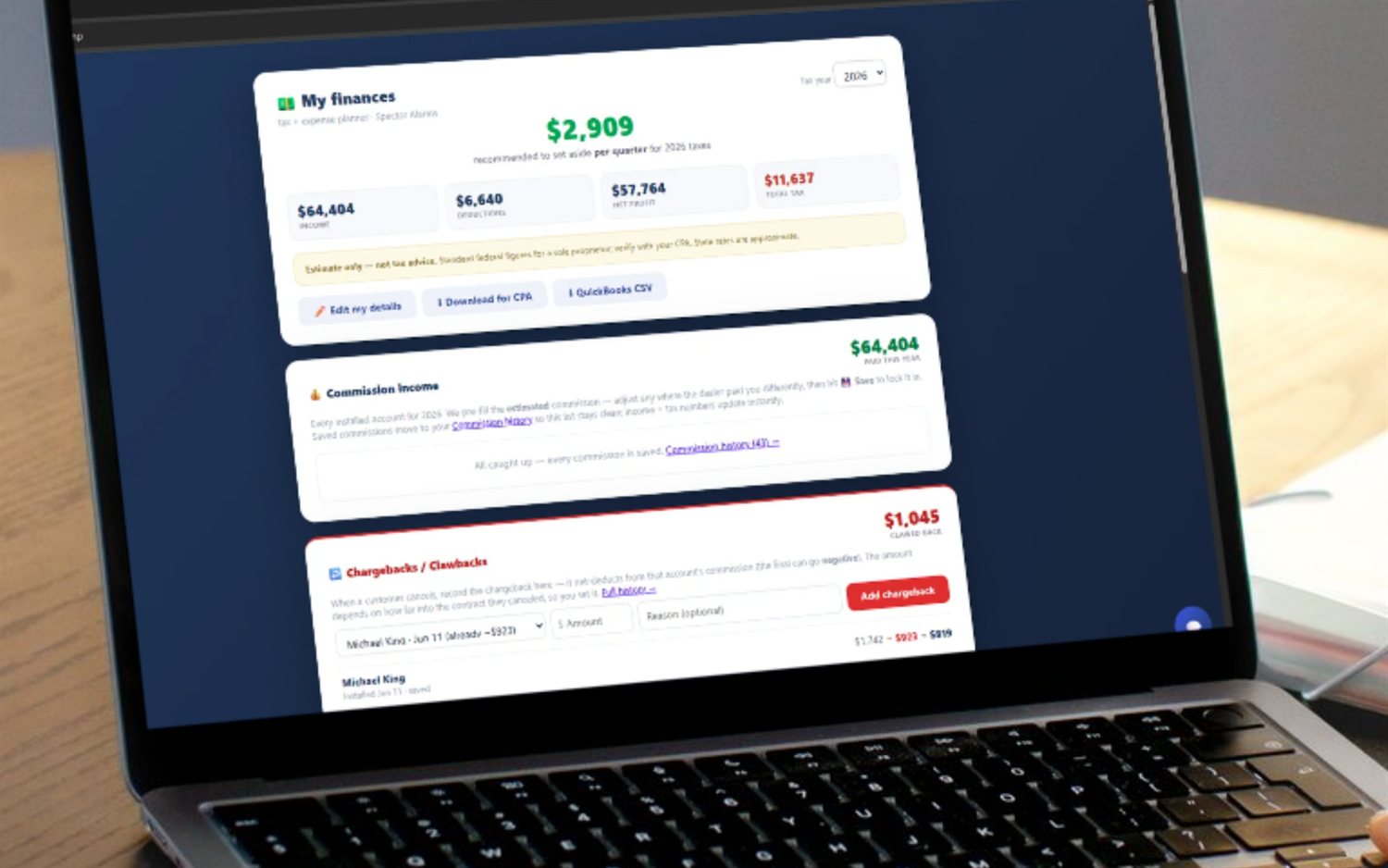
FieldStacker rep financials showing per-job tree service commission with clawbacks netted against the running total, mileage and a quarterly tax set-aside
Track it yourself

Never take the pay stub's word for it

Reps who track their own numbers in parallel catch missed jobs, wrong rates and clawbacks that should not have been applied. Reps who do not, find out in December. FieldStacker keeps the rep side of the money in the same app you canvass in:

  • Per-job commission on your own rate and basis
  • Clawbacks netted against your running total, so the number is the real one
  • Automatic mileage at the IRS rate — six estimates across a county is a real deduction
  • A quarterly tax set-aside if you are 1099
  • Every sold job tied back to the door you knocked to get it

See the tree service CRM →   Flat pricing →

The rest of the series

💰

What tree reps make

Honest ranges, first year versus experienced, and the ceiling nobody warns you about. See the numbers →

🗣️

Tree service D2D scripts

Curb-evidence openers and every objection you will actually hear. Read the scripts →

🧭

Sell tree service door to door

Territory, season, the pitch, the close and the follow-up. Field guide →

🗺️

The knock map

Territories, dispositions and go-backs for the whole crew. See the map → · All industries →

Commission questions, answered straight

What is a typical tree service sales commission percentage?

It varies more than most trades, and the percentage alone tells you almost nothing until you know what it is a percentage of. Straight-commission sales arborists and canvassing closers commonly land somewhere in the high single digits to low teens on sold revenue, while reps carrying a base salary usually sit lower, often in the mid single digits, because the company is already paying them whether they sell or not. Plans paid on gross profit rather than revenue carry a higher headline rate because the pool is smaller. Treat every number you hear as typical, not standard: two companies quoting the same percentage can pay very differently once you know the basis, the timing and the clawback rules.

Am I paid on the sold price or what the company actually collects?

Ask this in the interview, because it is the biggest single difference between two plans that look identical on paper. Paid-on-sold means the commission is earned when the customer signs, which is great for cash flow and terrible for the company when invoices go unpaid — so those plans almost always come with a clawback if the money never arrives. Paid-on-collected means you get paid after the job is produced and the invoice clears, which in tree service can be weeks after the handshake. Neither is wrong, but they produce very different first months, and reps who assume the first and get the second end up borrowing to cover rent.

What is a gross-profit or margin-based commission plan?

Instead of paying you a percentage of the invoice, the company pays a percentage of what is left after direct job costs — crew hours, equipment time, disposal, sometimes subcontracted crane time. The rate looks generous compared to a revenue plan because the pool it draws from is much smaller. The honest upside is that it aligns you with the business: bidding a job properly makes you money, and discounting to win it costs you directly. The honest downside is that you inherit costs you may not control, so ask exactly which costs are loaded in, whether overhead is included, and who eats it when a crew has a bad day.

What gets clawed back in tree service sales?

Not monitoring cancellations like alarms — the clawbacks here are operational. The four common ones: the job is cancelled before production; the customer never pays and the invoice ends up in collections; you underbid and the crew burns far more hours than the estimate assumed, so commission is recalculated on actual cost or you eat part of the overage; and scope you promised verbally that never made it onto the estimate, such as stump grinding, full haul-away or fence removal, which comes out of the job margin and often out of your number. Some companies also charge back on damage claims traceable to a bad access plan. Get every one of these in writing before you sign.

Is there any recurring commission in tree service?

There is no true RMR the way alarms have it, but plant health care is the closest thing. PHC programs — seasonal treatment plans, deep-root fertilization, borer and disease injections on a multi-year cycle — renew annually, and a company that sells them well builds a book that comes back every year. Some employers pay a smaller renewal commission on that book, some pay first-year only and keep the renewals, and plenty have never thought about it. It is worth asking about specifically, because a PHC book is the only part of a tree sales job that compounds. If you are also handling applications, note that your state very likely has record-keeping requirements for that work which live in your company system, not a sales app.

How do I track my own tree service commissions accurately?

Track it yourself, in parallel, at the moment the job sells — not from the pay stub. Log the sold amount, your basis and rate, and the date it was produced, then net every clawback against your running total as it lands so the number you see is what you will actually bank. If you are 1099, add automatic mileage capture at the IRS rate and a quarterly tax set-aside, because a day of six estimates across a county is a real deduction that disappears if you reconstruct it in April. FieldStacker keeps all of that in the same app you canvass in, so you are not maintaining a spreadsheet you stop updating in week three.
Know what you earned before payday tells you

Track every sold job, every clawback and every mile in the same app you knock with. 14-day free trial, no credit card, flat month-to-month.