Guide · tree service scripts

Door-to-door tree service scripts that start at the tree

Openers built on what you can see from the curb, the crew-on-the-block knock, storm triage, and the exact objections tree reps hear — with the words that answer them.

Flat month-to-month from $30/mo · 14-day free trial · no seat minimums, no annual contract

The short version: every other trade has to create the problem in the homeowner's head. You can point at it. So the tree script inverts the usual structure — the evidence comes first, your company comes second, and the whole goal of the doorstep is to get them off the porch and standing under the tree with you. Once you are both looking up, you are not a salesman anymore, you are the guy who knows what that crack means.

Why generic D2D scripts fail at a tree door

The standard door-to-door framework assumes the homeowner does not know they have a need. That is true for solar, alarms and pest control. It is not true here. Half the people you knock have already looked at that limb over the bedroom and thought "I should really do something about that," and a good number have already had one guy out and never called him back. You are not creating demand. You are converting a long-postponed intention into a scheduled job.

That means two things for your script. First, the credibility bar is higher and the persuasion bar is lower — say something about their tree that a random salesman could not have said, and you are instantly a different category of visitor. Second, the price question comes early and hard. In most trades price is an objection at the end; in tree work it is frequently the homeowner's first sentence. Your script has to survive being interrupted before it starts.

The four beats of a tree knock

Every good tree opener runs the same shape, and it is shorter than the five-beat framework used in general D2D scripts, because the evidence does the work the interrupt normally has to do.

  • Observation — one specific, true thing about their tree, said before you say your name.
  • Placement — why you are physically on this street today: the job at 412, the storm, the ash on the block.
  • Invitation — get them off the porch. "Walk out here with me for two minutes" is the actual ask, not "can I tell you about our services."
  • Next step — a walked tree, a written scope, and a date. Never end on "here is my card."

Six openers, word for word

Steal the shape, say it in your own mouth. If it does not sound like you, it will not survive the third door.

👀

The curb-evidence opener

"Hey — sorry to bug you. I do tree work, I am on the corner today, and I could not help noticing the ash out front. The top third has no leaves on it and the bark is coming off in strips on the south side. Can I show you something real quick? It will take two minutes."

🚚

The crew-is-here opener

"We have got the bucket and chipper on the block through Thursday for the two removals at 412. While everything is already set up, anything on your lot costs us a lot less to do than driving back out. Is there anything you have been meaning to get to?"

🪵

The dead-ash / pest opener

"Quick heads up — you have an ash in the parkway and the emerald ash borer has gone through this whole street. Yours still has leaves, which means you actually still have options. Once they go all the way dead they get brittle and the removal costs more. Want me to look at it?"

🌪️

The storm-triage opener

"I am going house to house on this street after last night. I am not here to sell you anything right this second — I am checking who has something actively unsafe. Do you have anything hung up in a canopy or leaning toward the house? Let me look before I go."

❄️

The dormant-season opener

"This is our slow stretch, so I am booking winter work at winter numbers. It is also genuinely the better time to prune most of these — no leaves means we can actually see the structure, and the ground is firm so we are not rutting your yard. Anything you were planning to do in the spring?"

🏘️

The neighbor-proof opener

"We took the two silver maples out at 118 last month — the ones that were over the driveway. Half this street has the same tree planted the same year, and yours is leaning the same direction. Mind if I take a look while I am here?"

One rule for all six: take a half step back from the door, look at the tree while you talk about it, and let your body language say "come out here" before your words do. A rep who is already turned toward the yard gets followed into it.

The transition: getting them under the tree

The doorstep is not where you sell tree work. Standing under the canopy is. Everything changes when you get a homeowner out to the root flare and start pointing: the mushroom conks at the base, the included bark in the union where two leaders split, the crack you can slide a pen into, the girdling root wrapped around the trunk, the hanger sitting forty feet up waiting for one gust. They have walked past that tree ten thousand times and never looked up. You are showing them their own property.

Say what you see, name it plainly, and be honest about severity. "This is going to fail this year" and "this has probably got a decade in it if we take weight off the west side" are both good answers, and the second one sells more work over time than pretending everything is an emergency. Reps who cry wolf get one job. Reps who tell someone their tree is fine get that street's phone number for a decade.

Then walk the whole job with them so the scope is not a surprise later: where the brush comes out, what gets driven on, whether the fence panel comes off, whether the stump is in and to what depth, and what the yard will look like when the crew leaves. That five-minute walk is also your clawback insurance — most commission that disappears in tree service disappears because the rep promised something at the curb that never made it into the number.

Every objection you will actually hear

These are the real sentences, not textbook ones. Handle them in your own words — but know which of the four things each one is really saying: I do not trust you, I do not want to spend it, I do not think it is my problem, or I am not the decision maker.

Objection branches

What they say → what it means → what you say next.

💬

"How much to take that one down?"

Means: I am pricing, not browsing. Do not guess. "Three things decide it — what is underneath, how we get the brush out, and whether that top comes down free or on ropes. Four minutes and you will have a real number instead of a made-up one." Never let a curb guess become the number you get held to.

🛡️

"Are you licensed and insured?"

Means: I have heard the horror story. Answer specifically: general liability and workers compensation, with a certificate emailed from the office naming them before the crew arrives. Add real credentials only — ISA Certified Arborist, TCIA accreditation — and never one you do not hold. This is a buying signal.

💸

"A guy in a truck said $700."

Means: make the difference visible. Do not bash him, itemize yourself: covered workers, rigging over the roof instead of a hope-and-drop, brush off the property, stump ground to depth, and who is liable if it lands wrong. Then let them choose. You do not want the job where you are cheapest and the risk is highest.

🌳

"It has been there forty years, it is fine."

Means: I do not see what you see. Stop talking and point. No leaf-out on one side, conks at the root flare, bark sloughing, the split union, the deadwood over the driveway. Then be honest about timeline — "not tonight, but not five more years" is a more persuasive sentence than a scare.

🏛️

"Isn't that the city's tree?"

Means: I do not think I owe for this. Often they are right — right-of-way and street trees frequently belong to the municipality, and many cities require a permit to remove protected or heritage trees even on private land. Know your city's rule and say the true thing. Telling someone a tree is not theirs to pay for is the fastest trust you will ever buy.

"The power company already trims that."

Means: someone else handles it. Line clearance crews clear the conductor corridor and stop. Everything outside that corridor — the half over the roof, the deadwood over the driveway — stays the homeowner's, and utility pruning often leaves a lopsided crown that needs balancing. Explain the boundary, then show them where it falls on their tree.

📄

"If it falls, insurance covers it."

Means: I am gambling. Be careful and be accurate. Policies commonly pay to remove a tree that strikes a covered structure, often with a cap, and commonly do not pay when one simply falls in the yard — and it varies by policy and carrier. Never say "you are covered." Say "call your carrier and ask specifically about removal, because a lot of people are surprised."

🌱

"That is my neighbor's tree."

Means: this is a property-line fight. Rules vary by state and city, and homeowners often may trim to the property line but not beyond. Do not play lawyer. Offer what you can do on their side, then go knock the neighbor — half the time you sell the whole tree to the person who actually owns it.

👫

"I have to talk to my wife/husband."

Means: usually true. Do not fight it — arm them. Leave a written scope, a photo of the actual defect on their phone, and a specific go-back: "I will be back on this street Thursday, what time is she home?" A photo of the crack in the union sells better in the kitchen than you can from the porch.

📅

"Not right now, maybe in the spring."

Means: no urgency, no budget, or both. Reframe with a real reason, not pressure: most deciduous pruning is better done dormant, the ground is firmer, the schedule is open, and spring is when everyone calls at once after the first windy night. Then book the winter date and disposition the door so the callback comes due.

🚨

"Can you do it today?" (storm)

Means: they are scared. Triage honestly. What is unsafe right now, what can wait a week, and what you can genuinely get a crane to and when. Promising a slot you cannot hold in the first 48 hours after a storm is how a company loses a neighborhood permanently.

🪓

"Do you grind the stump? Do you haul it?"

Means: scope check — and a clawback trap. Answer exactly, in writing, on the estimate: ground to what depth, grindings left or removed, wood left in rounds or hauled. Every "yeah of course" you say in the driveway and do not price is money that comes back out of your commission later.
Closes that fit tree work

A tree close is a date, not a signature in the abstract. The homeowner has usually already decided the work needs doing; what they are stalling on is committing a Thursday and a deposit. Close on the calendar.

  • The on-site close. "The truck is on this block through Thursday. If we do it while we are here, we are not charging you to bring everything back out." Only say it when it is true — the mobilization saving is real, which is exactly why it works.
  • The two-option close. "We can take the whole thing, or we can reduce the west side and take the deadwood and look at it again in two years. Which one do you want to price?" An arborist offering the smaller option is more believable than one who only ever recommends removal.
  • The photo close. Shoot the defect on your phone, text it to them standing right there, and let that photo do the arguing in the kitchen tonight. Nothing you say survives to dinner. The picture does.
  • The weather close. "There is a line coming through Sunday. That hanger is the one I would move first." Honest urgency about a real forecast is not pressure; inventing urgency is.
  • The slot close. "I have Tuesday the 14th open on the crew calendar. Do you want me to hold it while you talk to her, or should I give it away?" Small, reversible, specific.

Go-backs are where the other half of your money is

Tree work has a long, quiet middle. The estimate sits on the counter. The spouse has to weigh in. The permit application takes three weeks. The HOA meets on the second Tuesday. The homeowner genuinely intends to do it and genuinely forgets. If your only follow-up system is remembering, you are throwing away roughly half of what you already sold.

The go-back script is easy because you are not a stranger anymore: "Hey, it is the guy who looked at the maple out back — I said I would swing by after the permit came through." What is hard is knowing which of two hundred doors is due today. That is a system problem, not a discipline problem: disposition every door as you leave it, set the callback for the date it actually matters, and let it surface on its own. Read the field guide for the full follow-up cadence.

Where the script meets the street

A script only works on the right street

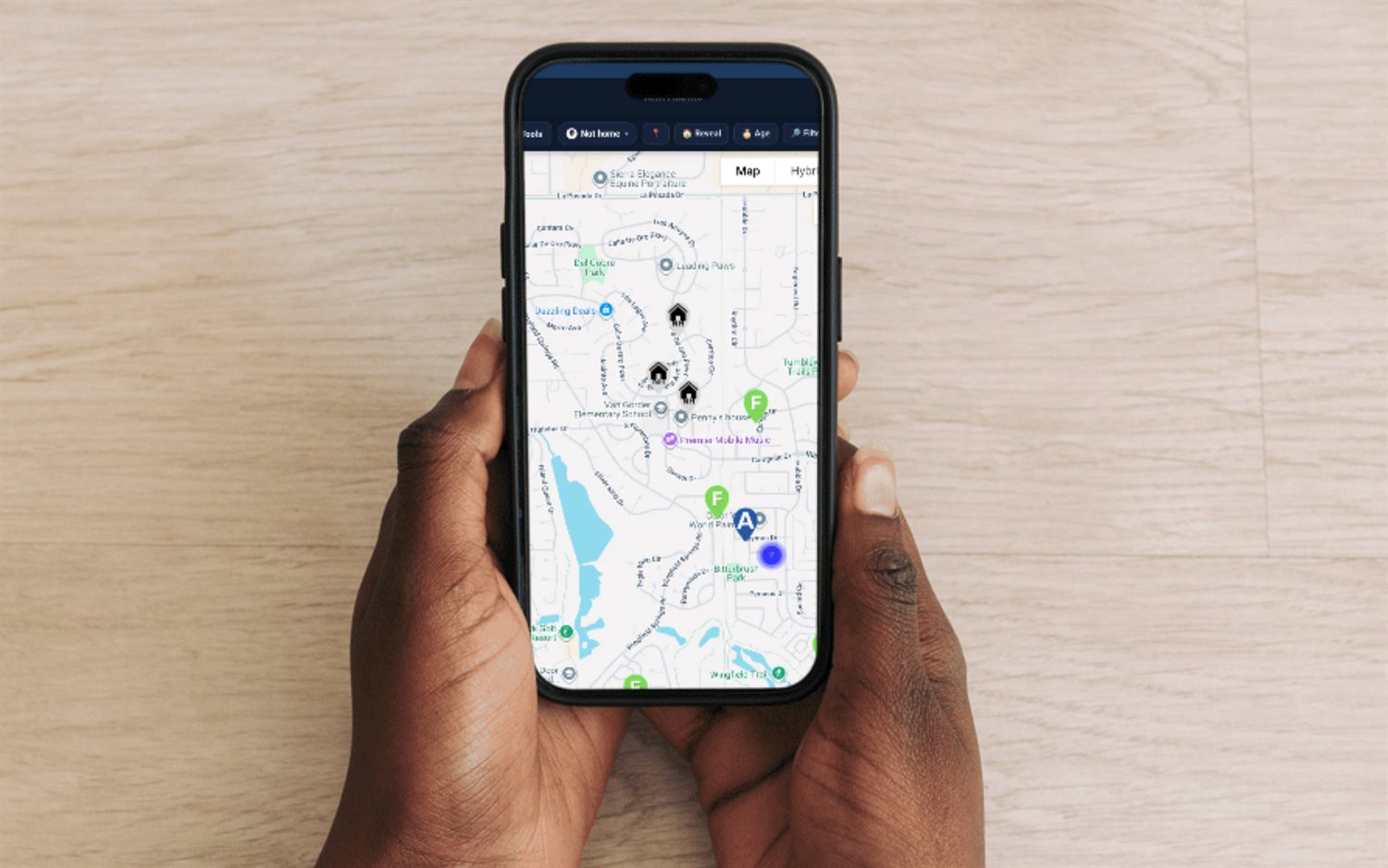
The best curb-evidence opener in the world dies in a subdivision full of staked saplings. FieldStacker keeps the whole canvass honest: draw a territory around the block your crew is working, load the doors, disposition every knock, and let the "call me after the permit" callbacks come due on their own instead of living in your head.

  • Territory the working block the morning the job starts
  • Custom dispositions — walked the tree, estimate left, waiting on permit, booked
  • Callbacks that surface on the date they matter, for warm go-backs
  • GPS-verified team knocks so two reps never re-pitch the same house
  • Objection coaching to drill the insurance and price answers between stops

See the knock map →   Tree service CRM →

FieldStacker knock map with color-coded custom dispositions so every tree service door remembers its own status for the go-back

Keep going

The rest of the tree service series.

🧭

Sell tree service door to door

Territory choice, the season calendar, permits and city trees, and the follow-up cadence. Field guide →

📊

How tree reps get paid

Revenue versus gross profit, tiers, setter fees and exactly what gets clawed back. Commission structures →

💰

What tree reps make

Honest ranges and what actually drives the spread. See the numbers →

🛠️

The CRM behind it

Job-site territories, storm routes, dispositions and rep money. Tree service CRM → · Pricing →

Questions tree reps ask

What is the best opener for tree service door-to-door?

Point at the tree. Tree service is the one door-to-door trade where the homeowner can see the product from the sidewalk, so your opener should name a specific defect on their specific tree before you name your company. "I am the arborist working the corner today — I noticed the ash out front has lost the top third of its canopy, mind if I show you what I am looking at?" beats any rehearsed pattern-interrupt, because it is observably true and it invites them outside instead of trapping them in a doorway. If you cannot see anything worth naming from the curb, you probably should not be knocking that house.

How do you answer "how much to take that one down?" at the door?

That question arrives before you finish your first sentence, and the wrong move is guessing. Never price a tree from the sidewalk. The honest answer moves them outside: "Depends on three things I have to see up close — what is under it, how we get the brush out, and whether that comes down free or on ropes. Give me four minutes and I will walk it with you and hand you a real number." If they push for a ballpark, give a wide, clearly labelled range and immediately explain the variables that move it. A number you invent at the curb becomes the number you get held to, and if the crew takes twice the hours, it is your commission that pays for it.

What do you say when a homeowner asks if you are licensed and insured?

It is the most common objection in tree care and it deserves a confident, specific answer rather than a defensive one. Say what you carry — general liability and workers compensation — and offer proof before they ask twice: a certificate of insurance emailed straight from the office, naming them, before the crew ever shows up. Mention any credentials that are actually yours, such as an ISA Certified Arborist on staff or TCIA accreditation, and never claim one you do not hold. The reason homeowners ask is real: if an uninsured groundman gets hurt in their yard or a limb goes through the roof, they can end up exposed. Treat the question as buying-signal, not insult.

How do you handle "my neighbor said he would do it for $700"?

Do not attack the other guy and do not race him to the bottom. Separate the two bids on what is inside them: whether workers compensation actually covers the person in the tree, whether the limb over the roof comes down on rigging or gets dropped and hoped for, whether the brush leaves the property, whether the stump is included and to what depth, and who pays if something lands wrong. Then let them choose with the difference in front of them. Some homeowners will take the cheap truck anyway, and that is fine — you did not want the job where you are the low bidder and the risk is highest.

What is the best script for canvassing while the crew is on the block?

Lead with the truck, because it is the most credible thing on the street. "We have the bucket and the chipper on this block through Thursday for the two removals at 412 — while everything is already set up, anything on your lot is cheaper for us to do than driving back out. Is there anything you have been putting off?" Mobilization is genuinely a real cost, so the on-site rate is honest, not a pressure tactic. This knock outperforms cold canvassing badly, and it only works while the crew is visible, which is why the block gets territoried the morning the job starts.

Do storm knocks need a different script?

Completely, and the biggest mistake is selling. After a wind or ice event, a homeowner with a tree on the roof is stressed, possibly displaced, and being circled by out-of-town trucks. Open with triage instead of a pitch: what is unsafe right now, what can wait, and what you can actually get to and when. Say honestly if a crane is a week out rather than promising a slot you cannot hold. Do not tell anyone their insurance will pay — policies commonly cover removal when a tree strikes a covered structure and commonly do not when it simply falls in the yard, and it varies, so tell them to call their carrier and read their policy. The reps who are straight in the first 48 hours own that neighborhood for years.

Take the script to a map that remembers every door

Territory the working block, disposition every knock, and let your go-backs come due on their own. 14-day free trial, no credit card.