Home remodeling · door-to-door

The door-to-door sales CRM for home remodeling teams

Kitchens, baths, basements and additions are sold at a table, not on a porch — so the whole job of a canvassing app is to fill that table. Build-year territories, just-sold pins, a disposition for the spouse who wasn't home, and commission you can actually verify.

Flat month-to-month from $30/mo · 14-day free trial · no seat minimums, no annual contract

FieldStacker runs the street and the rep's money for remodeling. The project side stays where it already lives: kitchen design, renderings, your cost book, selections and allowances and the sub schedule all belong to Buildertrend, JobTread, Houzz Pro, Chief Architect and 2020 Design, which already do that well. FieldStacker runs the canvassing around them.

Remodeling has a canvassing problem nobody else has

A roofer can point at a shingle. A siding rep can rub a rag on a wall and put the chalk in the homeowner's hand. A solar rep can hold up an electric bill. A remodeling rep gets none of that, because the product they are selling is inside the house and it is not broken. Nobody's kitchen is failing. It is simply twenty-six years old, and the homeowner has stopped seeing it.

That single fact reshapes what a canvassing tool has to do for this trade. You are not prospecting a symptom, you are prospecting a build year. When two hundred houses go up over three seasons, two hundred identical builder-grade kitchens, oak vanities and fiberglass tub surrounds get installed in the same eighteen months — and they all reach the remodel window together. The territory you want is defined by the plat map, not by anything visible from the sidewalk.

The second thing that reshapes it is time. A siding job goes from handshake to install in weeks. A remodeling job goes knock, consult, design agreement, selections, permit, build, punch list, and a kitchen sold in September can still be open in February. That means the rep who wins in this trade is not the one with the best pitch, it is the one who can still tell you in April what the woman at 4118 said in October. A memory problem is what a CRM is for.

What a remodeling D2D team actually gets

All of it ships today, all of it is vertical-agnostic, and none of it requires a setup detour.

🏘️

Build-year territories

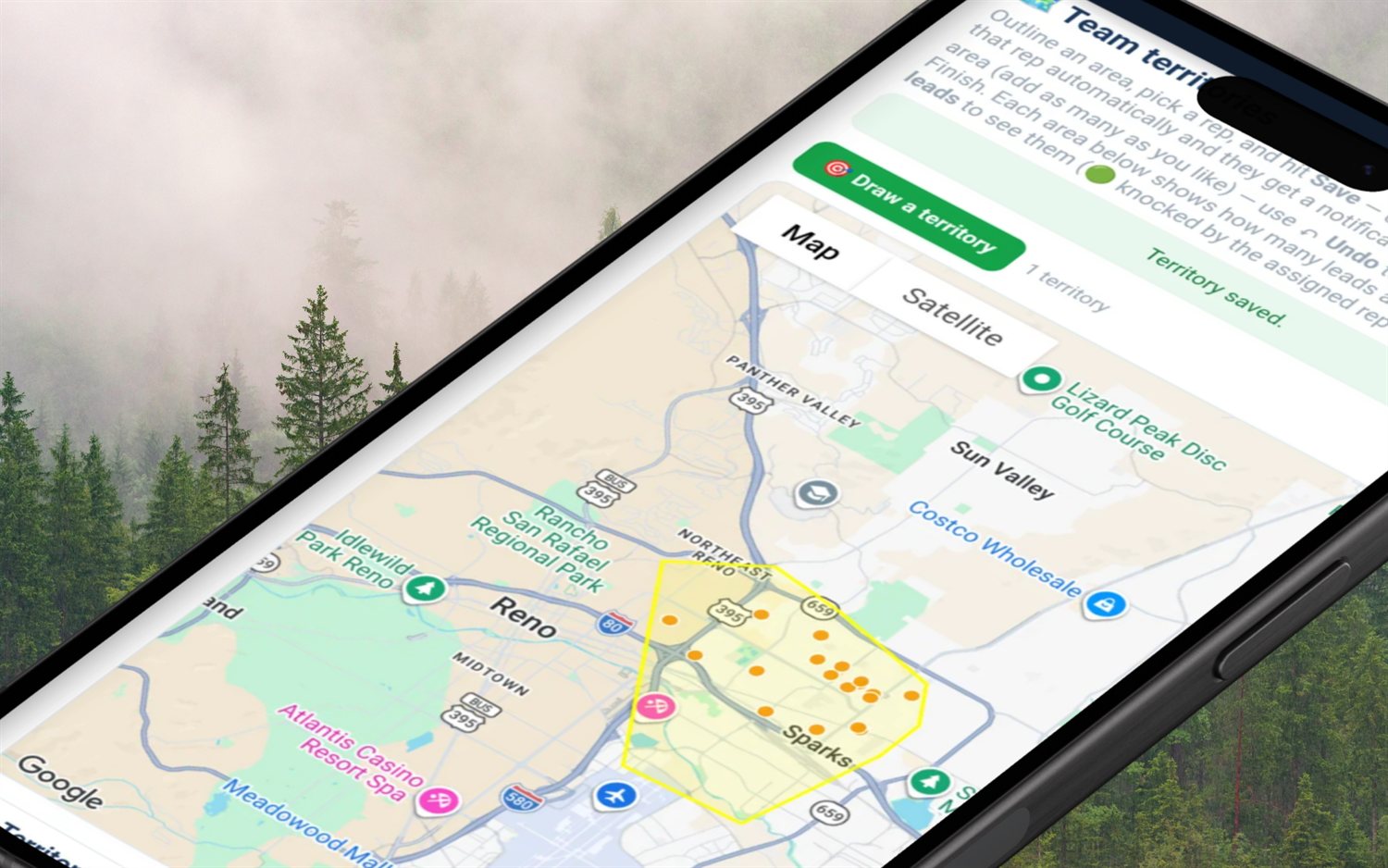
Trace the subdivision that went up in one cohort and assign the doors inside it to a rep. In remodeling the territory is the qualification — a street of untouched 1990s builds is a better list than any lead you can buy.

🔑

Just-sold homeowner pins

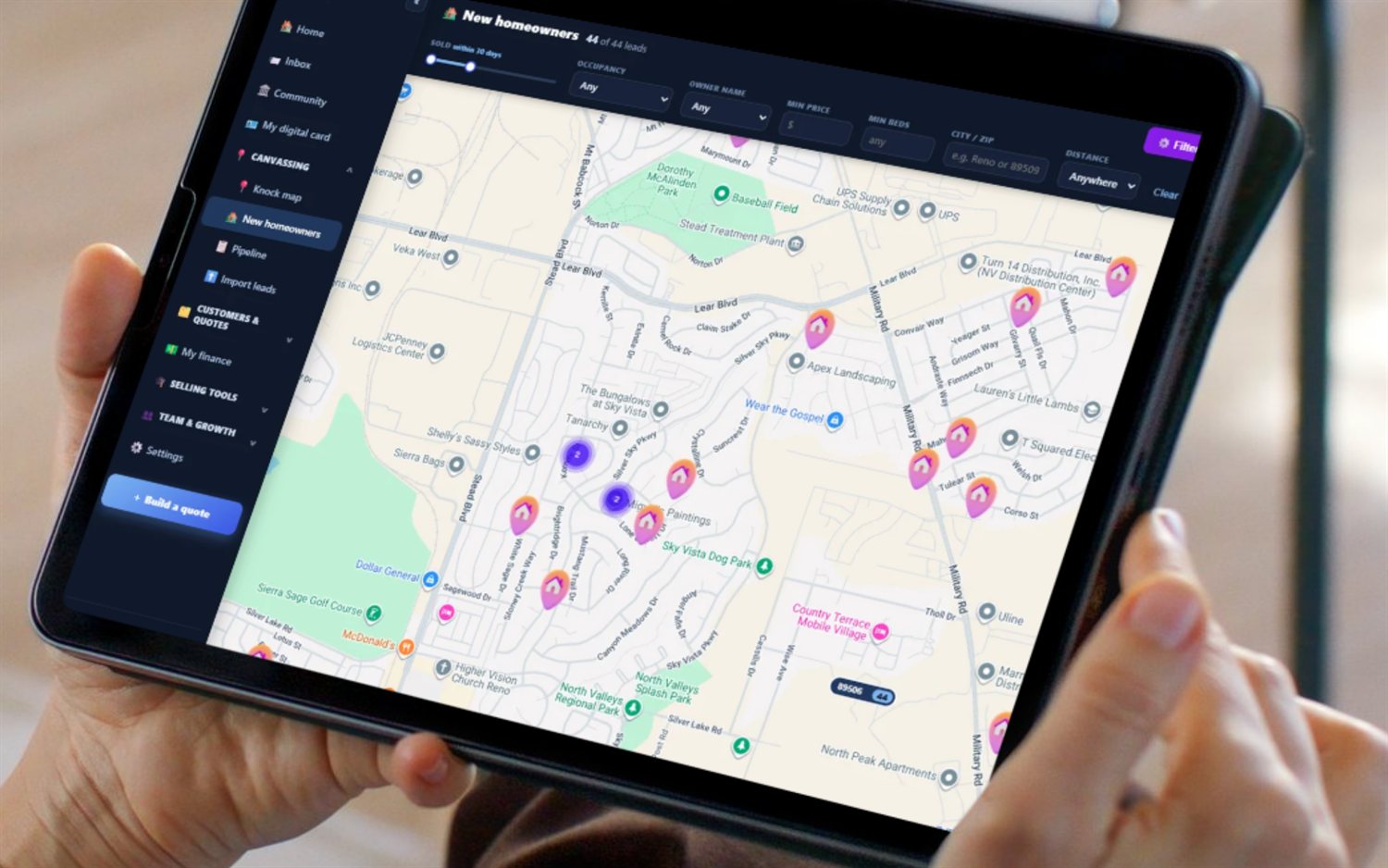
New owners of older homes are the strongest remodeling window there is: they have just formed an opinion about the kitchen and they are still in decision mode. Pull recently-sold homes onto the map and get there before the mailers.

🎨

Dispositions for a design-build cycle

Name your own stages — consult set, consult sat, design agreement signed, selections, permit pending, build scheduled, complete. Including the one every other CRM makes you fake: decision-maker gap, for the half-household that was actually interested.

📍

GPS-verified team knocks

Canvassers on a per-sit plan have every incentive to inflate. Verified knocks on a live team map mean the setter who worked the street gets credit, the one who sat in the truck does not, and nobody double-knocks a block you already burned.

Go-backs that come due

"Call us after the holidays" is the most common answer in this trade and it is usually sincere. Log it with a date and it surfaces in January as a warm callback instead of evaporating into a notes app.

💵

Commission you can verify

Per-deal commission on your own split, chargebacks that net against your total, automatic mileage at the IRS rate, and a quarterly 1099 set-aside. On a gross-profit plan, the number the office quotes you and the number you keep are rarely the same.

Where each tool fits

What FieldStacker runs, and what your design-build stack runs

The built-in doorstep quote builder is alarm-native — it prices plans and equipment, so pricing a kitchen stays with your estimating software. Remodeling estimating, design and production management are mature disciplines with mature software, and you should keep using it.

  • Layouts, renderings, 3D walkthroughs → Chief Architect, 2020 Design, SketchUp
  • Takeoffs, cost book, job costing, change orders, production schedule, client portal → Buildertrend, JobTread, Houzz Pro
  • Selections, allowances and showroom specs → your design center
  • Permits, plan review and structural sign-off → your GC office and your engineer
  • Canvassing, build-year territory, team GPS, go-backs → FieldStacker, today
  • Rep commission, chargebacks, mileage and 1099 taxes → FieldStacker, today

See every feature →

FieldStacker territory tool tracing a single-era subdivision and assigning the doors inside it to a home remodeling canvasser

Where each tool in a remodeling stack belongs

Most remodelers own two of these three layers and try to make one of them do the third job. It never works.

The job to be doneSpreadsheet + phone notesBuildertrend / JobTread / Houzz ProFieldStacker
Deciding which streets to knock this weekGuessworkNot what it's forBuild-year territories, just-sold pins, routes
Recording every door and what was saidPossible, rarely doneStarts after the saleCustom dispositions on a map
Knowing who actually knocked itHonor systemNoGPS-verified team knocks
The January callback to an October "not yet"ForgottenLead never enteredGo-backs that come due
Design, takeoff, selections, scheduleNoYes — keep it hereDeliberately not
What the rep personally earned and keptA spreadsheet nobody updates after a cancelCompany-side job costing, not rep take-homeCommission, chargebacks, mileage, 1099 set-aside

A remodeling rep's cycle, in one flow

From a plat map to a job you can still account for five months later.

1

Pick the cohort

Draw the territory around a subdivision old enough to be original and owner-occupied enough to say yes. Load the doors, build the route, hand it to the crew.

2

Knock, qualify, set both people

Disposition every door. The goal on the porch is one thing: an in-home consult with both decision-makers on the calendar. Log the context while you still remember it.

3

Run the consult in your own tools

Design, scope and price live in your design-build stack. FieldStacker just keeps the stage moving — design agreement, selections, permit, build scheduled.

4

Track to actually paid

Watch commission, chargebacks and the true-up land, capture the miles between subdivisions automatically, and let the quarterly tax set-aside build itself.

FieldStacker financials showing per-deal remodeling commission, chargebacks from a cancelled contract, and a quarterly 1099 tax set-aside
The part everyone else leaves out

Remodeling pay is hard to verify. Make it visible.

Most remodeling reps are paid a share of gross profit, which means the check depends on numbers the rep never sees: the true cost of the job, the allowance the homeowner blew through, the change order nobody priced, the finance dealer fee. Canvassing apps stop at the map and hand all of that back to a spreadsheet.

  • Real per-deal commission on your own split, percentage or overage
  • Chargebacks and clawbacks netted against your total — cancels in the rescission window, financing that fell through, jobs that got trued down
  • Automatic mileage capture at the IRS rate for every driving day between subdivisions and showroom visits
  • A quarterly 1099 tax set-aside built off what you kept, not what you sold
  • AI objection coaching between consults, and in-app team messaging so a setter can hand a hot door to a closer without a group text

How remodeling commission works →   Flat pricing →

Getting your list in

Bring the doors you already have

Most remodeling companies are sitting on years of dead leads: consults that never sat, homeowners who said next year and meant it, and a folder of Angi and Houzz inquiries that got two calls and then silence. Import a CSV or a list out of your old CRM and the addresses are geocoded onto the map automatically, so a stale spreadsheet becomes a route.

  • CSV or old-CRM import, geocoded to pins without manual address work
  • Fresh just-sold homeowners as a lead source alongside your own list
  • Route building so a canvasser walks a block in order instead of criss-crossing it
  • Works offline and syncs later — newer subdivisions eat cell signal
  • A free digital business card with a QR code for the leave-behind

See the knock map →   New-homeowner leads →

FieldStacker New Homeowners map showing recently-sold homes as fresh remodeling lead pins with filters
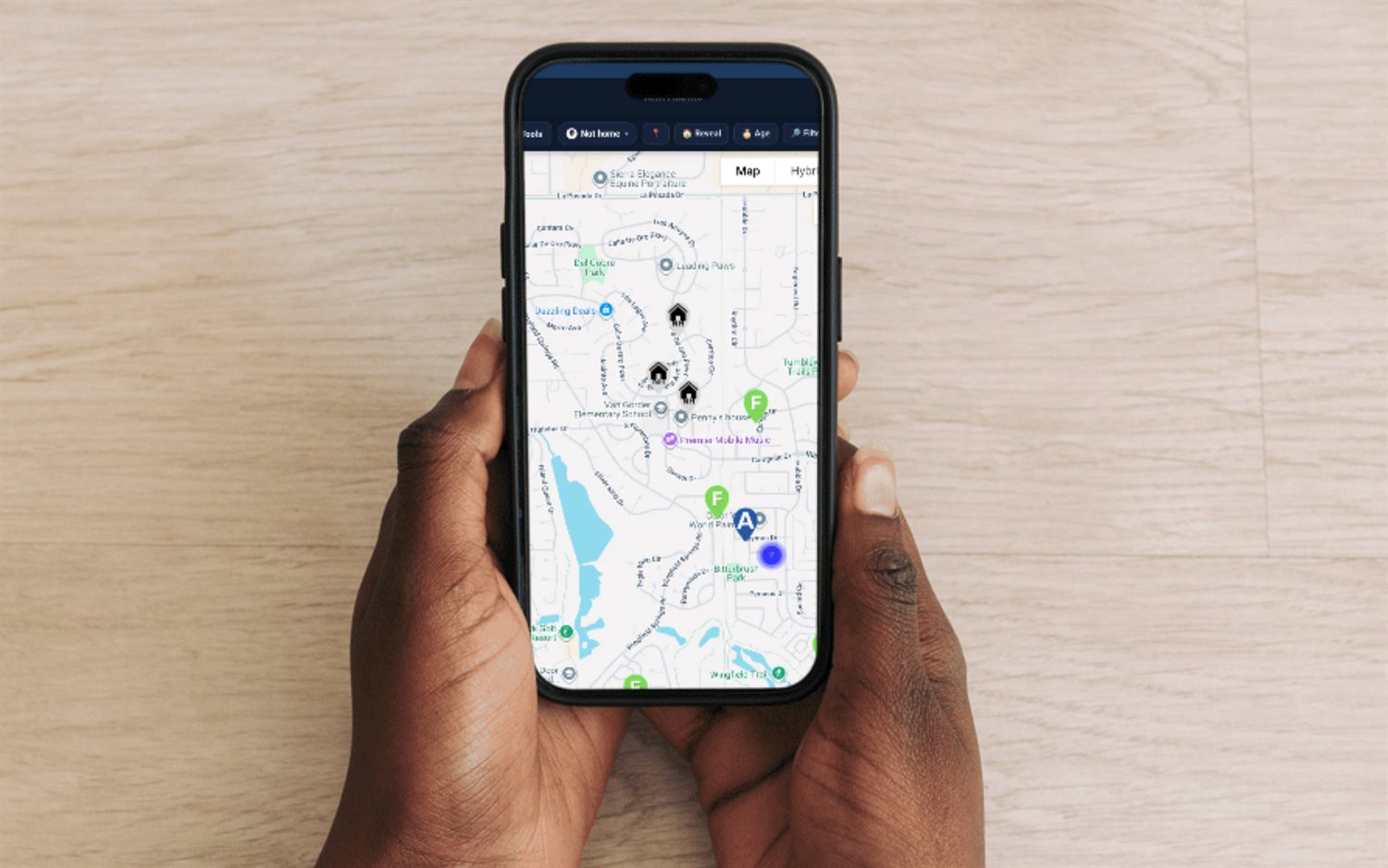
FieldStacker knock map with custom color-coded dispositions for a home remodeling pipeline from consult set to build scheduled
The stack

Sell remodeling and more from one login

Plenty of remodeling companies also run an exterior division, and plenty of independent reps carry two products down the same street. Turn on the industries you sell and work them from one account — one map, one set of stats, one bill. The alarm side is powered by FieldStacker Security, on the same backend, so nothing lives in two places.

Explore all industries →   Siding →   Windows →   Roofing →

The rest of the remodeling series

Four more guides written for this trade specifically, not recycled from roofing.

🗣️

Remodeling sales scripts

Openers that work when there is nothing to point at, and a branch for every objection — including the one about the contractor who never called back.

📋

How to sell remodeling door to door

Territory by build year, the counter-seasonal calendar, getting inside respectfully, the consult and the follow-up.

💰

Remodeling sales commission

Gross-profit plans, margin sliding scales, design-agreement pay, and the cost-overrun true-up that shrinks a check after the job is done.

📊

What remodeling reps make

Honest ranges by role, the ticket-versus-volume tradeoff, and the 1099 tax reality.

Remodeling D2D questions, answered straight

Is FieldStacker a good CRM for home remodeling door-to-door?

Yes for the canvassing and the rep money side. The knock map with fresh and just-sold pins, drawn territories, your own custom dispositions, GPS-verified team knocks, route building, the leaderboard and the 1099 financials are all vertical-agnostic and work for a kitchen, bath, basement or whole-home remodeler today. Design and job management stay in the platform you already run: renderings, takeoffs, cost books, selections, change orders and production schedules all live in Buildertrend, JobTread, Houzz Pro, Chief Architect or 2020 Design. FieldStacker runs the street; your design-build stack runs the project.

Does FieldStacker design kitchens, do takeoffs or manage the job?

No — all of that stays in your design-build stack: cabinet layouts, renderings, your cost book, scope pricing, selections and allowances, change orders, sub scheduling and the client portal. Those are entire product categories with good tools already in them. FieldStacker covers the part those tools were never built for: the sidewalk. Which streets you work, which doors you knocked, what the homeowner said, when to come back, who on your crew actually knocked it, and what you personally earned and kept.

Can dispositions match a design-build sales cycle?

Yes, and this is the part that matters most in remodeling because the cycle is so long. You name your own stages, so a pipeline can read consult set, consult sat, design agreement signed, selections in progress, permit pending, build scheduled, complete and cancelled instead of a generic sold or not sold. Remodeling also needs a stage nobody else does: the decision-maker gap, where one spouse was home and genuinely interested but the consult cannot be run yet. Tag that distinctly and it comes back to you as a warm callback instead of dying in a notes field.

We already run Buildertrend or JobTread. Does this overlap?

Barely, and that is intentional. Those platforms begin at roughly the moment a job is sold: estimate, schedule, selections, purchase orders, daily logs, invoicing, client communication. They are not canvassing tools and they were never meant to tell a rep which side of which street to knock on a Tuesday evening. FieldStacker sits upstream of them. The handoff point is clean: when the build contract is signed, the job leaves FieldStacker and lives in your project-management system for the next four months.

How is this different from SalesRabbit or SPOTIO for a remodeling team?

Those are capable canvassing platforms, but they are seat-based, priced for teams, usually sold with an annual commitment, and they hand the rep money question back to a spreadsheet. FieldStacker is flat month-to-month from $30/mo with a 14-day free trial and no card, no seat minimums and no annual contract, and it folds each rep's commission, chargebacks, mileage and quarterly 1099 set-aside into the same app they knock with. That matters in remodeling, where a rep on a gross-profit plan often cannot tell you what a job actually paid them until the true-up. Check their sites for current pricing.

Can one account sell remodeling and other trades?

That is the point of the stack. A lot of remodeling companies also sell siding, windows or roofing, and a lot of independent reps carry two products into the same neighborhood. Turn on the industries you actually sell and work them from one login, one map and one bill. The alarm side is powered by FieldStacker Security, our alarm edition, on the same backend, so nothing lives in two apps.

Owner data

Know the whole neighborhood before you knock

Draw an area on the map and one pull reveals up to 500 homeowners at once — the owner’s name, mailing address, whether they live there or it’s likely a rental, and their estimated age. Every plan with the owner reveal includes 50 pulls a month — that’s up to 25,000 homeowners of rich data every month. Run out and $10 adds another 50 (about 20¢ a pull).

  • Up to 500 homeowners per reveal, up to 25,000 a month
  • Name, mailing address, owner-occupied vs. likely-renter, estimated age
  • Up to 25,000 homeowner records a month, refilled every cycle

See what each plan includes →

🏘️
up to 25,000 homeowners a month

Put your build-year pocket on a map this week

Draw the territory, load the doors, disposition every knock and let January's callbacks make themselves. Start a 14-day free trial — no credit card, flat month-to-month.