Qualify a whole street from satellite, knock the just-sold homes with pools, and sell tight around the stops you already make. Every recurring account tracked to what it actually pays you — clawbacks included.
Flat month-to-month from $30/mo · 14-day free trial · no seat minimums, no annual contract
Pool service is the rare door-to-door product you can see before you knock. Pull up any Sun Belt subdivision on satellite and the blue rectangles tell you exactly which doors are worth your time — no other trade gets that. What kills pool canvassers is not finding pools; it is everything after: forgetting which of the forty houses said "I do it myself, ask me in July," walking a street a teammate already burned, signing an account four zip codes from any stop you make, and having no idea what you actually earned once two of your five signs cancelled in month two.
That is the gap FieldStacker fills. It is a canvassing CRM and a rep financial tracker in one app, built for the part of pool service that happens at the gate — not the part that happens with a test kit in your hand.
All of this is live today and vertical-agnostic — nothing here is waiting on a pool-specific build.
Work a satellite knock map, pin every house with water, and tag the ones without. A street gets qualified once — nobody re-walks the four houses on the corner that have no pool.
Name your own stages: DIY, has a guy, green, above-ground, filter clean only, quoted, signed, cancelled. "I do it myself" is a callback, not a no — tag it and let it come due when it gets hot.
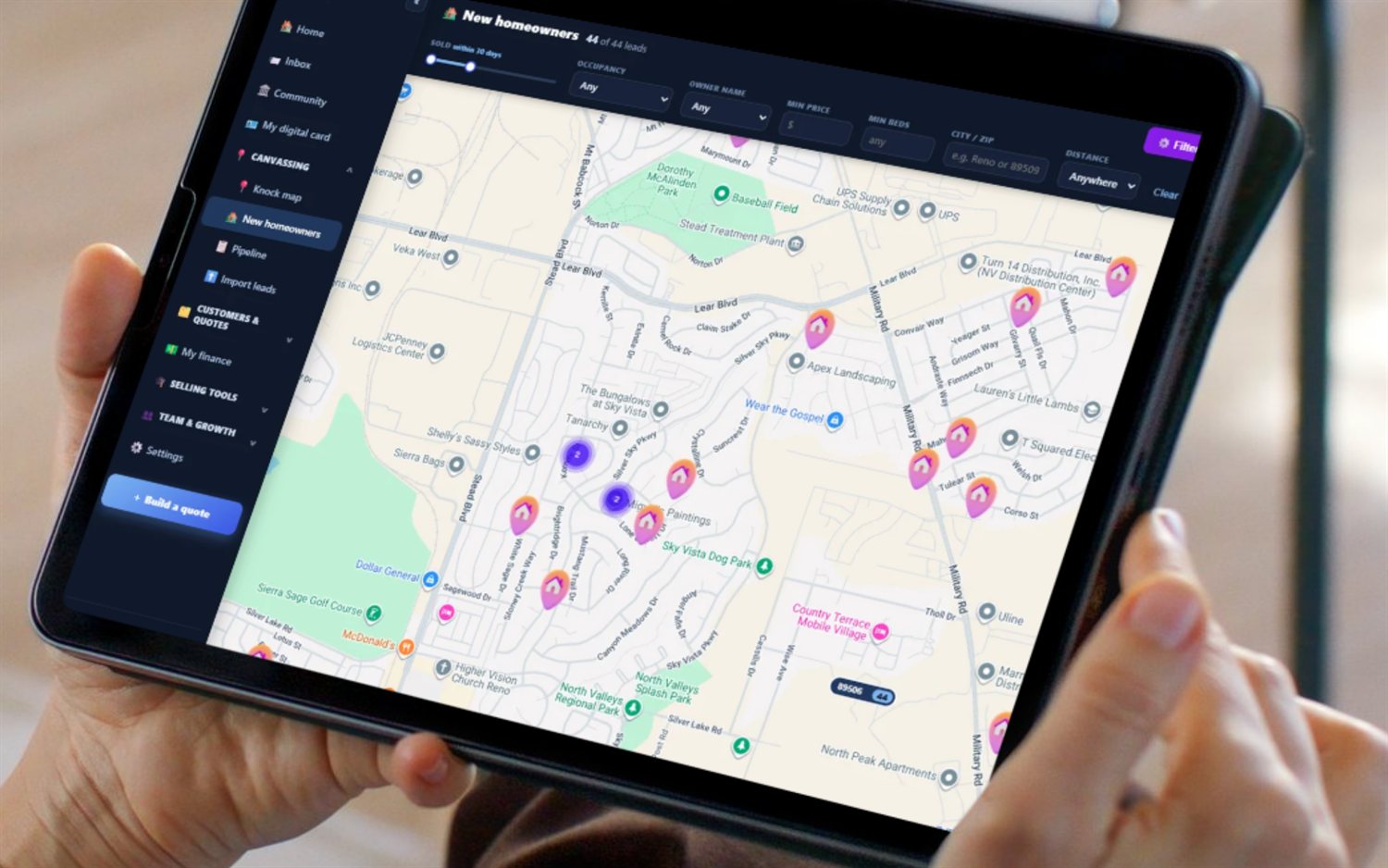
The new-homeowner lead source drops recently-sold addresses on your map. A buyer who just inherited a pool has usually never balanced water and their seller's service stopped at closing.
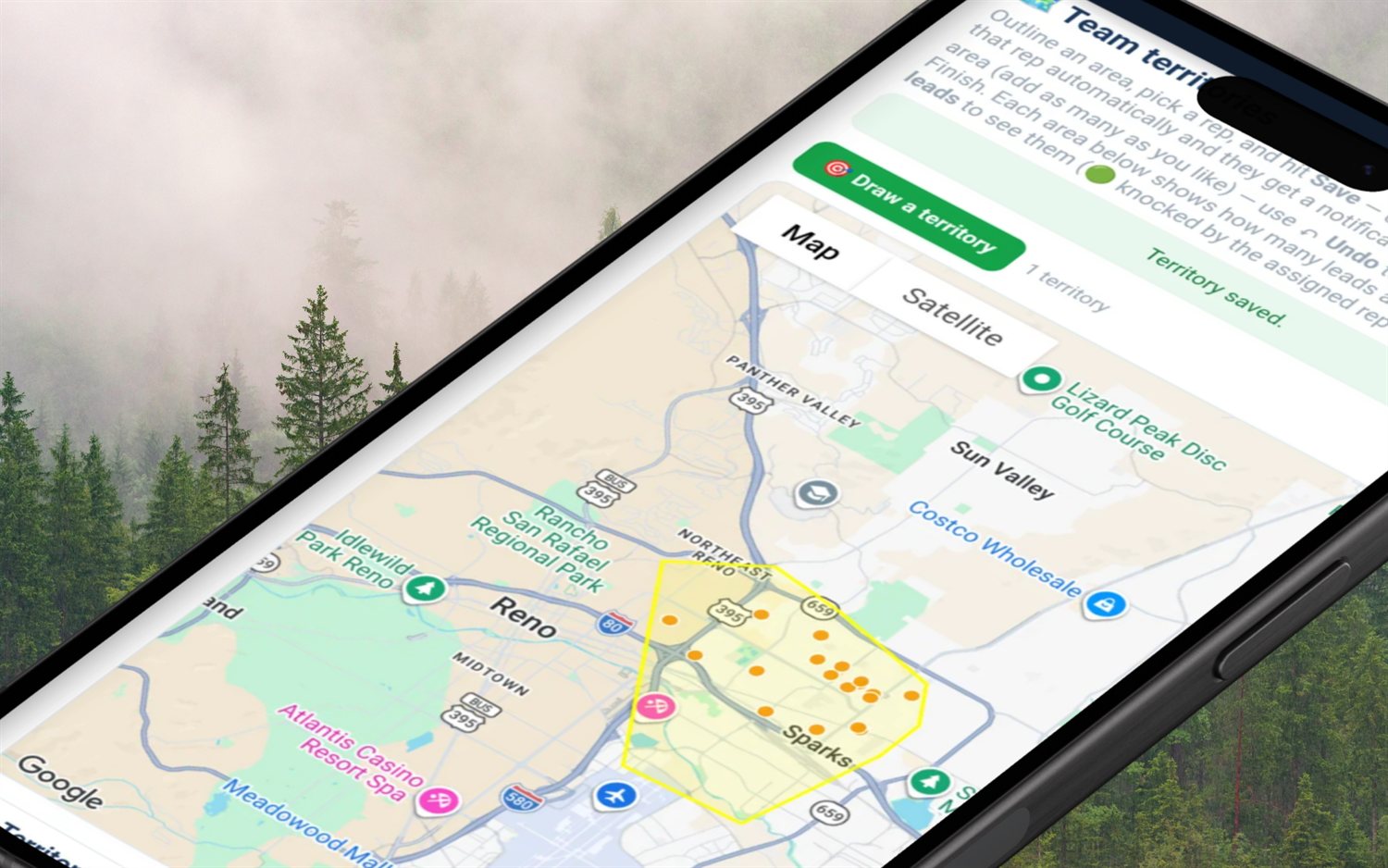
Density is the whole business. Draw the territory around the streets you already service and knock outward, so every new account is minutes off a stop you already make.
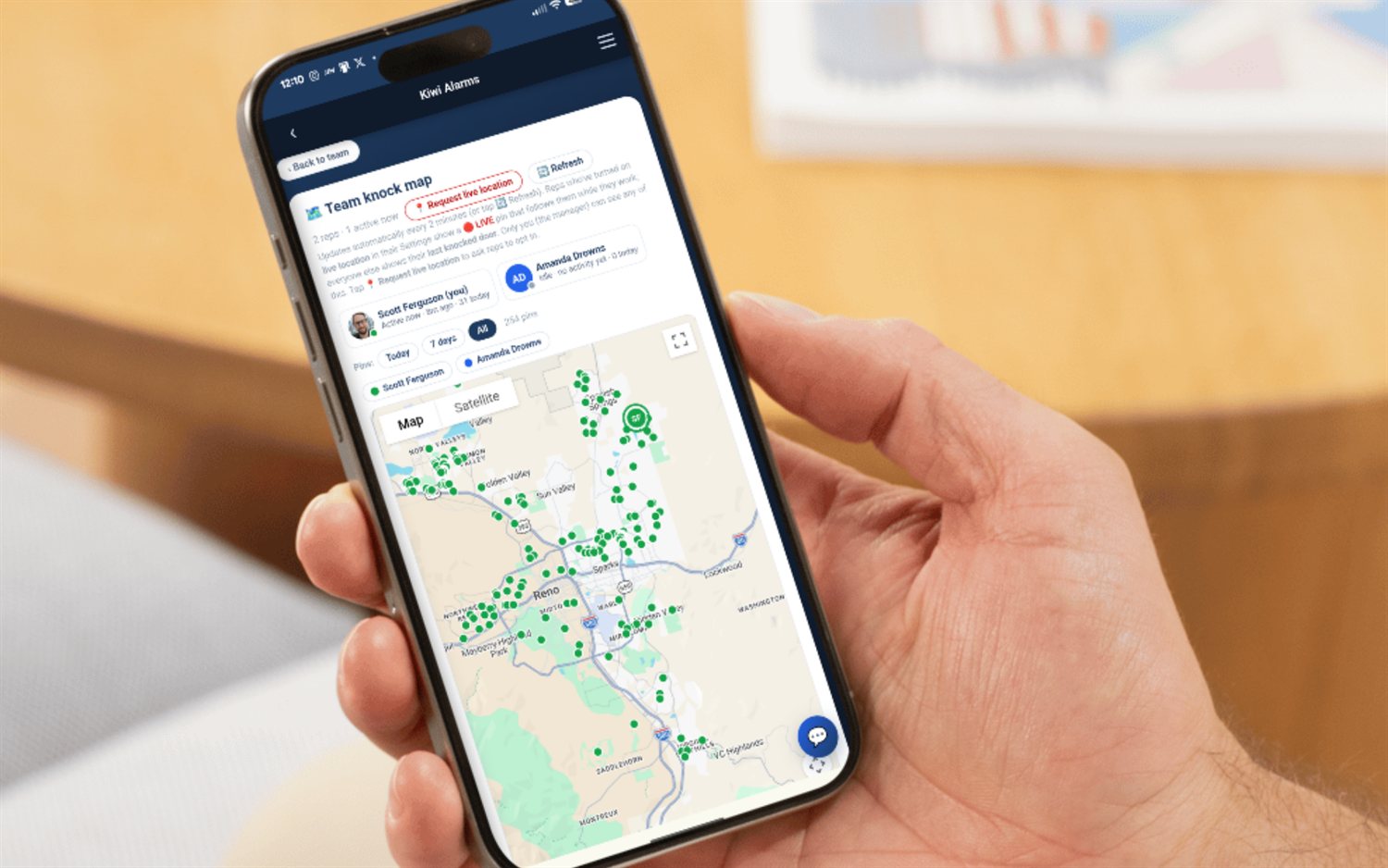
Spring crews double-knock constantly. Verified GPS knocks on a live team map mean two canvassers never burn the same cul-de-sac and every door is attributed to who worked it.
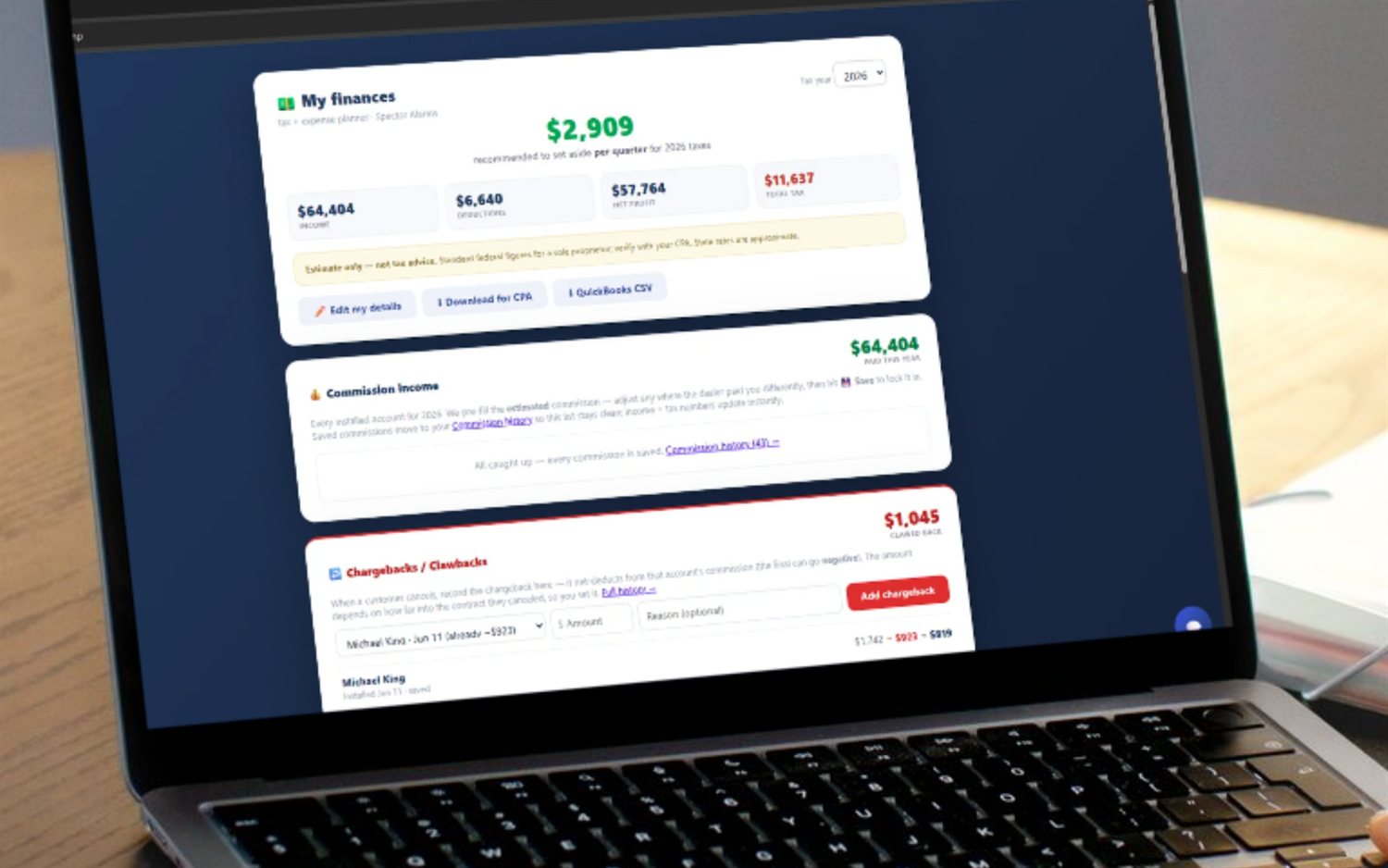
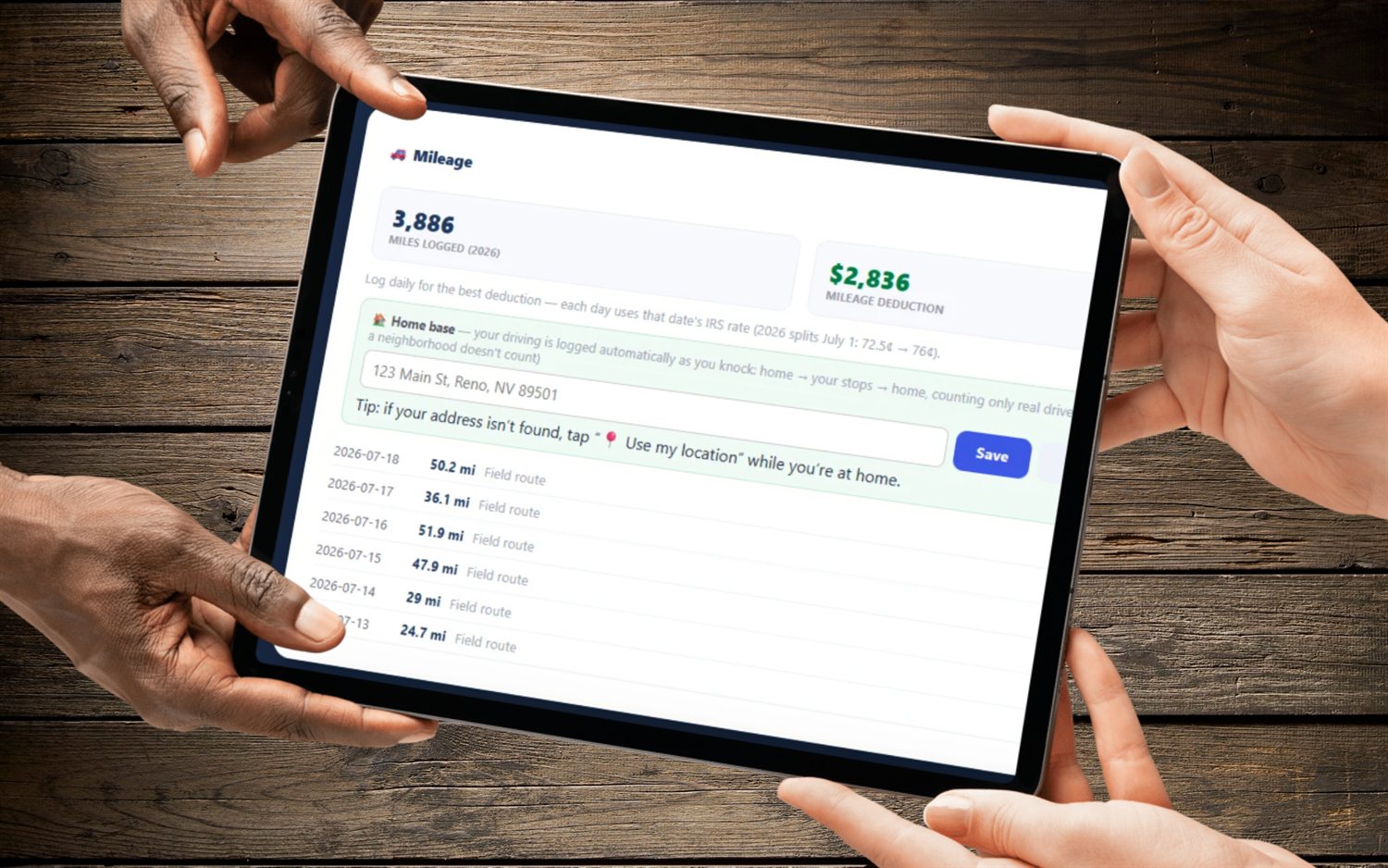
Track what each signed account pays you, net out the clawback when it cancels in the retention window, capture mileage at the IRS rate, and build a quarterly 1099 set-aside.


FieldStacker covers the street up to the signature. Everything from the moment an account is signed onward — the whole service day — belongs to the tools built for it, and those tools are good.
Every other trade sells one job at a time. Pool service sells a stop you have to physically make fifty-two times a year, which means the value of an account depends almost entirely on where it sits. Two accounts at $150 a month are not worth the same money if one is on a street you already run Tuesdays and the other is a twenty-minute detour. Route books change hands in this trade at a multiple of monthly billing precisely because a tight book is worth more than a scattered one — which is also why a company will pay a canvasser real money for an account and claw it straight back if it cancels.
So the map is not decoration. Pin your existing stops, trace a territory that hugs them, and canvass outward one street at a time. A canvasser who signs six pools on one block has built something the owner can service in ninety minutes; a canvasser who signs six pools across a metro has built a problem. FieldStacker is the only part of this stack that makes that visible before the account exists.
Want the full field playbook? Read how to sell pool service door to door, or steal the words from the pool service door-to-door scripts.
From a satellite view of a subdivision to an account you can track to payout.
Scan the subdivision from above, pin the pools, drop the just-sold addresses on top, and trace today's territory around a street you already service.
Offer the free water test, disposition every door as you go, and set the callback on every "I do it myself" for the week it gets hot.
The signed account becomes a stop in your route software. In FieldStacker it becomes commission — with the clawback window, your miles and your tax set-aside attached.
Pool commission is small per sale, high in volume, and brutally exposed to churn. If you sold nine accounts in April and three cancelled by June, your April number was never real. FieldStacker keeps the honest version in the same app you knock from:
What is shipped, where the rest lives, and what it costs.
| What a pool company needs | FieldStacker | Where it lives instead |
|---|---|---|
| Qualifying which homes have pools | Manual, on a satellite map — pin and disposition as you scan | No automatic pool detection anywhere in the app |
| Fresh just-sold leads | Yes — new-homeowner lead source on the map | — |
| Importing an old customer or lead list | Yes — CSV or another CRM, addresses geocoded automatically | — |
| Territories, routes, team GPS knocks | Yes | — |
| Weekly service route and stop scheduling | No | Skimmer, Pool Brain, Pool Office Manager, general FSM tools |
| Chemical readings, dosing, LSI | No | Your route app, Taylor kit or photometer |
| Recurring monthly billing and autopay | No | Your billing system |
| Auto-priced pool plan sheet at the door | Not yet — the built-in quote builder is alarm-native today | Your own price card until it generalizes |
| Rep commission, clawbacks, mileage, 1099 | Yes | Usually a spreadsheet — that is the point |
| Price | Flat from $30/mo, month-to-month, 14-day free trial, no card | See pricing |
Pool canvassers cross-sell constantly — the same backyard that needs weekly service often wants lawn care, pest control or a screen repair, and plenty of spring pool crews knock a second product in the off-season. Turn on the industries you actually sell and work them from one FieldStacker account: one map, one set of stats, one bill. The alarm side is powered by FieldStacker Security, our alarm edition on the same backend, so nothing lives in two apps.
The rest of the pool service door-to-door library.
Openers built on what you can see in the backyard, and the exact words for "I do it myself" and "I already have a guy." Pool service D2D scripts →
Month's billing, multipliers, flat bounties, residuals, repair percentages — and the retention window that takes it back. How pool reps get paid →
Honest ranges for first-season and experienced pool reps, and what actually drives the spread. What pool reps make →
Territory choice, the season calendar by market, the pitch, the close and the follow-up. How to sell pool service D2D →
Custom pins, dispositions, territories and route building — the tool the whole workflow sits on. See the knock map →
Where new-homeowner data comes from and how to knock it before anyone else does. New homeowner leads →
Yes for the canvassing and money side of the job. The knock map, custom dispositions, drawn territories, GPS-verified team knocks, route building, leaderboard, in-app messaging and 1099 financials are all vertical-agnostic and work for a pool service canvasser or a whole spring crew today. Route management stays with your route software: the weekly stop, chlorine and pH readings, LSI, per-visit service photos and monthly billing all live in Skimmer, Pool Brain and the rest of that category, which do that job well and should keep doing it. FieldStacker runs the street before the account exists; your route software runs it after.
No — they own the service day and FieldStacker owns the street. Skimmer, Pool Brain, Pool Office Manager and the general field-service platforms are built around the service stop — the route sheet, chemical readings and dosing, before-and-after photos, the customer-facing service report, recurring monthly invoicing and autopay — and all of that stays with them. FieldStacker is the layer in front of it: finding the pools, knocking them, tracking every door and every go-back, keeping two canvassers off the same cul-de-sac, and tracking what the rep personally earns on the accounts they sign. The handoff is clean — a signed account leaves FieldStacker and becomes a stop in your route software.
Not automatically — there is no pool-detection layer. What you get is a satellite knock map you pre-qualify yourself, which is already a huge edge in this trade because a pool is one of the only products you can see from above. Scan the block in the app, pin the houses with water, and use a custom disposition set — in-ground, above-ground, screened cage, no pool, green — so the whole street is qualified once and never re-walked. Pair that with the new-homeowner just-sold lead source and you are knocking people who inherited a pool they have never run.
Yes, and this is the part canvassing apps usually skip. Log the account and what it pays you — one month's billing, a multiplier of the monthly rate, a flat bounty, a residual, or a percentage on the repair and equipment side — and see your real number instead of a guess. Pool service commission gets clawed back constantly when an account cancels inside the retention window or the first invoice never clears, so chargebacks net against your total. Mileage captures automatically at the IRS rate, which matters when you are driving a metro chasing pools, and a quarterly 1099 tax set-aside builds as you go. Billing the homeowner stays in your route or billing software.
Those are capable canvassing platforms, but they are seat-based, sold to teams, and usually want an annual commitment — and they hand the rep's own commission, chargebacks, mileage and 1099 taxes back to a spreadsheet. FieldStacker is flat month-to-month from $30/mo with a 14-day free trial and no credit card, no seat minimums and no annual contract, so a two-truck pool company can put three canvassers on the map in April and drop back to one in October without renegotiating anything. Check their sites for current pricing before you compare.
That is who it was built for first. A solo owner-operator knocking around their own route gets the most out of it, because pool service economics are density economics — an account four doors from a stop you already make is worth far more than one across town. Pin your existing stops, draw the territory around them, and knock outward from streets you are already on. You also get a free digital business card with a QR code to hand out at the gate, and the app works offline for the side yards and rural roads where signal drops.
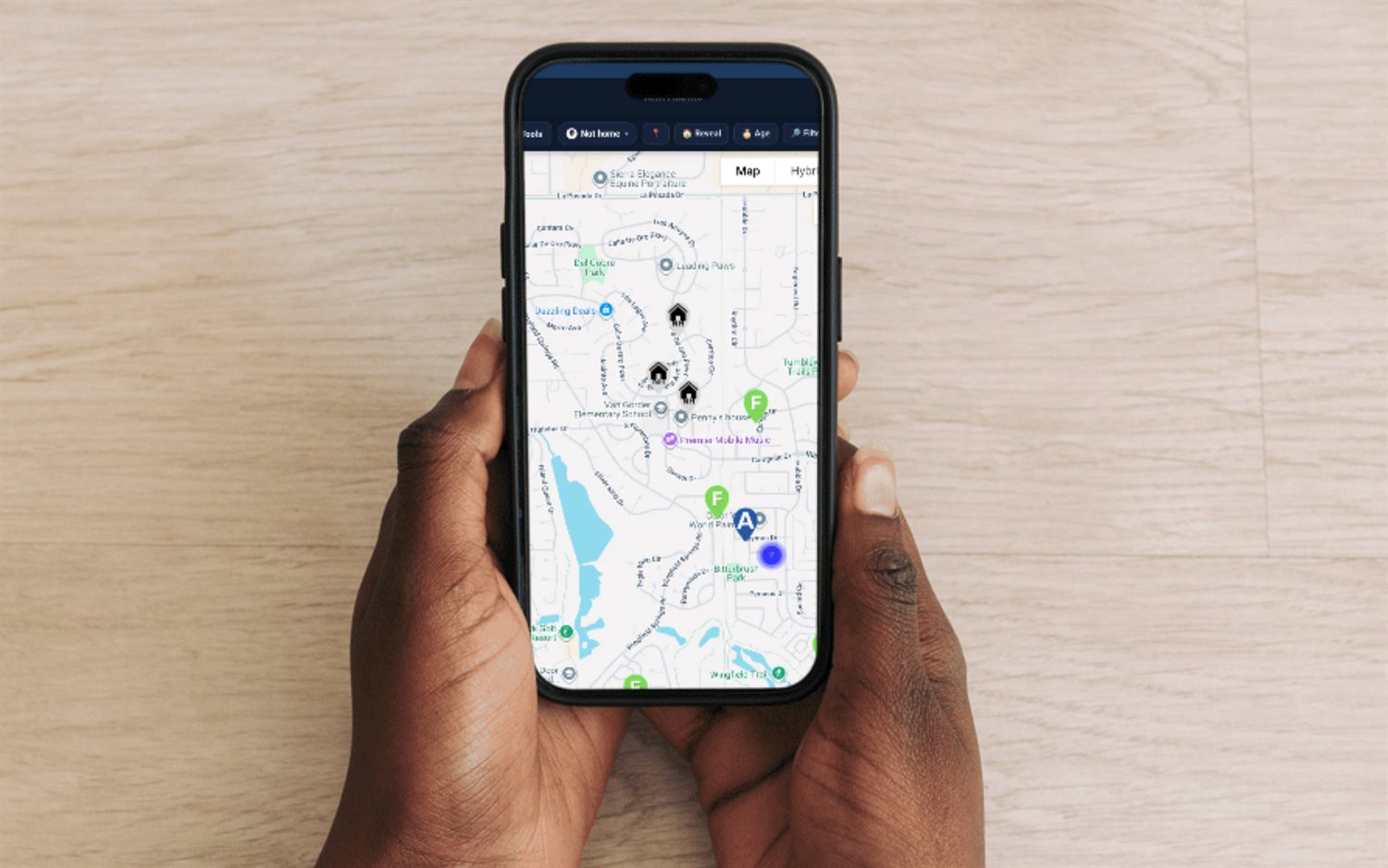
Draw an area on the map and one pull reveals up to 500 homeowners at once — the owner’s name, mailing address, whether they live there or it’s likely a rental, and their estimated age. Every plan with the owner reveal includes 50 pulls a month — that’s up to 25,000 homeowners of rich data every month. Run out and $10 adds another 50 (about 20¢ a pull).
Pin the pools, drop the just-sold addresses on top, and knock a block you can actually service. 14-day free trial, no credit card, flat month-to-month.