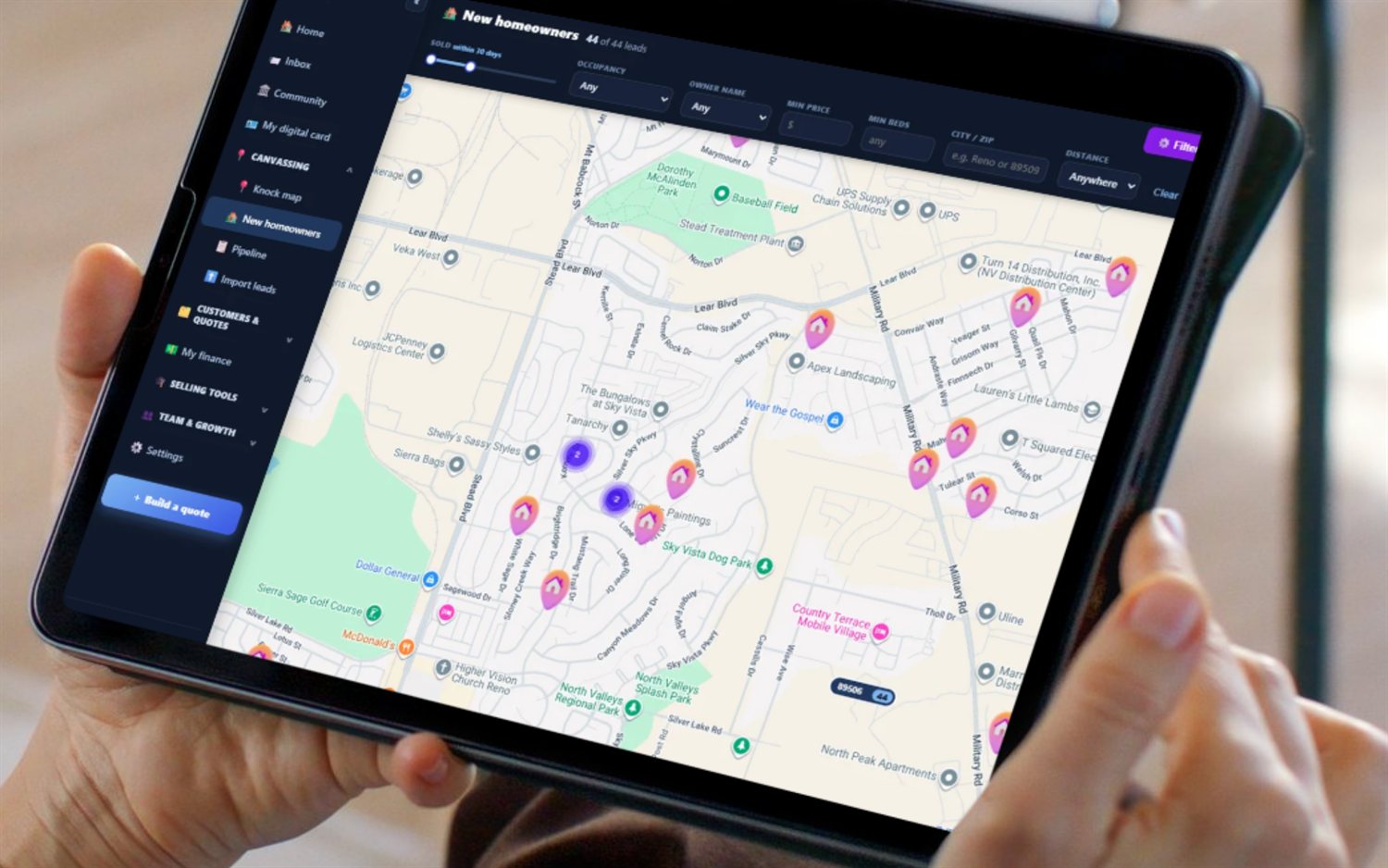
Work the tree-heavy blocks before the leaves drop, set demos both homeowners will actually sit for, keep canvassers off each other's streets with GPS-verified knocks, and track the commission that survives discounts, dealer fees and cancels.
Flat month-to-month from $30/mo · 14-day free trial · no seat minimums, no annual contract
Gutter protection is one of the few trades where the whole year hides in about ten weeks. From the first serious leaf drop through the last warm Saturday in November, every block with a mature oak or maple canopy turns into a live territory — and then the phone goes quiet until the spring rains flood somebody's front stoop. Reps who win this trade are the ones who picked the right streets early, walked them properly, and kept an organized pile of not-nows to reheat when the debris actually showed up.
The other thing that makes gutters different: almost nobody closes it at the door. The standard shape is two-tier — a canvasser walks the perimeter, spots the streaking and the sprout growing out of the corner, and sets a demo for an in-home closer who measures, runs the water-and-leaves test on a sample section, prices per linear foot and presents financing. That means your CRM has to track a set as carefully as it tracks a sale, and it has to survive the three-day right-to-cancel window and the deals that never fund. Most canvassing apps stop at the pin. FieldStacker keeps going all the way to what actually hit your bank account.
All of this is live today — nothing here needs a trade-specific setup detour.
Pull fresh-lead pins onto a map — including recently-sold homes, where the inspection report almost always flagged the gutters and the new owner is still in spending mode — and route the block instead of wandering it.
Trace the streets that actually produce: the mature-tree section, the 1990s subdivision on its original aluminum, the pine belt. Assign the leads inside to a canvasser and hand off areas without a group-text argument.
Name your own stages. Gutter teams flag things nobody else does: perimeter walked, one-legger (only one owner home), demo set, sat no sale, sold, cancelled in rescission.
See the crew on a live map with verified knocks. Nobody double-knocks the street your best canvasser already worked, and every set is attributed to the person who actually earned it.
"Come back when the leaves start" is the most common answer at a gutter door. Disposition it, set the callback, and let it come due in October instead of dying in a notebook.
Real per-deal commission on your own split, chargebacks when a job cancels or never funds, automatic mileage capture at the IRS rate, and a quarterly tax set-aside — because a canvasser on a 1099 is a business.
Measuring eaves and pricing a leaf-protection system are their own discipline, and the tools built for them are good at it. FieldStacker's built-in quote builder is tuned for alarm equipment and monthly plans rather than a per-linear-foot gutter guard proposal — generalizing it is on the roadmap, not shipped — so the estimate stays in your estimating tool and the canvass stays here.
From picking the right block to a commission that survived the cancel window.
Draw the territory around tree canopy, roof age and just-sold homes. A treeless new-build cul-de-sac is a bad day no matter how good your opener is.
Disposition every door as you go, note what you saw on the house, and flag the one-leggers so nobody burns a closer's evening on a demo that can't be decided.
The set lands on the closer with the address and the notes you took at the door. Measurement, the water-and-leaves test and the per-foot proposal happen in your estimating tool.
Follow the job through the right-to-cancel window, funding and install. Watch commission, give-backs and mileage update, set aside taxes, and climb the leaderboard.
An alarm rep builds a monthly residual. A gutter rep does not. Every dollar you earn this fall you have to go out and earn again, which makes the deductions between the contract price and your deposit matter more here than almost anywhere else — the discount you gave to close, the dealer fee on a long same-as-cash plan, the cancel inside the three-day window, the credit turndown that never funded. FieldStacker keeps all of it in one place:
Import the addresses you already have from a CSV or another CRM and they get geocoded onto the map automatically, so last season's not-nows become this season's route. And if your company sells more than gutters — plenty of roofing and siding crews add leaf protection to the same ticket — turn on the other industries and work them from one account, one map, one bill. The alarm side is powered by FieldStacker Security on the same backend, so nothing lives in two apps.
Four companion guides written for this trade specifically, not recycled from solar.
Real openers, and every objection branch in the actual words homeowners use — "I clean them myself," "I already have screens," "four grand for gutters?"
The field guide: which blocks, which season, what to look at before you knock, the demo, the close and the follow-up that beats the cancel rate.
Per-set, percent-of-contract, profit-share and overage plans, what discounts and dealer fees really cost you, and when the money actually lands.
Honest ranges for setters, first-year closers and veterans — plus the four things that drive the spread and the 1099 math nobody mentions at the interview.
Yes for the street side of the business. The fresh-lead knock map, drawn territories, custom dispositions, GPS-verified team knocks, go-backs, leaderboard and 1099 financials are vertical-agnostic and work for a gutter and leaf-protection crew today. Your eave measurements and your per-linear-foot pricing for a micro-mesh system stay where they are — in the aerial measurement report and the estimating and contract tool built for them. FieldStacker runs the canvass and the money; your estimating stack runs the proposal.
Those stay in your estimating stack. Aerial gutter and eave measurements (EagleView, GAF QuickMeasure, Hover) or a laser measure on site, per-linear-foot pricing for a specific guard system, the contract and the e-signature all live in the tools built for them — Leap, JobNimbus, AccuLynx, improveit 360, MarketSharp or whatever your company runs. Financing applications and dealer-fee math stay in your lender portal. FieldStacker covers everything around that: getting canvassers onto the right blocks, tracking every door, setting demos both homeowners will sit for, and tracking your commission, chargebacks, mileage and 1099 taxes.
Yes, and that is the normal shape of a gutter guard team. Canvassers work an assigned territory and disposition every door; when they set a demo it is attributed to them, and the closer sees the address, the notes and what the canvasser actually saw on the house. Because dispositions are yours to name, you can flag the ones that matter in this trade — one-legger (only one owner home), perimeter walked, demo set, sat no sale, sold, cancelled in rescission — instead of forcing your process into somebody else's pipeline stages.
That is most of the job. Gutters is a season business: the phone-worthy doors show up when the leaves drop and again after the first heavy spring rain. Draw a territory around the mature-canopy blocks, blanket them, and disposition the enormous pile of not-nows into callbacks that come due when you actually want to knock them again. The rep who kept a clean "come back when the leaves start" list in September is the rep with a full October. It also works offline, which matters on the old tree-lined streets where service drops.
You can track what your plan actually pays. Log the job, enter your own split, and net the deductions against it — a discount you gave to close, a financing dealer fee, a cancel inside the three-day right-to-cancel window, a deal that never funded after a credit turndown. Add auto-mileage at the IRS rate for every driving day and a quarterly tax set-aside and you have the whole rep-money picture in the app you already knock with. It works from the plan you enter rather than assuming one for you.
Those are capable canvassing platforms, but they are seat-based, usually sold to teams on an annual commitment, and they hand the money side — your commission, your give-backs, your miles, your quarterly taxes — back to a spreadsheet. FieldStacker is flat published pricing from $30/mo, month-to-month, with a 14-day free trial and no credit card, no seat minimums and no annual contract, and the rep financials are built in. Check their sites for current pricing before you compare.
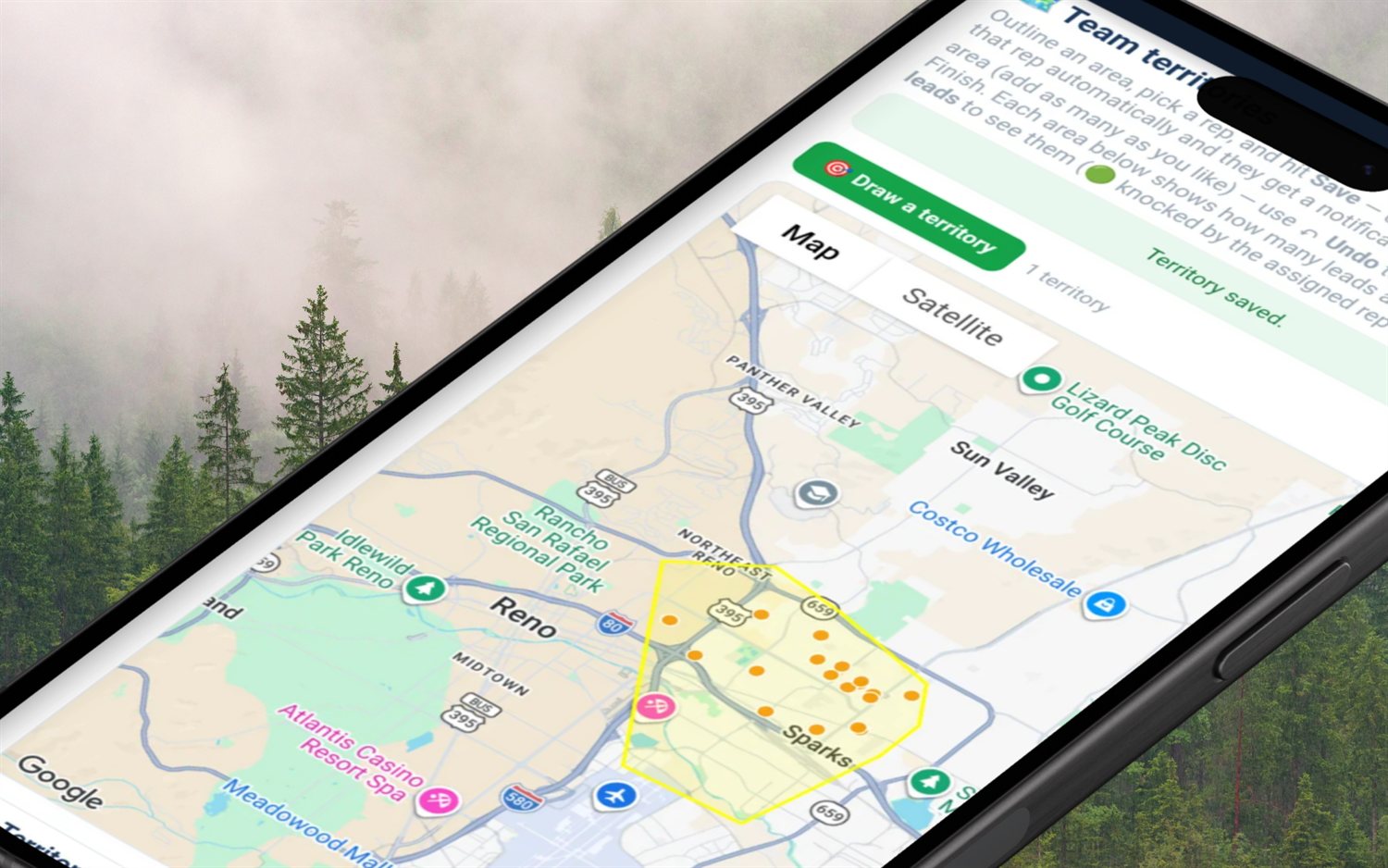
Draw an area on the map and one pull reveals up to 500 homeowners at once — the owner’s name, mailing address, whether they live there or it’s likely a rental, and their estimated age. Every plan with the owner reveal includes 50 pulls a month — that’s up to 25,000 homeowners of rich data every month. Run out and $10 adds another 50 (about 20¢ a pull).
Start a 14-day free trial — no credit card — and draw your first territory this week. Flat month-to-month, cancel anytime.