A CRM for small business that does the work, not just the contacts
If your business sends people to customers' homes, your CRM has to know about visits, invoices and the regulars who come back every quarter. FieldStacker keeps all of that on the customer record.
14-day free trial · no credit card · from $30/mo · your techs are free
General CRMs are good at what they were made for. HubSpot tracks contacts and deals through a pipeline and has strong marketing email; its free plan covers up to 2 users and 1,000 contacts. Zoho CRM has a free edition for 3 users, and Zoho's simpler Bigin has a free plan for 1 user and 500 records (all from their own pricing pages, checked October 26, 2026). If you sell software, consulting or B2B services, start there.
A service business has a different day. The "deal" is a Tuesday visit at 10am. The pipeline is the schedule. The most valuable customer isn't the biggest deal; it's the one on a quarterly plan who has paid on time for three years. A general CRM can store those facts as notes and custom fields, but it won't dispatch the tech, charge the card on file or remind the customer before the visit. You end up paying for a second app and copying data between them.
What a service business needs from its CRM
Each of these is part of the customer record, not a separate tool.
The customer's whole history
Address, every visit, every estimate and invoice, job photos and notes. When they call, you see what you did last time and what they paid.
Regulars on a plan
Service plans keep recurring visits on the calendar, weekly through yearly, for any trade. Card on file and autopay charge each visit.
A schedule, not a task list
Every tech down the side, days across the top. Drag a job and the customer's Google Calendar invite moves with it.
Paid in the same app
Quick invoices, card payments through your own Stripe account with no FieldStacker fee on top, and reminders for unpaid invoices.
A portal for customers
Customers sign in to pay, see estimates, receipts and upcoming visits, and reschedule a booking without calling you.
A mobile CRM for the truck
It runs on your phone, and your techs use it on theirs at no extra cost. Look up a customer or take a payment from the driveway.
Try a CRM built for service work, free for 14 days
Moving from HubSpot or a spreadsheet? We import your customers and jobs for free.
- No credit card to start
- From $30/mo after the trial
- Your techs and cleaners are free
- Cancel any time from the app
General CRM or service CRM: a fair comparison
Both are good tools. They answer different questions. Free-plan limits checked on each vendor's pricing page October 26, 2026.
| What you need | General CRM (HubSpot, Zoho CRM, Bigin) | FieldStacker |
|---|---|---|
| Contacts and a sales pipeline | Strong | Yes |
| Marketing email and campaigns | Strong, especially HubSpot | Email campaigns, offer pages, QR codes, postcards |
| Technician schedule board | Not the focus; usually a second app | Yes, Day / Week / Map |
| Recurring visits charged to a saved card | Not the focus; check their site | Yes, service plans + autopay |
| Customer portal with visits and receipts | Check their site | Yes |
| Free plan | HubSpot: up to 2 users, 1,000 contacts · Zoho CRM: 3 users · Bigin: 1 user, 500 records | No free CRM plan; 14-day trial, free digital business card |
| Paid price | HubSpot Starter listed from $7/seat/mo · Bigin from $7/user/mo yearly ($9 monthly) | $30/mo Pro, techs free |
The regulars run themselves
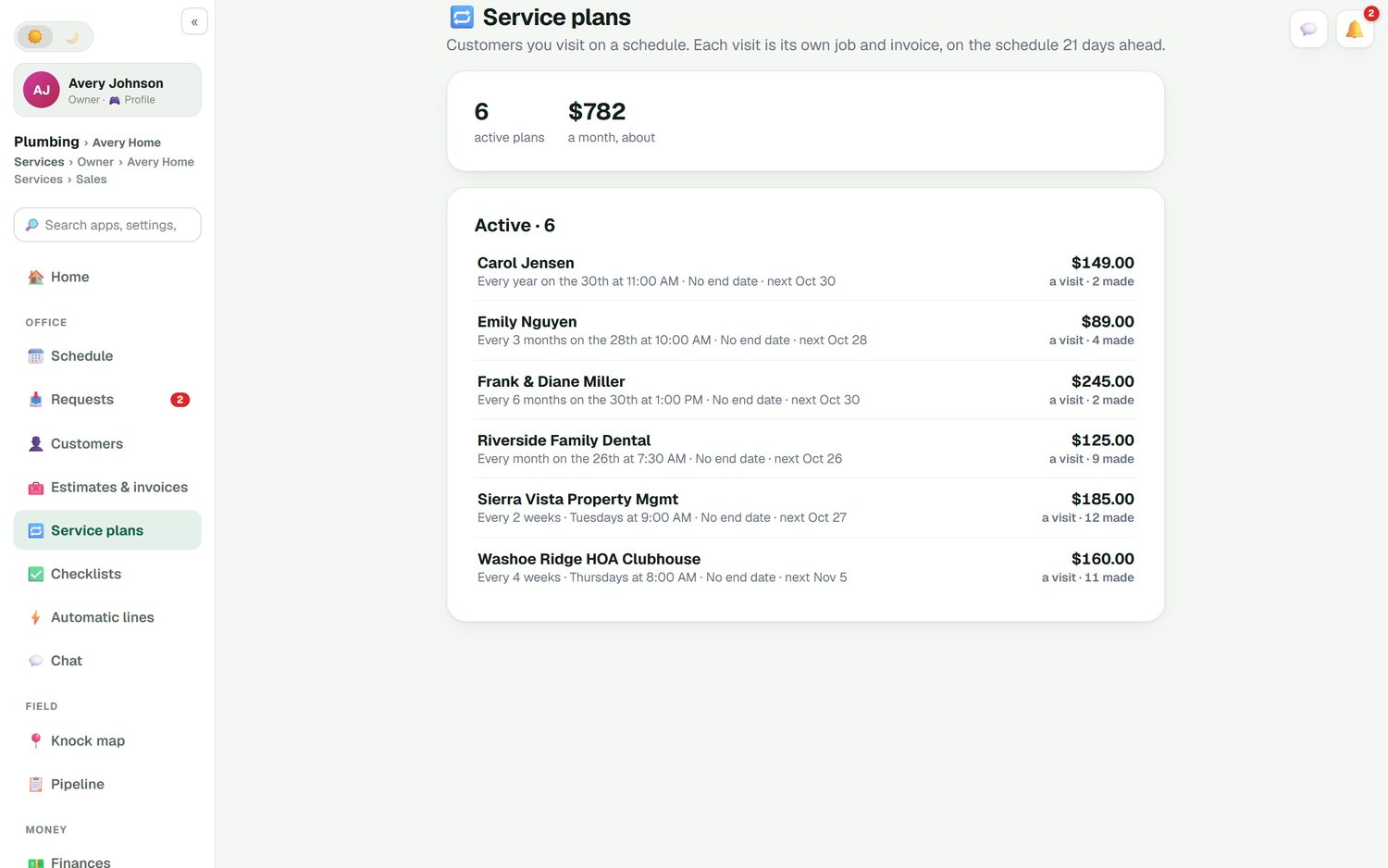
Turn any finished job into a service plan: every two weeks, every month, every quarter, once a year. Each visit becomes its own job and invoice on the schedule ahead of time, and the saved card is charged after each one. You see how many active plans you have and roughly what they bring in each month, which is the number that tells you if the business is growing.
- Weekly through yearly, for any trade
- Card on file and autopay for each visit
- Customers manage visits on their own page
Customers find their own receipts and visits
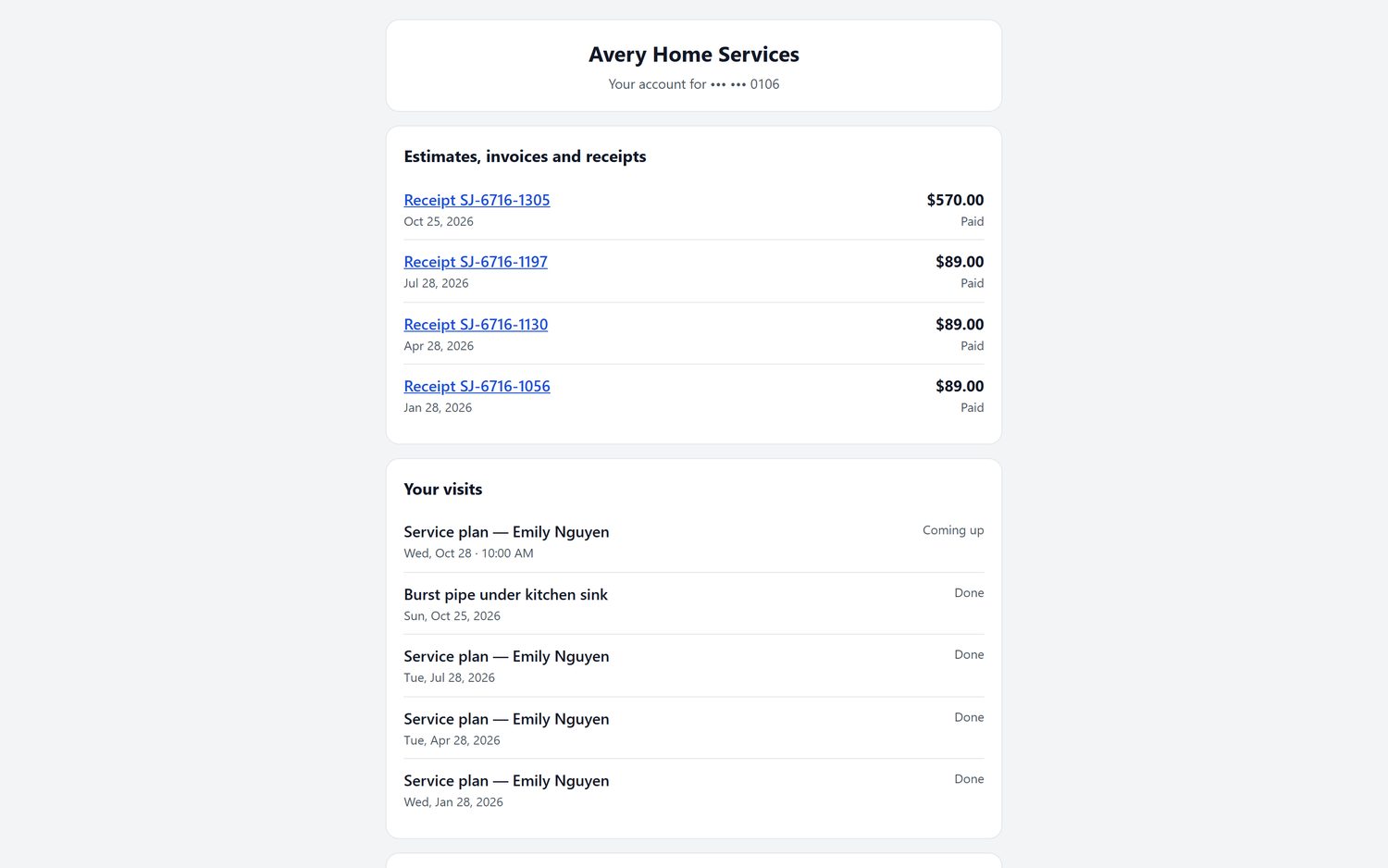
"Can you resend that invoice?" and "When are you coming next?" are calls you don't need. Each customer has a portal where they pay invoices, see estimates, receipts and billing history, check upcoming visits and reschedule a booking. When we host your website, the portal runs on your own domain.
- Pay invoices and see receipts
- Upcoming and past visits in one list
- Reschedule a booking without calling
Estimates and invoices on the same list
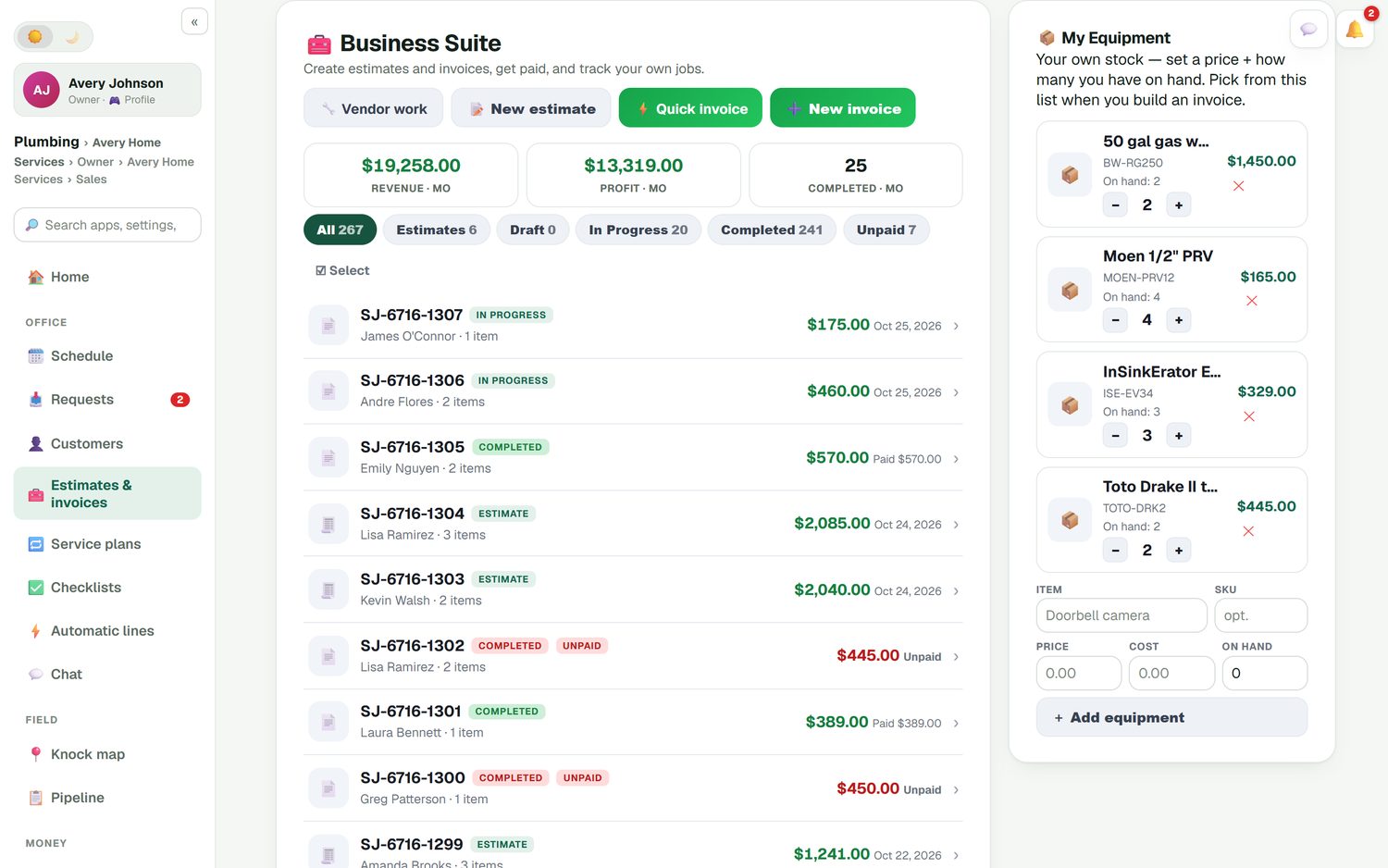
Every estimate, job and invoice sits in one list you can filter: estimates waiting, jobs in progress, completed, unpaid. The top shows revenue and profit for the month. Invoices and payments sync to QuickBooks Online automatically, so your bookkeeper sees the same numbers you do.
- Revenue, profit and completed jobs this month
- Batch-invoice up to 100 finished jobs at once
- QuickBooks Online sync (not Desktop)
Small business CRM questions
What is the best CRM for small business?
It depends on what your business does all day. If you sell by email and phone and need marketing tools, a general CRM like HubSpot or Zoho is a strong choice. If you send people to customers' homes to do work, you need the schedule, the invoice and the recurring visits in the same record, which is what FieldStacker is built for.
Is HubSpot good for a small service business?
HubSpot is a good CRM, and its free plan is generous: free for up to 2 users with 1,000 contacts, per its pricing page checked October 26, 2026. It is built around contacts, deals and marketing. A service business usually still needs a separate tool for the crew schedule, job checklists, recurring visits and charging a card when the job is done.
What is a simple CRM for small business?
A simple CRM is one you open every day because it holds the work, not just names. In FieldStacker the customer list, estimates, schedule and invoices are the same screens, so there is nothing extra to keep up to date after the job.
Is there a CRM app I can use on my phone?
Yes. FieldStacker is a mobile CRM that runs on your phone: look up a customer, build an estimate, take a card payment or check tomorrow's schedule from the truck. Your techs use it on their phones too, at no extra cost.
Can I move from HubSpot or another CRM?
Yes. Free import from HubSpot, Jobber, SalesRabbit or your current CRM is included. You can also upload a CSV or Excel file up to 250 MB yourself, with undo if the columns land wrong.
How much does FieldStacker cost for a small business?
Pro is $30/mo, or $25/mo billed yearly, for one owner, and includes a website and 10 business email addresses on your domain. Team is $60/mo for you plus 2 seats. Technicians you add are free. Every plan has a 14-day free trial with no credit card.
Related: CRM for contractors · lead management · free CRM options · house cleaning · pest control · pricing
Run your customers and your schedule in one place
14-day free trial, no credit card. Import your customer list and book your first job today.