Roof measuring software in one tap on the house
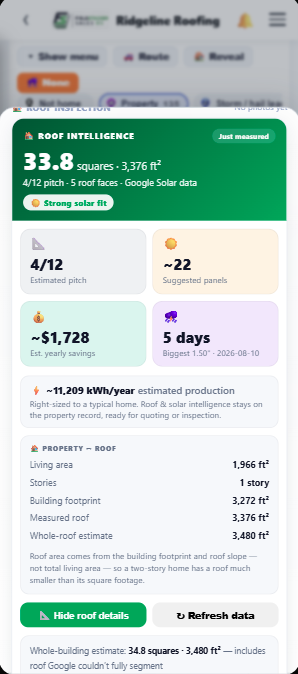
Open a house on the map and tap Measure roof. You get the roof area, squares, average pitch and number of roof faces from satellite building data, before you set up a ladder.
14-day free trial · no credit card · from $30/mo · your crew is free
Roofers measure a roof three or four times before it is built. Once to decide whether the lead is worth the drive, once on the inspection, once for the estimate and once for the material order. The first of those does not need a ladder or a paid report. It needs a fast, honest number you can trust to within reason.
That is what the Measure roof button is for. Use it to size a roof from the office, sort a list of leads by how big the job is, or give a homeowner a ballpark on the phone. Then climb the roof, check the pitch and the decking, and write the real estimate.
What the Measure roof button gives you
Four numbers, where they come from, and what to do when the satellite has nothing or you need exact edges.
Roof area
The sloped surface of the roof in square feet, not the floor area of the house. A two-story home can have a smaller roof than its living space.
Squares
Roof area divided by 100, the unit roofers buy and price shingles in. The bill of materials adds waste to field shingles only.
Average pitch
The average slope across the roof, such as 4/12 or 8/12. Steeper roofs mean more surface and often a steep charge.
Roof faces
How many separate planes the roof has. A simple gable has two; a cut-up hip roof with dormers has many more, and more waste.
About a cent a house
Each measurement costs about a cent and is cached once per house, so reopening the same roof does not measure it again.
Trace, type or import
Where there is no satellite coverage, trace the roof yourself on the map. Coverage varies, so expect to do this sometimes. For exact edges, type them in or import a report you already bought.
Measure your next roof from the map, free for 14 days
Open the knock map, find a house and tap Measure roof.
- No credit card to start
- From $30/mo after the trial
- Your techs and cleaners are free
- Cancel any time from the app
Why the roof is bigger than the house
A roof's surface is its footprint times a pitch factor. A flat footprint of 2,000 square feet at a 6/12 pitch is about 2,236 square feet of roof, or 22.4 squares, before overhangs and waste. The steeper the pitch, the bigger that factor gets. The Measure roof result shows the area and average pitch together, so you can see how the squares were reached instead of taking a number on faith.
| Pitch | Multiply footprint by | 2,000 ft² footprint becomes |
|---|---|---|
| 4/12 | 1.054 | about 21.1 squares |
| 6/12 | 1.118 | about 22.4 squares |
| 8/12 | 1.202 | about 24.0 squares |
| 10/12 | 1.302 | about 26.0 squares |
| 12/12 | 1.414 | about 28.3 squares |
Standard pitch factors (the square root of 1 + (rise ÷ 12)²). Waste and overhangs are extra.
The measurement sits with the homeowner
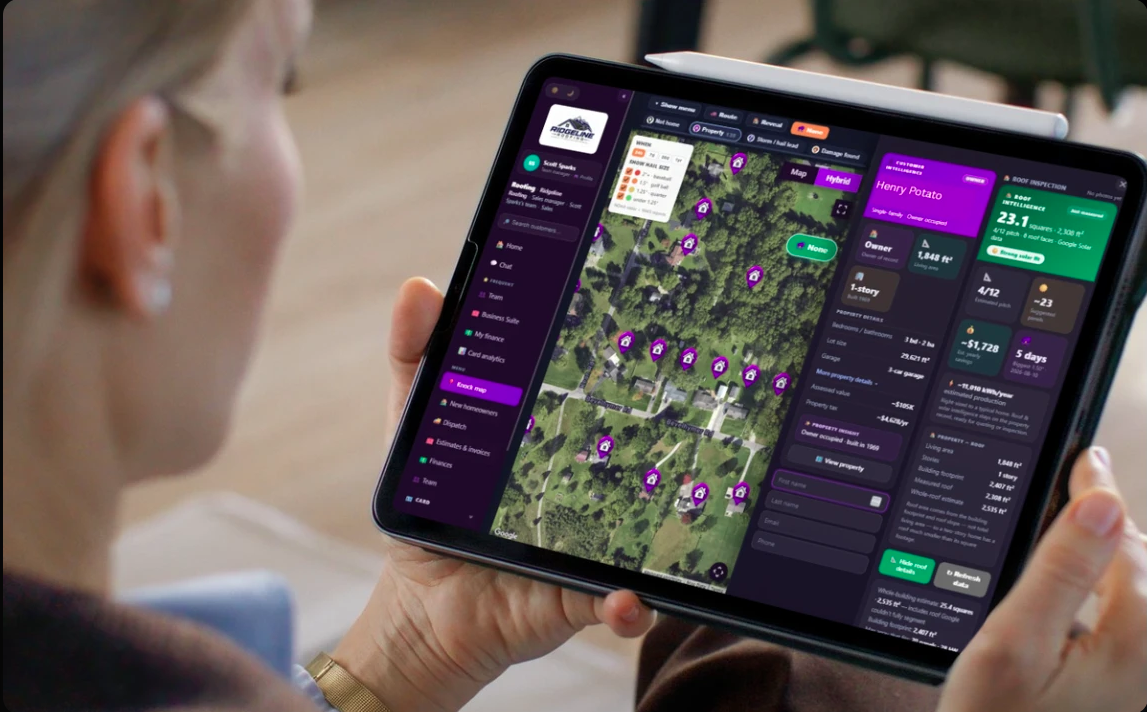
The roof measure lives on the same house card as everything else you know about the lead. The owner's name if you have revealed it, your notes and voice notes, the go-back you set, and the Quote button. A rep at the door can say "your roof is about 24 squares" with a straight face, and the office can look up a request's address on the map and size the roof before deciding who drives where.
- On the knock map, on your phone, tablet or office computer
- Next to the owner reveal, notes and go-backs for that house
- Cached once per house, so reopening it does not measure again
When you still need a tape or a certified report
A satellite roof measurement is an estimate. Trees over the roof, deep overhangs, a new addition, a flat section over the porch or an old image of the area can all move the number. It is not a certified measurement report, and FieldStacker does not sell or order aerial measurement reports. When you need one, for an insurance claim, a supplier that requires it, or a roof too complex to trust from above, buy it from a measurement vendor. Roofr, for example, sells reports from $13 each on its paid plans and $19 on its free Starter plan (checked October 26, 2026). Then import it: EagleView, Roofr, Hover and GAF QuickMeasure reports load as PDF, CSV, JSON or XML, and the quote and material list use its edges instead of the estimate.
- Use the satellite measure to qualify, size and ballpark
- Confirm pitch, layers and decking on the inspection
- Trace, type or import the edges before you order materials
- The material order email will not send while the edges are still estimates
Every measurement says where it came from
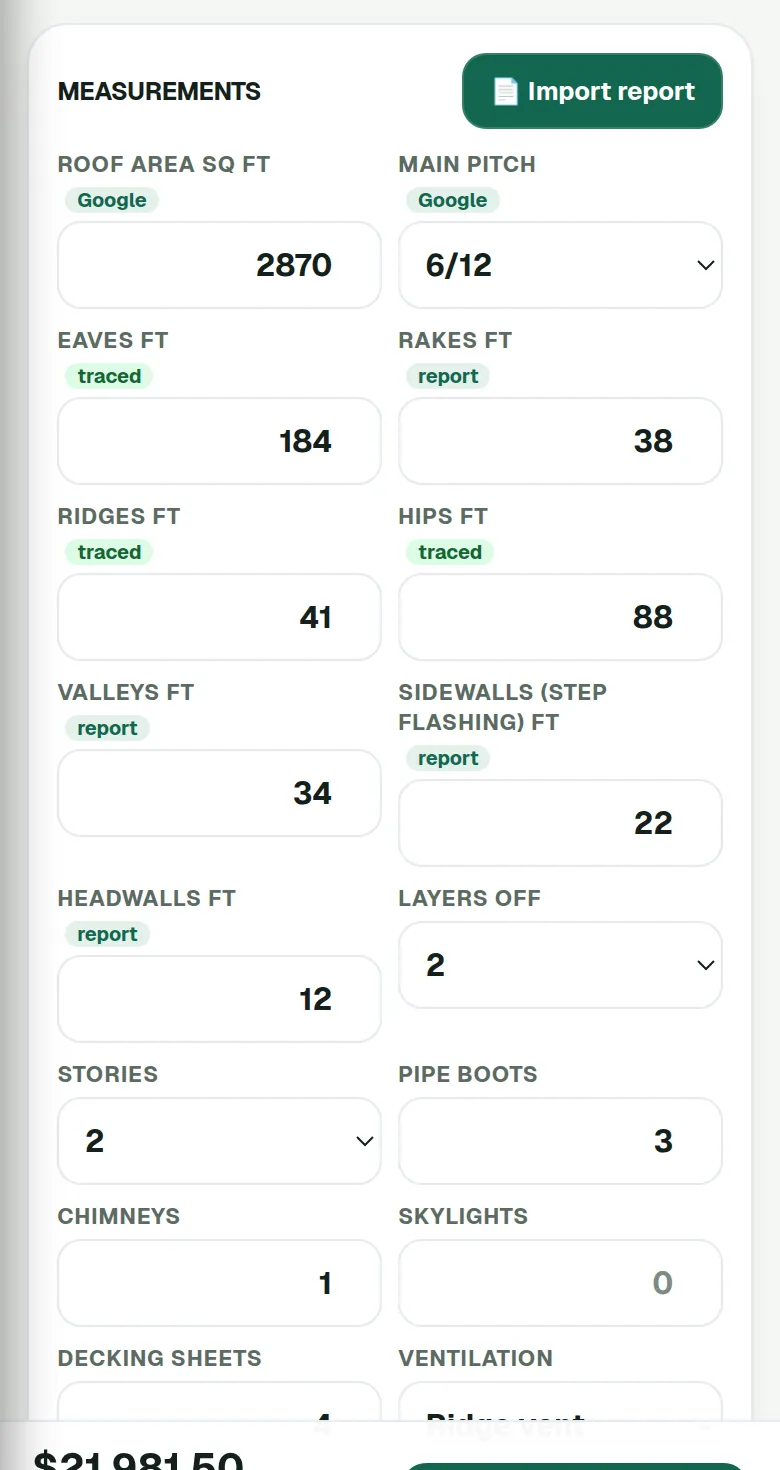
Measure roof fills in the roof area and main pitch from Google's satellite data. That is the starting point, not the finish. The edges a material order needs, eaves, rakes, ridges, hips, valleys, step flashing and headwalls, come from one of three places: trace them on the map, type them in from your tape, or tap 📄 Import report and load the EagleView, Roofr, Hover or GAF QuickMeasure report you bought, as a PDF, CSV, JSON or XML file. Each box carries a small tag, Google, traced or report, so whoever opens the job later can see which numbers were checked and which are still an estimate. Layers, stories, pipe boots, chimneys, skylights and decking sheets sit on the same card.
- Mix sources: a report's valleys next to ridges you traced yourself
- Change a number and the quote and the material order use the new one
- FieldStacker does not sell or order reports; you import the one you trust
From the measurement to the supplier
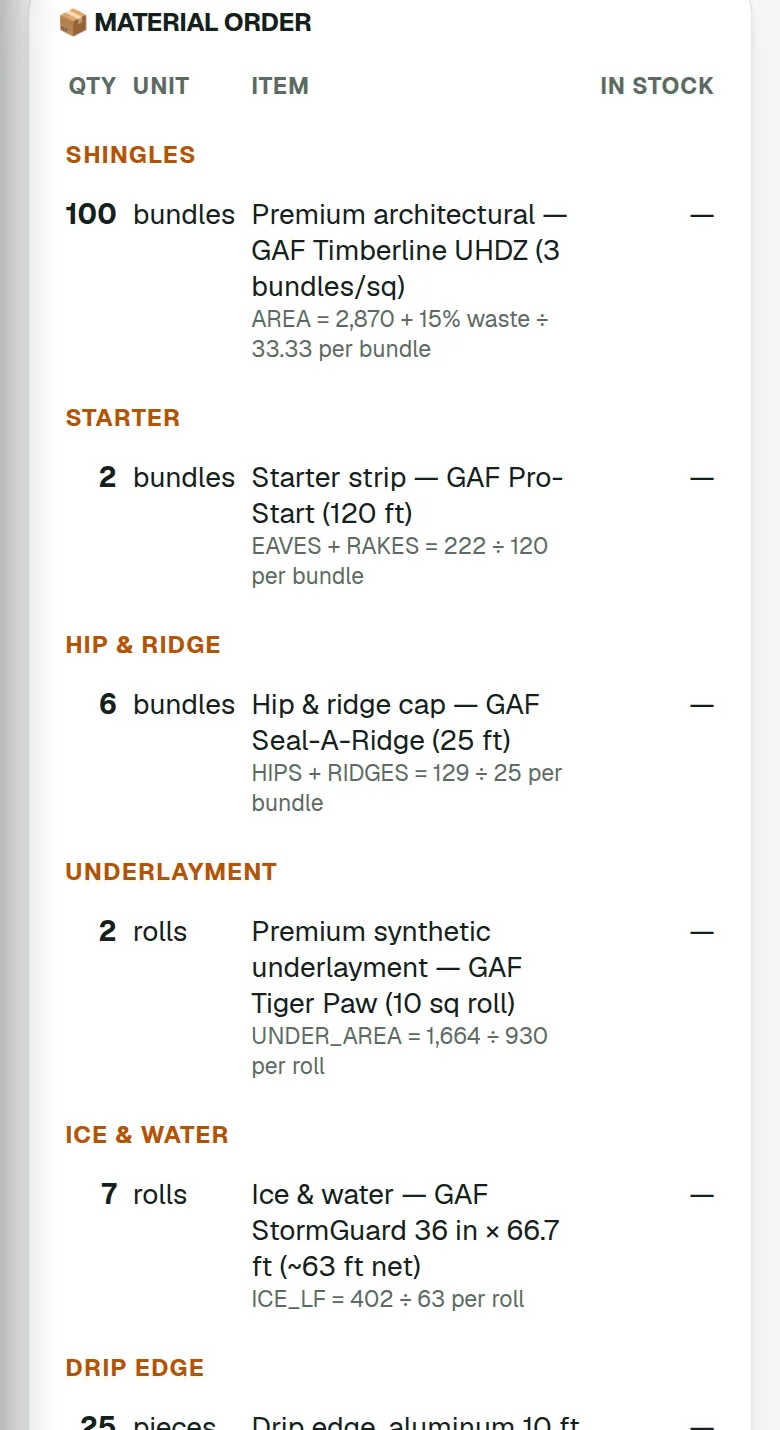
The measurement is what the material list is made from. Shingle bundles come from the roof area plus waste, starter from the eaves and rakes, hip and ridge from the hips and ridges, and so on down the list, with the formula printed under each line so you can check it against your own numbers. Once the edges are traced, typed or imported, email the order to your supplier from your business email, or print or copy it. While the edges are still estimates, FieldStacker will not email it.
- Waste on field shingles only
- Formulas, products and costs are yours to edit
- The same measurement prices the Good, Better and Best roof quote
From measurement to signed roof
How the measurement feeds the rest of the job.
Find the house
Search the address or tap the pin on the knock map, from a request, a storm list or a door your rep knocked.
Tap Measure roof
Read the area, squares, average pitch and roof faces. No coverage? Trace the roof by hand.
Inspect
Climb the roof, confirm the pitch and the layers, and take photos. Trace or type the edges, or import the report you bought.
Quote it
The Good, Better and Best options in the roof estimate price per square from the measurement, and the bill of materials works out the order. Then schedule it in roofing software.
Roof measuring questions
How accurate is satellite roof measurement?
Close enough to size a roof, qualify a lead and ballpark a price before you climb, which is what it is for. It reads the roof from satellite building data, so overhangs, trees, recent additions and low-slope sections can throw it off, and coverage varies by area. Confirm the numbers on the inspection before you order materials or give a final price.
Is it a certified roof measurement report?
No. It is FieldStacker's own measurement on the map, not a certified report and not a report from an aerial imagery vendor. FieldStacker does not sell or order reports. If an adjuster, a supplier or a contract needs a certified report, buy one from a measurement vendor and import it: EagleView, Roofr, Hover and GAF QuickMeasure reports load as PDF, CSV, JSON or XML, and the quote and the material order use its numbers.
Can I import an EagleView or Hover report into FieldStacker?
Yes. Import a report you already have from EagleView, Roofr, Hover or GAF QuickMeasure as a PDF, CSV, JSON or XML file. Its eaves, rakes, ridges, hips, valleys, flashing lengths and squares by pitch replace the satellite estimate, and the bill of materials works out each material line from them. You can also trace the edges on the map or type them in.
How much does it cost to measure a roof?
Each measurement costs about a cent per house. The result is cached, so opening the same house again does not measure it twice. The knock map it lives on is part of the Pro plan at $30/mo, or $25/mo billed yearly.
What if there is no satellite coverage for a house?
Then you trace the roof by hand on the map instead. Coverage varies by area. On the inspection, your tape and pitch gauge still have the final word.
Is there a good roofers app for measuring from my phone?
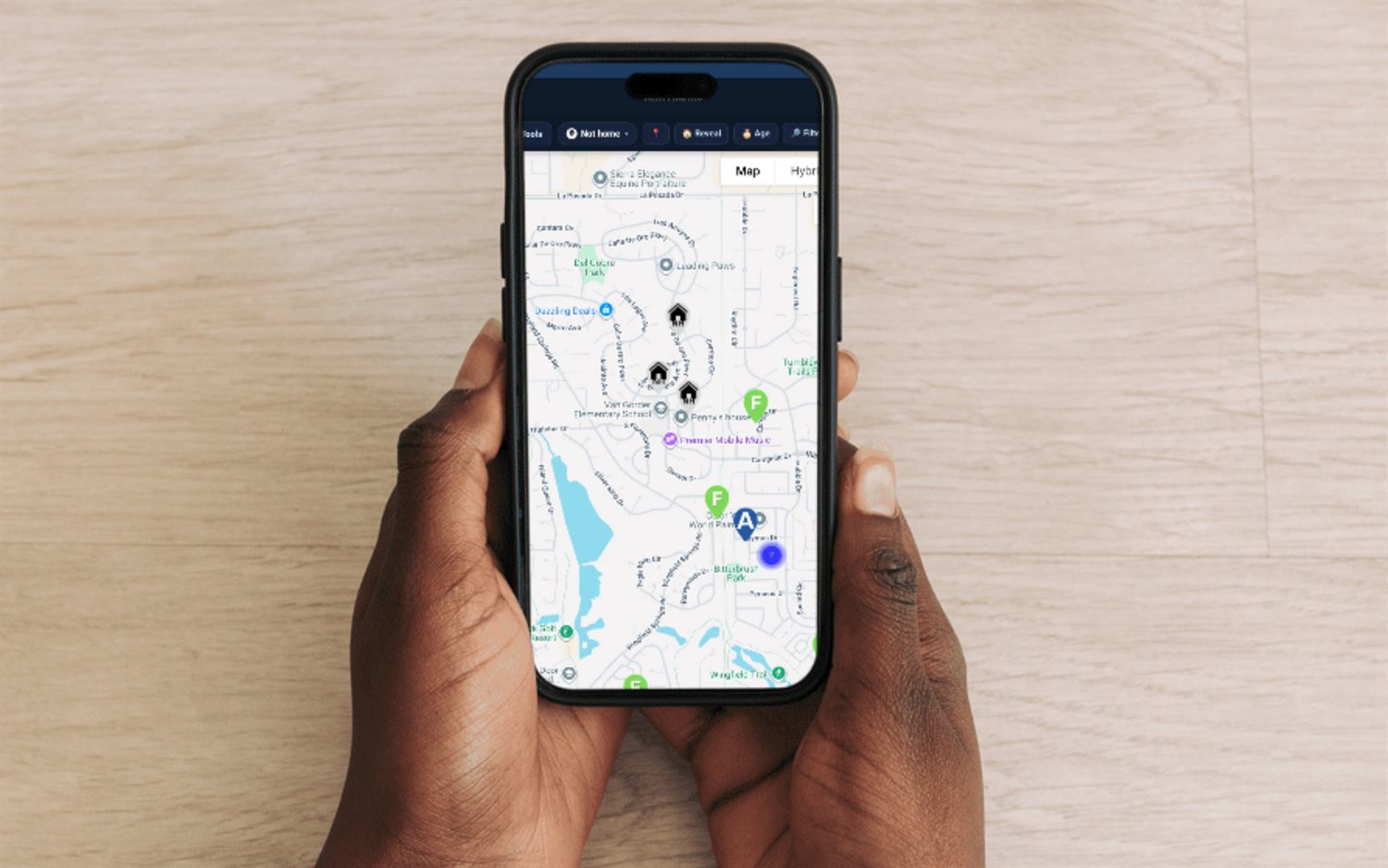
FieldStacker works on your phone. Open a house on the knock map, tap Measure roof, and the roof area, squares, average pitch and number of roof faces come back on the same card, next to the homeowner's details and your notes.
Can I use the measurement for an insurance claim?
Not the satellite number on its own. Adjusters usually expect a certified report or their own measurement. Buy the report, import it into FieldStacker, and the insurance estimate, the supplement requests and the material order run from its numbers. FieldStacker can read the adjuster's scope PDF for the claim, but it does not create Xactimate or ESX estimates.
Related: roofing sales CRM · roofing CRM · roof estimating software · pressure washing, priced from a satellite measurement · pricing
Size your next roof before you leave the office
14-day free trial, no credit card. Open the map, tap a house, and tap Measure roof.