Knock the whole radius around the house you're spraying this week, keep every peeling fascia and chalked south wall on a map, and track your commission, cancels and miles like a business. Built for canvassers, estimators and 1099 painting reps.
Flat month-to-month from $30/mo · 14-day free trial · no seat minimums, no annual contract
Exterior painting is the easiest trade in door-to-door to qualify and one of the hardest to organize. You can stand on the sidewalk and read the house: chalk on the south elevation, caulk split at the window perimeters, bare wood showing on the fascia and the gable ends, a garage door two shades lighter than the trim. The lead is right there. What kills painting reps is everything after that — forty half-remembered addresses in a notes app, a bid that sat for nine days while the couple argued about colors, a canvasser double-knocking a street another canvasser already burned, and a commission sheet nobody can reconcile after two cancels and a repriced job.
FieldStacker takes the street and the money and puts them in one app on your phone. The bid stays in your estimating tool, by design. Painting estimating is its own discipline — elevations, substrate, prep level, coats, lead-safe requirements on a pre-1978 house — and the tools built for it are good at it. So use both, and stop running your canvassing out of a group text.
All of it works today. None of it needs a trade-specific setup detour.
Draw a circle around the house you're painting Thursday, load every door inside it, and canvass the block while the ladders are still up. The truck in the driveway is your best proof — work it before it drives away.
Every chalked, peeling, rot-at-the-trim house you spot goes on the map as a pin instead of into a notes app you'll never open again. Route the cluster and work it in one pass.
Name your own stages — needs paint, measure set, bid delivered, waiting on colors, HOA approval pending, deposit taken, scheduled, cancelled — so a bid that's stalled on a color choice never looks the same as a bid that's dead.
Bring your old customer list in from a CSV or another CRM. Addresses geocode automatically, so the houses you painted six or seven seasons ago come back as pins right when they're due again.
See the crew on a live map with verified knocks. Two canvassers never burn the same street twice, and every door is attributed to whoever actually worked it when the setter bonus gets paid.
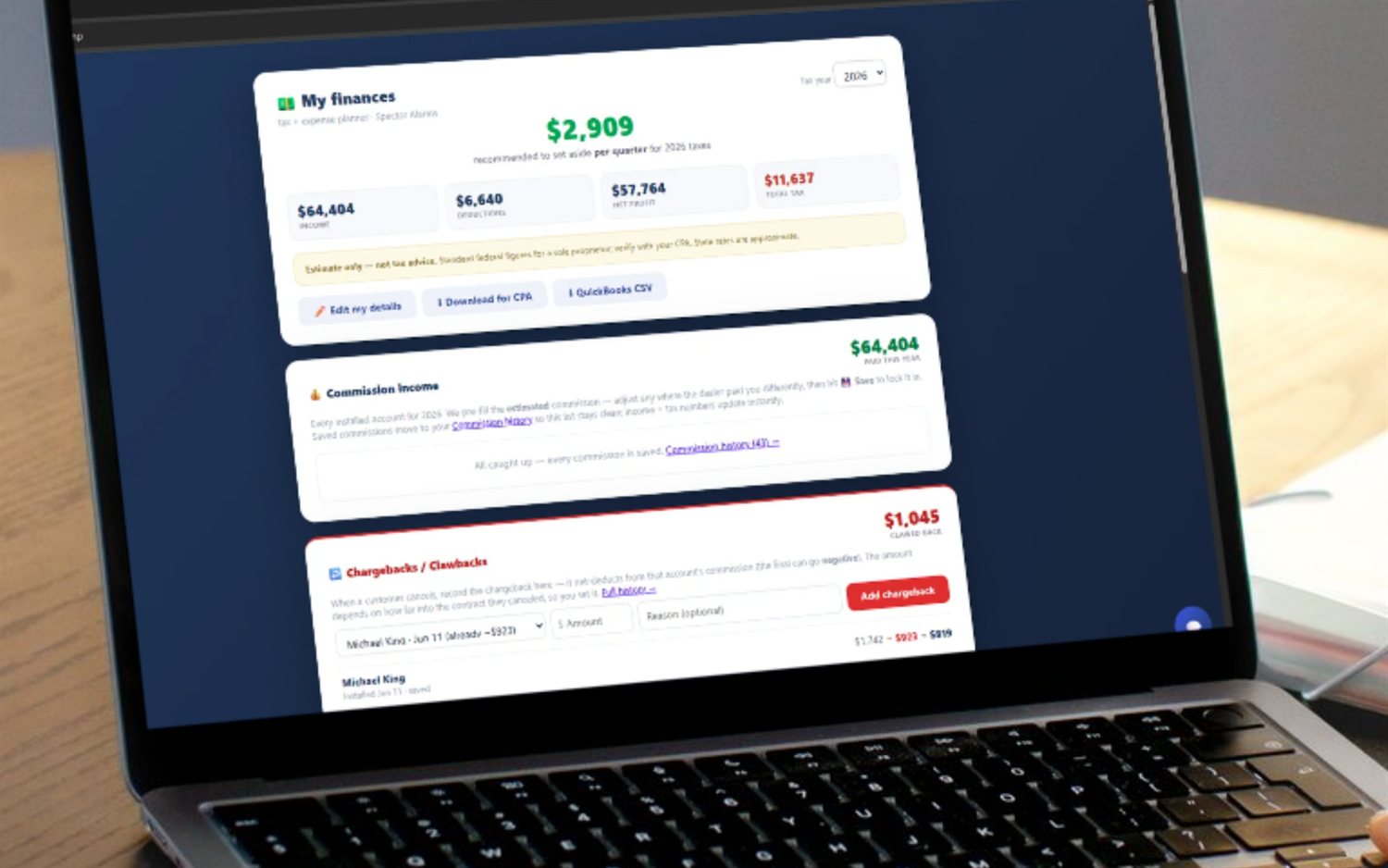
Your real commission on your own split, chargebacks netted out when a job cancels or gets repriced, automatic mileage at the IRS rate for a day of six measures, and a quarterly tax set-aside.
Pricing a repaint stays with the tool you already bid in. FieldStacker's built-in doorstep quote builder was written for alarm equipment and monitoring plans; generalizing it to siding square footage, prep hours, gallons and coats is on the roadmap, not shipped. Exterior takeoff and color are real trades of their own.
From a yard sign to a job that's finished, collected and paid out.
Circle this week's job site. Load the doors inside it, route them, and hand each canvasser a slice so nobody knocks the same street twice.
Rub the siding, show them the chalk on your hand, point at the bare wood on the fascia. Disposition the door and set the walk-around — then price it in your bidding tool on site.
Follow it through colors, the three-day cancel window, the start date and the final payment. Commission, chargebacks, miles and the tax set-aside update as it moves.
Canvassing apps stop at the map and hand your commission math back to a spreadsheet. In this trade the spreadsheet loses, because a signed painting contract is not a paid painting contract: there's a three-day right to cancel on most door-to-door sales, a measure that missed rot gets repriced, a homeowner drops the back fence from the scope, and every so often a final balance just doesn't land.
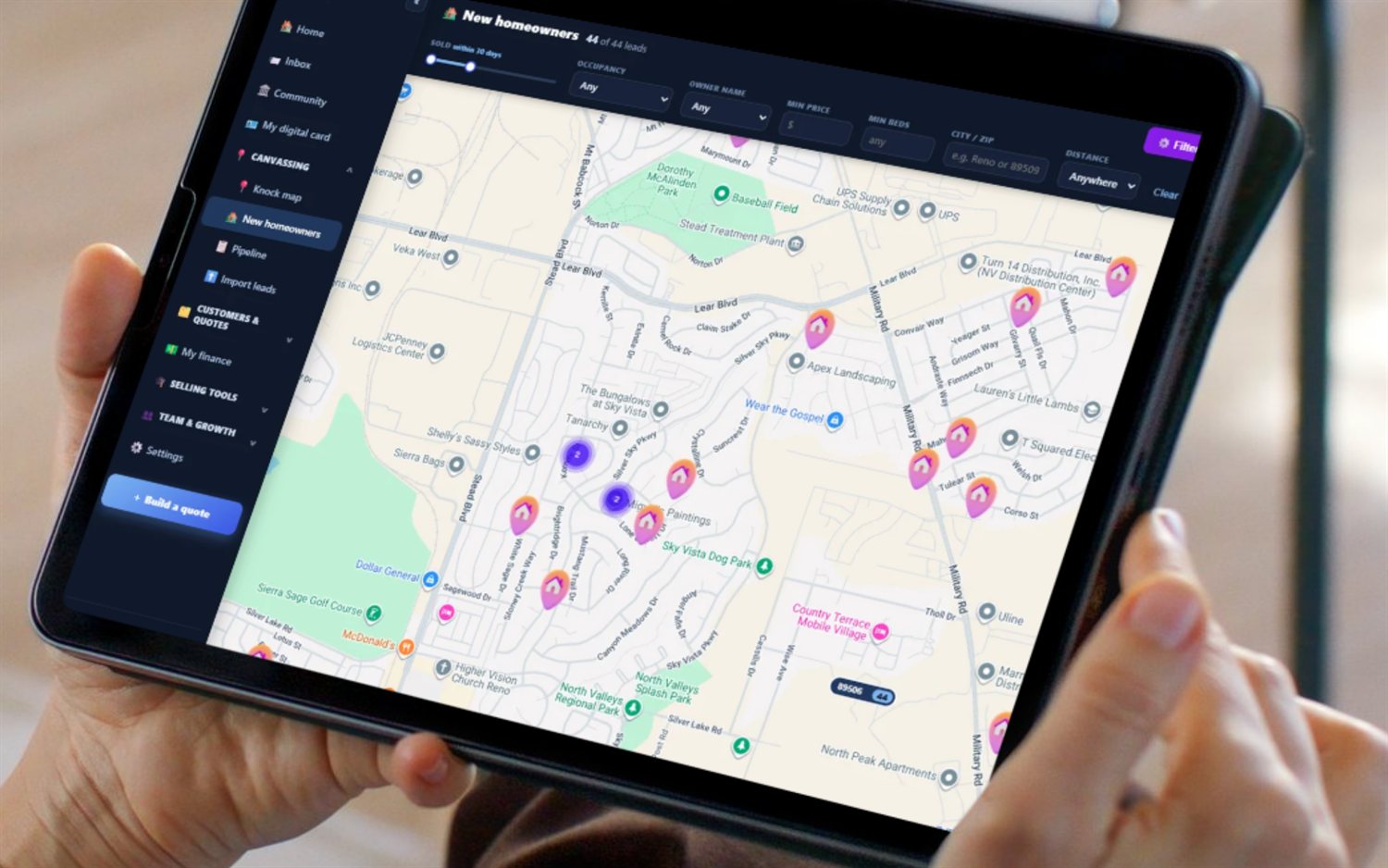
New owners change the house. Paint is the cheapest way to make a place feel like theirs, and the exterior color they inherited is usually the previous owner's taste, not their own. FieldStacker's new-homeowner lead source drops recently-sold homes onto the same knock map as everything else, so you can knock the block where three houses just changed hands instead of guessing.
Exterior painting stops when the weather says so. Most acrylic exterior coatings want surface temperatures above roughly 50°F unless you're buying a low-temp product, and nothing goes on a wet wall, so a crew in the upper Midwest or New England is realistically selling exteriors for seven to nine months and a Sun Belt crew is dodging heat and monsoon instead of frost. Either way, a twelve-month per-seat contract for a canvassing platform is a strange thing to sign in February.
FieldStacker is flat and month-to-month from $30/mo, with a 14-day free trial that doesn't ask for a card, no seat minimums and no annual commitment. Staff up for the spring push, drop back to one seat in December, come back in March. Platforms like SalesRabbit and SPOTIO are capable canvassing tools, but they're sold per seat and typically on an annual agreement, and they leave your personal commission, chargebacks, mileage and taxes to a spreadsheet — check their sites for current pricing. If you want the side-by-side, we wrote FieldStacker vs SalesRabbit and FieldStacker vs SPOTIO.
Plenty of painting crews also knock roofing after a hail event, and a lot of exterior reps pick up gutters, siding or pressure washing as a second offer. Turn on the industries you actually sell and work them from one FieldStacker account — one map, one set of stats, one bill. The alarm side is powered by FieldStacker Security, our alarm edition, on the same backend. See all industries, or the roofing and solar pages.
Four companion guides written for this trade specifically, not recycled from another vertical.
Openers built on visible failure, plus the objection branches — "we just had it done," "I'm going to do it myself," "we're putting siding on." Read the scripts →
Territory choice by housing age and substrate, the temperature window, the walk-around, the close and the follow-up cadence. How to sell painting D2D →
Percent of contract vs percent of gross profit, setter fees, overage splits, and every clawback in the trade. Painting sales commission →
What canvassers, first-year reps and veteran estimators actually take home, and the 1099 math underneath it. What painting reps make →
Yes for the canvassing and the money side of painting sales. Exterior painting is the rare trade where the buying signal is visible from the sidewalk — chalking on a south wall, failed caulk at the window trim, bare wood on the fascia — so the job is finding those houses fast and never losing one. The knock map, drawn territories around an active job site, custom dispositions, GPS-verified team knocks, route building and 1099 financials all work for a painting crew today. Your takeoff and proposal tool keeps measuring siding and pricing the repaint; FieldStacker runs the street around it.
No — takeoff, gallons and proposals stay in your estimating stack. Exterior takeoff is real work — siding square footage by elevation, window and door counts, substrate (wood lap, T1-11, cedar shake, stucco, fiber cement, aluminum), prep level, coats, sheen, ladder versus lift, and whether the house is pre-1978 and falls under the EPA lead-safe RRP rule. Tools like PaintScout, Estimate Rocket, Jobber or Housecall Pro exist for that, HOVER or a laser measure and a wheel handle the measurements, and Sherwin-Williams ColorSnap or the Benjamin Moore visualizer handle color. FieldStacker's own doorstep quote builder is alarm-native today. Keep your estimating stack; FieldStacker runs the street around it.
This is the single best use of the product for a painter. A crew spraying a house on Thursday is the strongest proof you will ever have, so trace a territory around that address, load the doors inside it, and knock the block while the truck and the ladders are still out front. Every knock is dispositioned and GPS-verified, so the canvasser working the north side never re-knocks the south side, and the whole radius gets covered before the scaffolding comes down. Do that around every job all season and the yard sign stops being decoration and starts being a lead source.
Yes — import it. Exterior repaints typically come back around every five to ten years depending on substrate and exposure, which means the customers you painted six or seven seasons ago are your warmest doors this spring. Import them from a CSV or another CRM and the addresses are geocoded automatically, so an old spreadsheet turns into pins on the knock map. Add a "repaint due" disposition, route the ones that cluster, and knock them with a reason no cold canvasser can match: you painted this house, you know exactly what was on it, and you know what has failed since.
Yes, and painting needs it more than most trades. Log the job, see your real commission on your own percentage or gross-profit split, and net out the chargebacks this trade actually produces — a three-day cancellation under the door-to-door cooling-off rule, a job repriced after the crew finds rot the measure missed, a discount you gave away at the table, or a final balance the homeowner never paid. Mileage is captured automatically at the IRS standard rate, which matters when you drive to six measures a day, and a quarterly set-aside builds so the off-season tax bill is not a surprise.
It is one of the reasons the pricing is built this way. Every plan is flat and month-to-month, starting at $30/mo, with a 14-day free trial that takes no credit card, no seat minimums and no annual contract. If your season closes in November you are not locked into a twelve-month agreement to keep a map you cannot use until March. Add crew seats when the spring push starts and drop back down when the last house is done. Most canvassing platforms sell annual, per-seat contracts, which is a poor fit for a trade that stops when the surface temperature does.
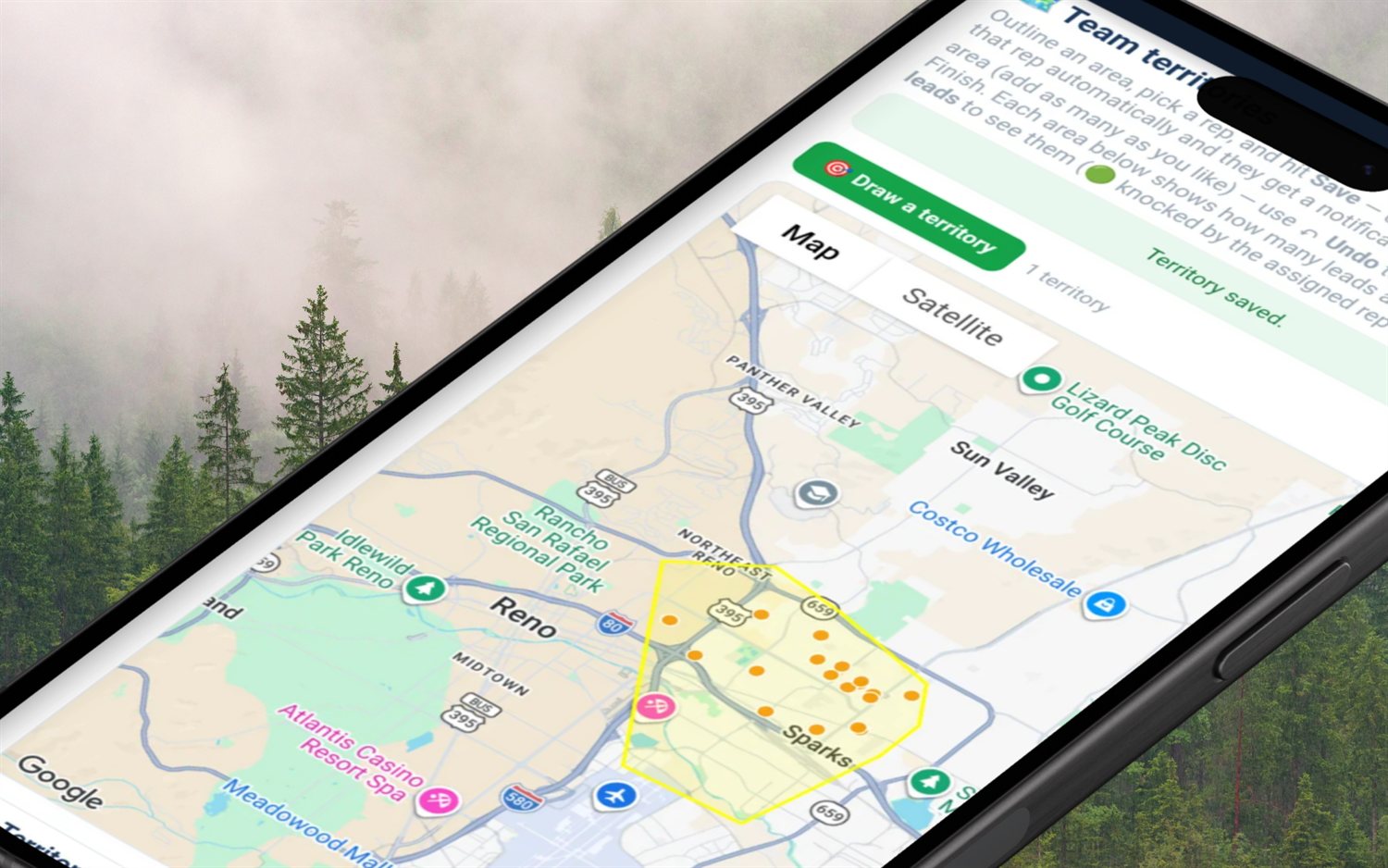
Draw an area on the map and one pull reveals up to 500 homeowners at once — the owner’s name, mailing address, whether they live there or it’s likely a rental, and their estimated age. Every plan with the owner reveal includes 50 pulls a month — that’s up to 25,000 homeowners of rich data every month. Run out and $10 adds another 50 (about 20¢ a pull).
Start a 14-day free trial — no credit card — and canvass the block around your current job before the ladders come down. Flat month-to-month, cancel anytime.