Sell the street you already service. Tight route-density territories, every door qualified from the sidewalk, seasonal dispositions that survive a "call me in March," and commission tracked through the chargeback that hits when an account cancels before the second application.
Flat month-to-month from $30/mo · 14-day free trial · no seat minimums, no annual contract
Lawn care is the one door-to-door trade where you can qualify the prospect before you knock. A solar rep guesses at the utility bill. A roofer needs a hail map. You are looking straight at crabgrass creeping into the strip by the driveway, a thin shaded patch under the maple, a service flag stuck at the end of the walk that tells you exactly which competitor already has the account and what day they came. Nobody has to give you data. The lawn is the data.
What actually gets sold at these doors splits three ways, and they behave nothing alike. There is the recurring treatment program — fertilization and weed control on a five to seven step calendar, plus grub, mosquito or perimeter as add-ons — which is a subscription sale with retention math behind it. There is maintenance: the weekly or biweekly cut, where a single account is worth little but twelve accounts on one street are worth a great deal. And there is design/build — patios, walls, plantings, irrigation, sod, drainage — which is a four-figure to six-figure project sale that starts with a site visit and closes weeks later. FieldStacker handles the canvassing and the money for all three, and gets out of the way of the software that runs the crews.
All of it works today, for treatment programs, maintenance routes and design/build alike. No setup detour, no vertical-specific configuration required.
Drop a pin the second you spot the weeds, the flag, the dead patch or the freshly sodded new build. Every door carries a note and a color, so tomorrow's rep sees what yesterday's rep saw from the curb.
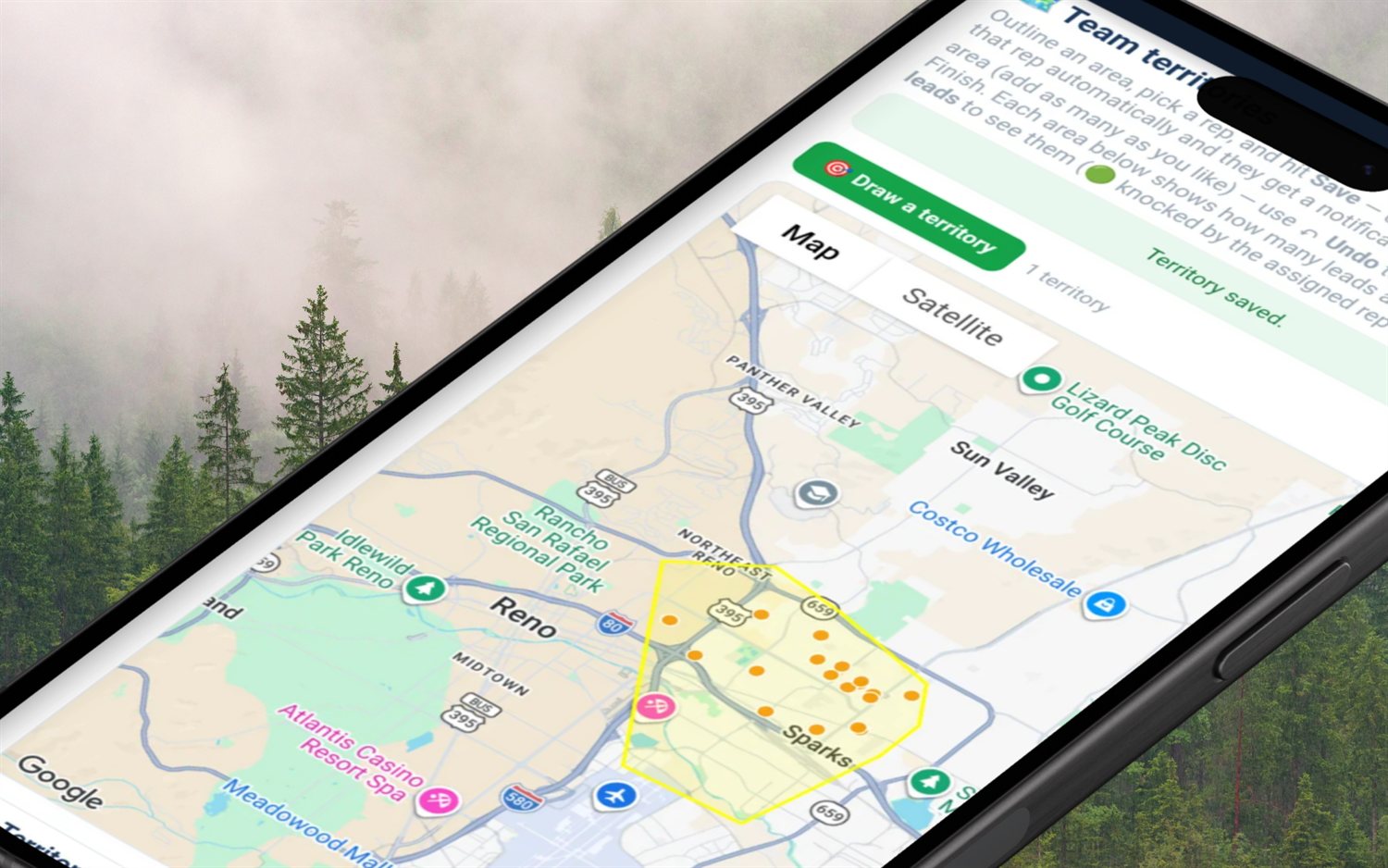
Trace the blocks you already run a truck down and assign them. In this trade a scattered book of business costs you drive time every single week for years — density is the whole margin.
Name your own stages. "Has TruGreen — renews in March", "DIY, quoted", "measure set", "design presented", "wants fall aeration only". The half of your book that says "not now" is next season's revenue if you tag it properly.
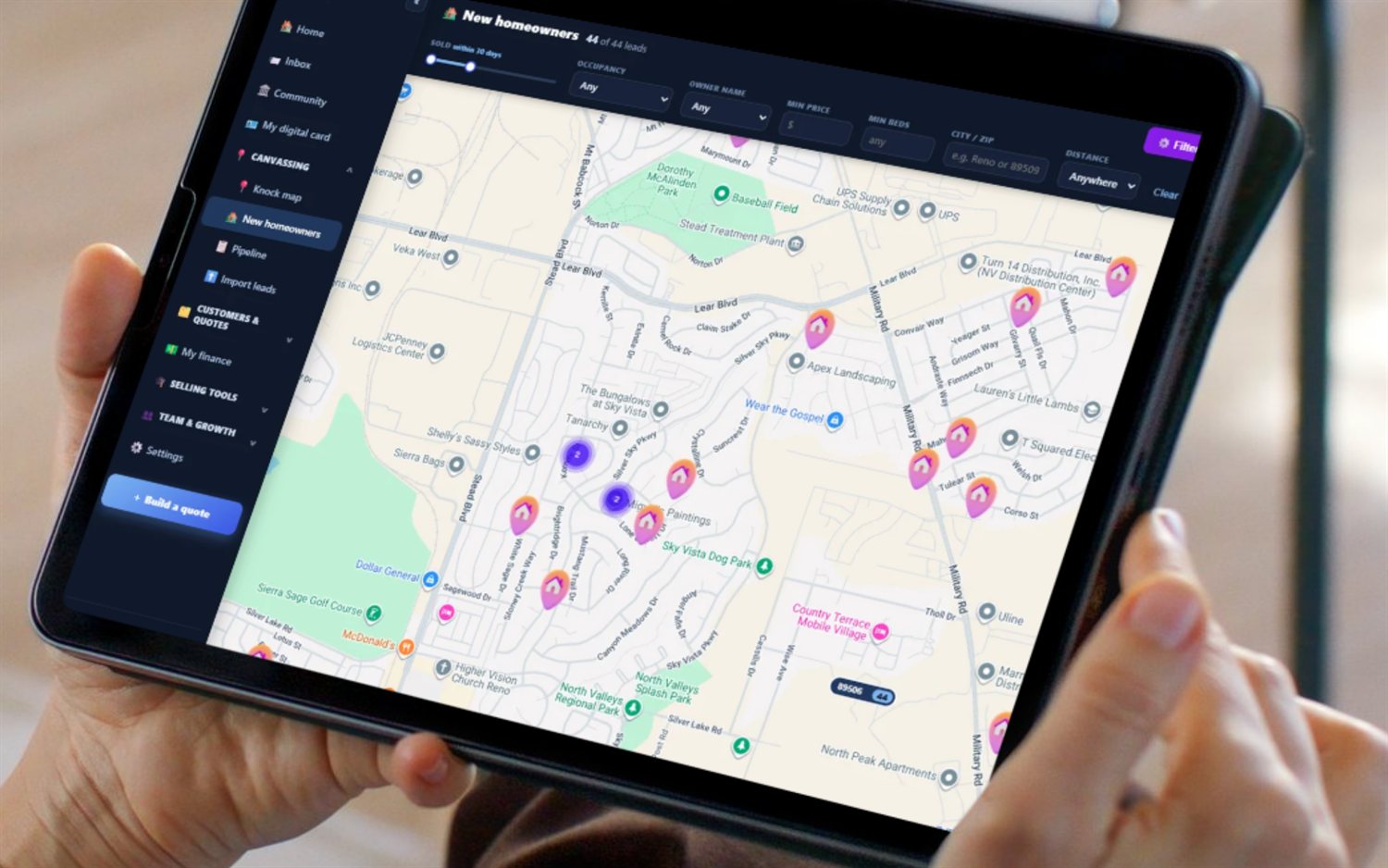
A house that changed hands ninety days ago has no lawn guy, an inherited lawn nobody fed last year, and an owner actively picking every household service. It is the warmest cold door in this trade.
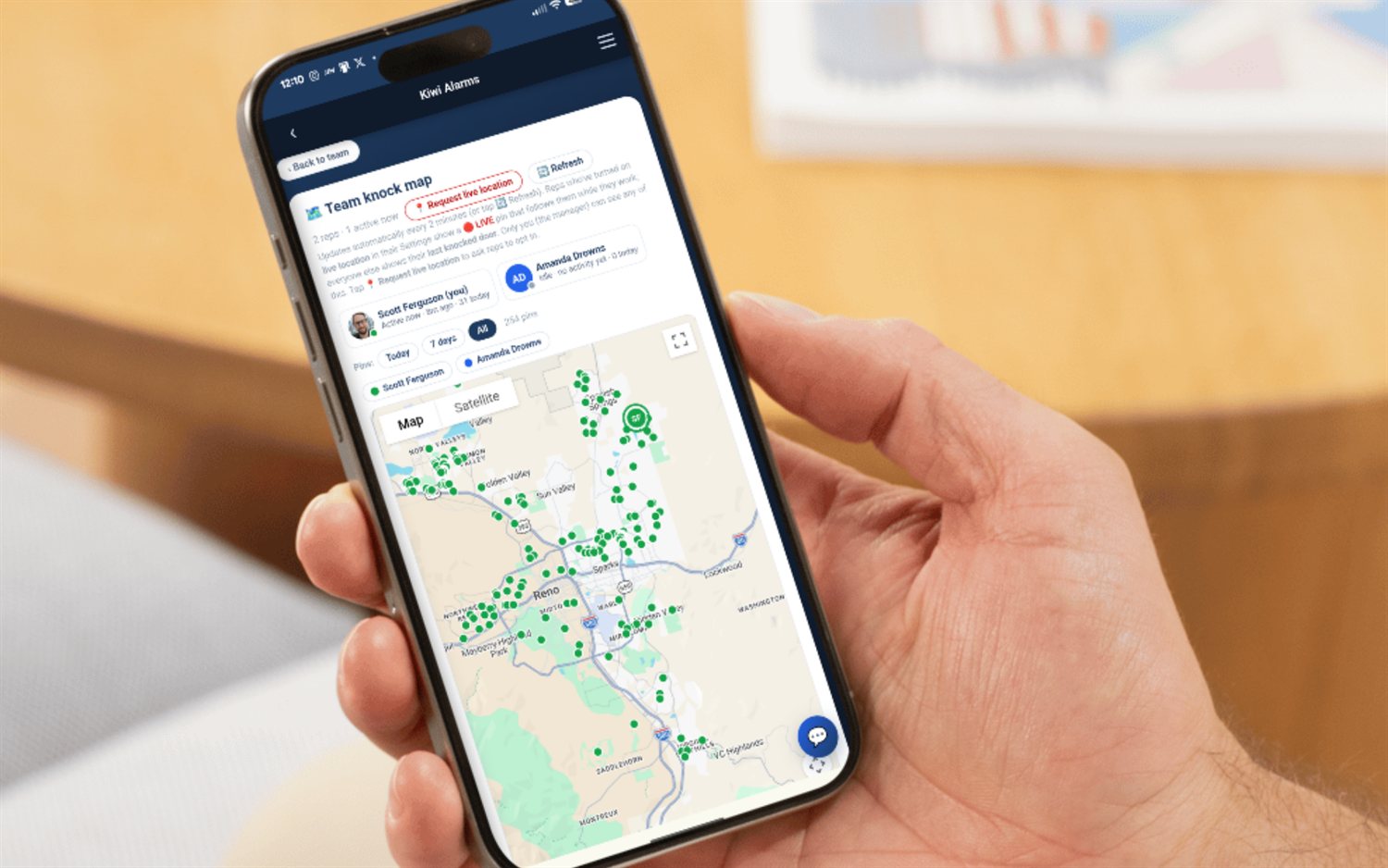
Spring crews turn over. See who actually worked which street, in real time, so two reps never double-knock a block and every door is attributed to the person who hit it.
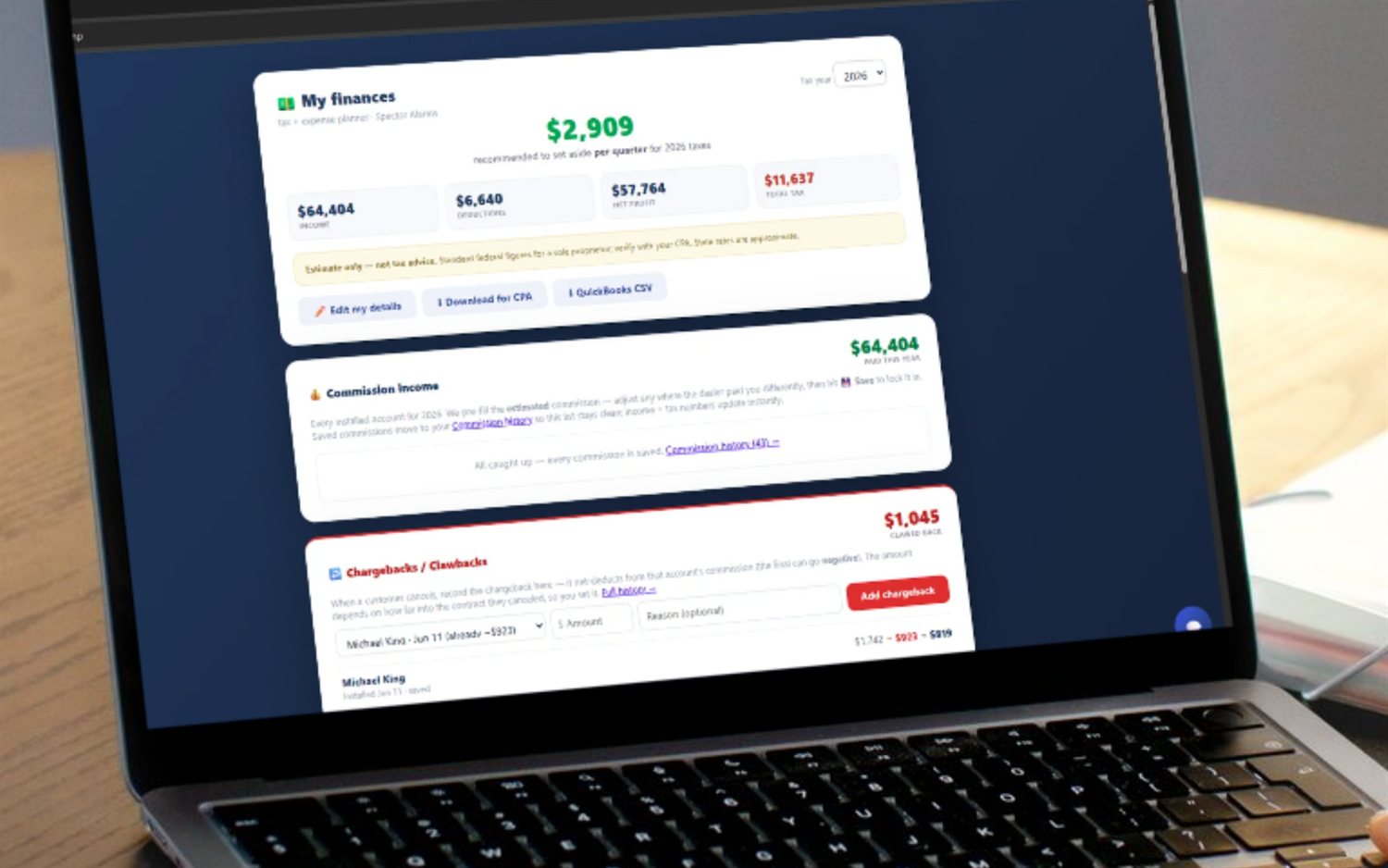
Log the program value and your rate, watch the clawback net out when the customer cancels before app two, capture every mile between neighborhoods at the IRS rate, and build a quarterly tax set-aside.


Keep the software that is already doing its job. Everything below the fold in a lawn company — the board, the trucks, the chemicals, the money coming in — belongs to tools built specifically for it. FieldStacker owns the part those tools were never designed for: the sidewalk, and what the rep personally earns.
Every other door-to-door trade pays the same on a sale no matter where the house sits. Yours does not. A mowing account eleven minutes off the route drags a truck, a trailer and two people out of position every week for as long as you keep it — and a treatment account on an island costs a technician a stop nobody planned. Twelve lawns on one street and twelve lawns across the county are the same commission and wildly different businesses.
Lawn care revenue is not spread evenly across twelve months, and neither is the canvassing. Custom dispositions and callbacks let a "no" in July become a sale in March.
The hardest deadline in the trade. Once soil temperature climbs past the mid-50s and crabgrass germinates, the first application is late and the customer sees weeds all summer. This is why an early-spring knock closes and a May knock argues.
Homeowners look at their lawn for the first time in months, compare it to the neighbor who is already on a program, and are actively deciding. The heaviest canvassing weeks of the year sit here.
A separate, easier, warm-season sale that rides on an existing account or opens a new one. Sells on the back patio, not the front turf.
Visible turf damage in mid-to-late summer is a self-qualifying door. So is drought stress next to an irrigated neighbor — that is an irrigation conversation.
The second real selling season, and often the best add-on window of the year. Cool-season lawns get their one good seeding chance; leaf cleanup and the winterizer close alongside it.
Holiday lighting sells in autumn, before anyone is thinking about it, and snow contracts sign in late summer and fall. Both keep a canvasser earning in the months the mowers are parked.
Warm-season markets run a different calendar entirely — bermuda, zoysia and St. Augustine green up later, take a different fertility program, and bring fire ants, chinch bugs and large patch instead of the northern problem list. The point is not our calendar; it is that yours is fixed, short and unforgiving, and the doors you tag in the off-window are the ones you close when it opens. A disposition of "happy with current company, contract renews in March" is worth more than a fresh cold door in February — if somebody wrote it down.
From picking a street to a tracked commission — and a clean handoff to the software that runs the service.
Open the territory around today's service route, pull the just-sold homes inside it, and start where the mower is already running instead of driving in circles.
Qualify from the sidewalk, name what you saw, tag every door — sold, quoted, DIY, competitor-with-renewal-date, not home — and set the callback so it comes due at the right time next season.
Push the sold account into Jobber, Service Autopilot or Real Green so the service board owns it. Your commission, the chargeback if it cancels early, your miles and your tax set-aside stay here.
Lawn care commission is not paid and forgotten. A treatment program that cancels before the second or third application usually claws back. A prepay that gets refunded usually claws back. A maintenance account that quits after two cuts usually claws back. Reps who only count what landed are always surprised in month three. FieldStacker nets it out as it happens.
Four companion guides written for this trade specifically, not adapted from a solar page.
Openers built on what you can see in the yard, plus every real objection — "I have TruGreen", "I do it myself", "not around my dogs" — with the words back. Read the scripts →
Per-job percent, per-account bounty, percent of gross margin, renewal season, and exactly what triggers a chargeback. See the pay structures →
Honest ranges, the math that produces them, why income is lumpy across a season, and the 1099 reality behind the gross. See the numbers →
Territory choice, the season windows, permits and licensing, the 20-second yard diagnosis, the close and the follow-up. Read the field guide →
Plenty of green-industry reps also sell pest control on the same street, and a lot of crews add holiday lighting, gutters or roofing referrals to keep the winter paid. Turn on the industries you actually sell and work them from one FieldStacker login — one map, one leaderboard, one bill. The alarm side is powered by FieldStacker Security on the same backend, so nothing lives in two apps.
Not in the way the green industry uses that phrase. When a lawn company says "CRM" it usually means Jobber, Service Autopilot, Real Green, SingleOps, Yardbook or Aspire — software that schedules recurring visits, routes crews, prints service tickets, keeps application records and takes the money. FieldStacker is the layer in front of that: the canvassing and the rep's pay. Knock map, sidewalk-qualified doors, drawn territories, custom dispositions, GPS-verified team knocks, leaderboard, commission and 1099 tracking. You sell the account in FieldStacker and hand it to your service software the same day.
No. Aerial turf measurement is its own discipline and the tools that do it — Go iLawn, SiteRecon, Real Green's Measurement Assistant, or a wheel and a phone — are far better at it than we would be, so square footage and automatic 6-step pricing by the thousand stay with them. Our built-in doorstep quote builder is alarm-native today, so lawn reps log the deal and its value themselves. Everything around that — the door, the disposition, the follow-up, the commission — is live now.
No, and it should not. Recurring visit scheduling, crew routing, service tickets, state-required pesticide application records, autopay and invoicing all belong in your operations software. FieldStacker builds the knock route for the canvasser, not the production route for the truck. Sell it here, then push the customer into Jobber, Service Autopilot, Real Green, SingleOps or whatever runs your board, and the account lives there for the rest of its life.
Yes on the sales side. A patio or a full landscape renovation is a long, high-ticket sale with a site visit, a design presentation and a follow-up cycle, and custom dispositions handle that fine — name your stages "measure set", "design presented", "revision", "deposit" and work them like any pipeline. The design and the takeoff stay where they are: renderings, plant schedules, paver and base material quantities and job costing live in DynaSCAPE, Vectorworks Landmark, Structure Studios, iScape, LMN Estimating or Aspire. We run the street and your commission; they run the drawing and the numbers.
Yes, and that is a real reason lawn companies pick us. Pricing is flat and month-to-month starting at $30/mo with no seat minimums and no annual contract, so a company that canvasses hard from March through November is not paying for a January nobody knocks in. Add seats when the spring crew shows up, drop them when the season ends, come back next February with your territories and your door history still there. Canvassing platforms sold on annual seat contracts make you fund twelve months for a seven-month selling season.
Those are capable canvassing platforms, but they are seat-priced, usually sold to teams on an annual commitment, and they stop at the map — your personal commission, your chargebacks when an account cancels before the second application, your mileage and your 1099 set-aside all go back to a spreadsheet. FieldStacker is flat month-to-month from $30/mo with a 14-day free trial and no card, and it carries the rep's money in the same app as the knock. Check their sites for current pricing before you compare; theirs moves and ours is published.
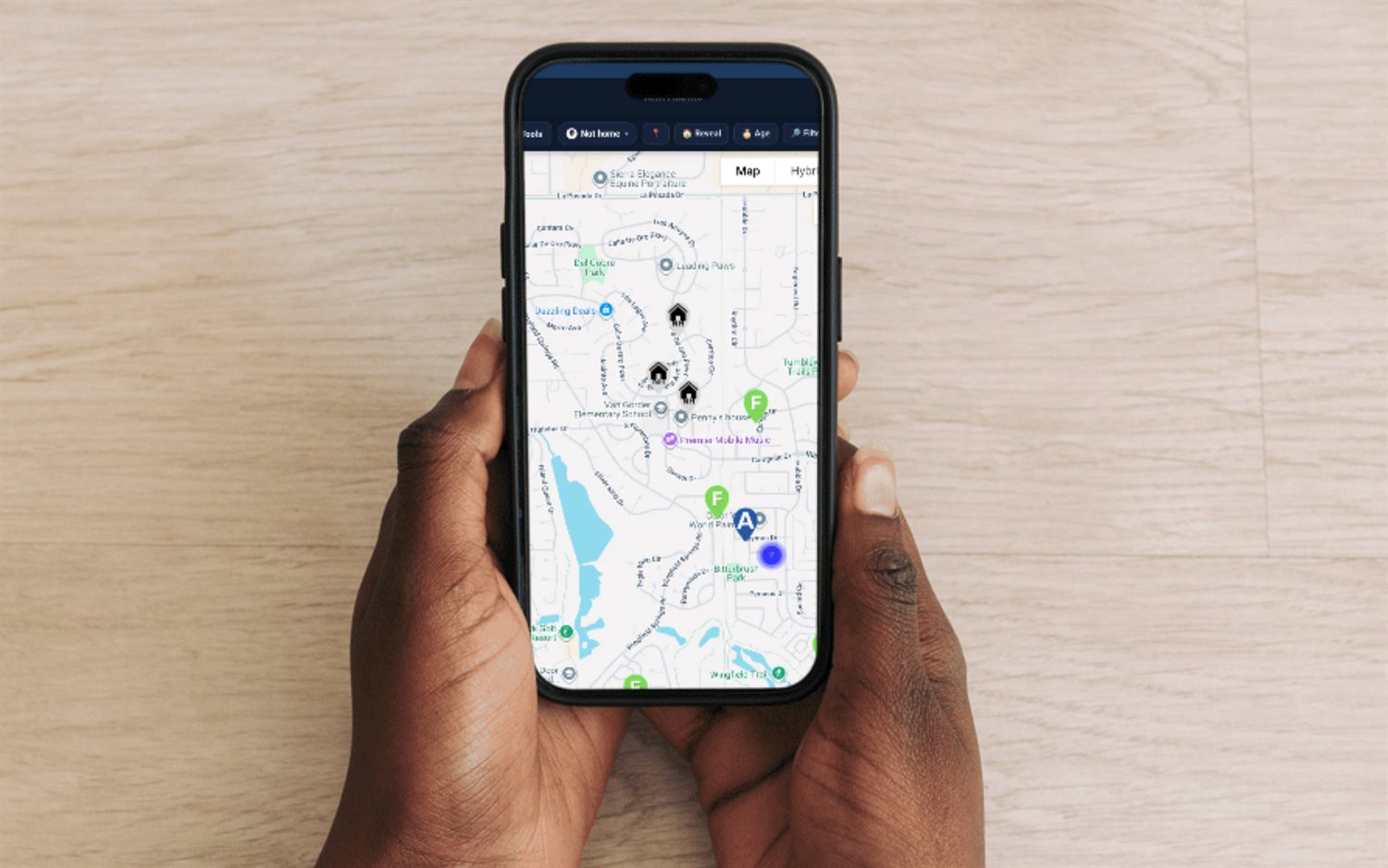
Draw an area on the map and one pull reveals up to 500 homeowners at once — the owner’s name, mailing address, whether they live there or it’s likely a rental, and their estimated age. Every plan with the owner reveal includes 50 pulls a month — that’s up to 25,000 homeowners of rich data every month. Run out and $10 adds another 50 (about 20¢ a pull).
Start a 14-day free trial — no credit card — draw your first territory around the street you already service, and knock it this week. Flat month-to-month, cancel when the season ends.