Guide · lawn care & landscaping scripts

Door-to-door lawn care sales scripts that start in the yard

You can see the problem before you ring the bell. These are the openers that use it, the objections homeowners actually say — word for word — with the response to each, and closes that fit a seasonal service sale instead of a one-time transaction.

Flat month-to-month from $30/mo · 14-day free trial · no seat minimums, no annual contract

The short version: do not open with who you are — open with what is wrong with their lawn, and be right about it. Diagnose from the sidewalk, ask who cuts it and who treats it (those are two different accounts), quote the first application rather than the season, and close on a start date, not on a yes. Half your "no" is a calendar deferral, so tag it and come back before green-up.

Why lawn care scripts are not solar scripts

Every generic door-to-door framework tells you to earn the first twenty seconds with a pattern interrupt. That is true here too, but lawn care hands you an unfair advantage nobody else in canvassing gets: the qualifying information is public and visible. A solar rep has to ask about a utility bill. A roofer needs a hail map or a guess at the roof's age. You are standing on a public sidewalk looking at crabgrass invading the driveway strip, a nutsedge patch that shot up above the cut line, dollar spot in the front, moss in the shade, mower scalping on the slope, or a lawn so thick and striped that you should keep walking. You know whether there is a sale here before anyone opens the door.

The second difference is that the homeowner is almost certainly already spending money on this. Very few doors are "have you considered having a lawn?" — they are already paying somebody, or paying the box store, or paying with their Saturday. Your job is rarely to create the budget. It is to move it, or to find the half of the service they are not buying.

Third: this trade has two accounts hiding at every door. Who cuts it and who treats it are different companies at a very large share of homes. The single highest-yield question in lawn care canvassing is the one that separates them, and most reps never ask it because they assume "I have a lawn guy" means the door is closed.

The 20-second yard read, before you knock

Walk up slow and take inventory. You are looking for a specific, nameable, visible defect that you can say out loud — because a specific observation is proof you know something, and a generic compliment is proof you are selling.

  • The driveway and sidewalk strip — crabgrass and spurge show up here first. Easiest, most visible, most universally recognized problem in the trade.
  • Broadleaf pressure — dandelion, clover, plantain, violet. If you can count them from the street, they can too, and their neighbor has none.
  • Nutsedge — the bright, fast, taller-than-everything green. Homeowners notice it three days after a mow and hate it.
  • Thin turf under trees, moss on the north side — shade and soil, not just fertility. This is a seeding and soil conversation, and it is a bigger ticket.
  • Irregular color, drought stress next to an irrigated neighbor — that is an irrigation or a fertility conversation depending on the season.
  • Fresh sod, new construction, builder-grade lawn — a brand new lawn with a brand new owner who has zero incumbent.
  • A competitor's service flag — free intelligence, in writing, at the end of the walk. It tells you who has the account and roughly when they were last out.
  • Scalping, ruts, a stripe pattern that never changes — that is a maintenance conversation, not a treatment one.

Write the finding on the pin before you knock. It becomes your opener today and your go-back script in five months.

Six openers, and when to use each

Steal the shape, say it in your own words. The one thing they all share: you say something true and specific about their property in the first sentence.

🚛

The crew-on-the-street opener

The strongest one you have, and it only works when it is true. "Hey — that is our truck down at the Hendersons'. We are treating three lawns on this block today, and since we are already here I can do yours at the same stop. Do you want me to look at what yours actually needs?" Proximity is the entire pitch.

🔎

The diagnosis opener

Name the defect before you name yourself. "I am going to be straight with you — the strip along your driveway is crabgrass, not grass. It dies in October and comes back thicker in June unless something goes down before it germinates. Has anybody talked to you about that?" Be right, or this backfires.

🏡

The just-moved-in opener

No incumbent, an inherited lawn nobody fed, and a household in service-shopping mode. "You just bought this place, right? Whatever the last owner was doing out here stopped last fall, and it shows in the back. Want me to tell you what it actually needs before spring so you are not fighting it all summer?"

🚩

The competitor-flag opener

They already buy this. Do not attack the incumbent — separate the services. "I saw the flag out front, so I know somebody is treating it. Quick question and then I will get out of your way: are they cutting it too, or is that you?"

✂️

The route-density opener

For maintenance, sell the schedule, not the price. "We are on this street every Thursday — three houses down and the two on the corner. Adding you does not cost us a trip, so I can do it for what it costs to be on a route we are already running. Are you cutting it yourself right now?"

🧱

The design/build opener

Different sale, different beat: you are selling a site visit, never a number. "That slope on the side is washing out into the drive every time it rains — you can see the silt line. That is a wall-and-drainage fix, not a landscaping fix. I am not going to price it standing here. Can I put twenty minutes on the calendar to measure it?"

The one question that doubles your opportunity per door: "Who cuts it, and who treats it?" Ask it at every single house. Most homeowners buy one of those and not the other, and reps who hear "I already have a lawn guy" and walk away are leaving the other half of the market on the porch.

The objections, in the words they actually use

These are not hypotheticals. If you knock lawns for a season you will hear each of these dozens of times. For each one: what they say, what it usually means underneath, and language that moves it.

"I already have a lawn guy."

What it means: usually true, and usually only half the job. It is a reflex answer, not a decision.
Response: "Good — who do you use? ... They do fine work, I see their flags around here. Honest question and then I am gone: are they treating it, or just cutting it?" If they only have maintenance, you sell treatment. If they only have treatment, you sell the cut. If they genuinely have both and are happy, ask when the agreement renews, thank them, and write the month on the door. That is a warm February lead, not a dead house.

"I've got TruGreen." (or Weed Man, Lawn Doctor, Spring-Green, the local outfit)

What it means: they are a proven buyer of exactly your product. That is the single most qualified door on the street.
Response: never trash the incumbent — it makes the homeowner defend a decision they already made. "They are a real company, no argument there. The only reason I stopped is that we are running this street specifically, so you would get the same tech every visit and I would be the person you actually call. If you are happy, stay put. When does your program renew?" National brands have high churn; you are not converting today, you are positioning for the renewal.

"I do it myself." / "I just grab the Scotts bags at Home Depot."

What it means: they value a good lawn — a warmer prospect than someone who does not care — and they are proud of the work.
Response: compliment the result, then compete against the calendar, not the person. "You are clearly doing something right, the front is thicker than most on this block. Most people who hand it off are not doing it badly — they are just tired of hitting the pre-emergent window in a two-week gap in March and hauling bags on a Saturday." If they are a genuine hobbyist agronomist, tag them and move on; that is a fifteen-minute conversation you will not win.

"How much?" — before you have looked at anything

What it means: "give me a number I can use to end this conversation."
Response: bound it and trade for the measurement. "It is priced off square footage, so I would be making it up standing here. Give me four minutes to measure and I will hand you the real number — and if it is more than you want to spend you can tell me to leave and I will." If they insist, quote the first application or the first month, never the season total. A small true number keeps the conversation alive; a big vague one ends it.

"I don't want chemicals with my kids and my dogs out there."

What it means: a real concern that deserves a real answer, and the one objection where a careless response is also a compliance problem.
Response: tell the truth and nothing more. The products are EPA-registered, applied by a licensed applicator following label directions; the label states exactly how long to stay off the treated area; your tech posts the yard; you will leave the product information. Do not say "totally safe," do not say "organic" unless it is, do not invent a re-entry time. Then offer the alternative if you have one — a fertility-only, reduced-input or organic program is a legitimate sale. If you do not offer one, say you do not.

"We rent." / "The landlord takes care of it."

What it means: almost always a real disqualifier for treatment, and occasionally a lead in disguise.
Response: "Got it, then I am at the wrong door — thanks." Then the one useful follow-up: "Do you know if the landlord is local? Some of them have four or five houses around here." A landlord with a small portfolio is a multi-property account. Tag the door as a rental so nobody knocks it again in June.

"Just email me a quote." / "Leave something and I'll look at it."

What it means: a polite exit, nine times out of ten.
Response: agree, then convert it into a scheduled moment. "Absolutely — what is the best email? ... I will send it tonight. One thing so it is not a random number: can I take two minutes right now to measure so what I send is the actual price for this lawn and not a guess?" If they still decline, send it, leave the card, and set the callback for three days out. A quote nobody follows up on is a quote nobody buys.

"I need to talk to my husband/wife."

What it means: sometimes true, sometimes a soft no.
Response: do not fight it, schedule around it. "Of course — is he around now, or is there an evening this week you are both home? I would rather explain it once to both of you than have you relay it." Also disarm the price part: "So he is not blindsided, the number for a lawn this size is X for the first application. Does that sound like something worth him looking at?"

"I'm not signing a contract."

What it means: they have been burned by auto-renew, cancellation fees, or a company that would not stop coming.
Response: be exact about your own terms and do not oversell them. If your program is cancel-anytime, say so plainly and say how to cancel. If it has a prepay or an agreement, say that too and explain what it buys them. Reps who fudge this create the exact cancellation that claws back their commission ninety days later. "You can stop it with a phone call, and if the first application does not do what I said it would, do not pay for the second" is a strong, honest close only if it is your actual policy.

"The guy down the street does mine for $35."

What it means: almost always a maintenance comparison, and often an unlicensed, uninsured operator with a truck and a trailer.
Response: do not race him to the bottom. Separate the offers. "He might be great — plenty of good ones out there. Two things that are different: we are licensed and insured, so if a rock goes through your window or somebody gets hurt on your property that is on our policy, not on you. And we show up on the same day every week whether or not it is convenient. If price is the only thing that matters, keep him. If it stops showing up, call me."

"We're selling the house."

What it means: a genuine short-horizon objection that is also a specific, easy sale.
Response: flip the timeframe. "Then you want it looking its best for photos, not its best in August. A cleanup, an edge and one application before it lists is a couple hundred dollars against a listing price. When do the pictures get taken?" Also tag it — that house has a new owner in ninety days and no lawn service.

"Not right now. Check back in the spring."

What it means: the most common answer in the trade, and it is worth money if you record it.
Response: pin the date. "That is fair, and honestly the right time to start is before it greens up, not after — once crabgrass germinates the first application is already late. Can I put you down for the last week of February so I catch you before the window closes?" Then set the callback in the app and let it come due. This one disposition, done consistently, is the difference between a good spring and a great one.

"Can't you read the sign? No soliciting."

What it means: exactly what it says.
Response: "Apologies — I did not see it. Have a good one," and go. Then tag the door no-soliciting so nobody on your team ever knocks it again. In lawn care you are working the same neighborhoods for years, not blowing through a storm zone once; a homeowner who gets knocked three times after posting a sign will call the city about your permit, and that costs the whole crew the neighborhood.
Closes that fit a seasonal service sale

You are not closing a purchase, you are closing a start date. That distinction changes every line.

1

The start-date close

"We are on this street Thursdays. I can put your first application on this Thursday or the one after — which is better?" Two yeses, and it makes the service feel already scheduled, because it is.

2

The first-application close

Anchor small and true. "You are not committing to a year. You are committing to one application at $X, and if the crabgrass strip does not clear up, do not do the second one."

3

The measurement close

For anything priced by square foot: the measure is the yes. "Let me get the actual number instead of a guess" is a small ask that puts you in the yard and ends with a real quote in their hand.

4

The neighbor-proof close

"Three houses on this block are already on it — that is why our truck is here every other week. Walk down and look at the corner lot, then tell me no if you still want to." Social proof they can literally go look at.

5

The prepay close

Only if your company genuinely offers it: a season prepay discount is a strong close and, for the rep, usually the version most likely to survive the chargeback window. Never invent a discount you cannot honor.

6

The consultation close

Design/build only. Never price a patio at a door. "I am not going to make up a number. Twenty minutes, I measure and take photos, and you get a real proposal. Saturday morning or Tuesday evening?"

The scripts nobody writes down

Not-home is not a no

In a trade where people are at work all day and in the yard on Saturday, a huge share of your doors are simply empty. The leave-behind and the go-back are where a lawn care canvasser's real numbers come from — and both depend on writing down what you saw.

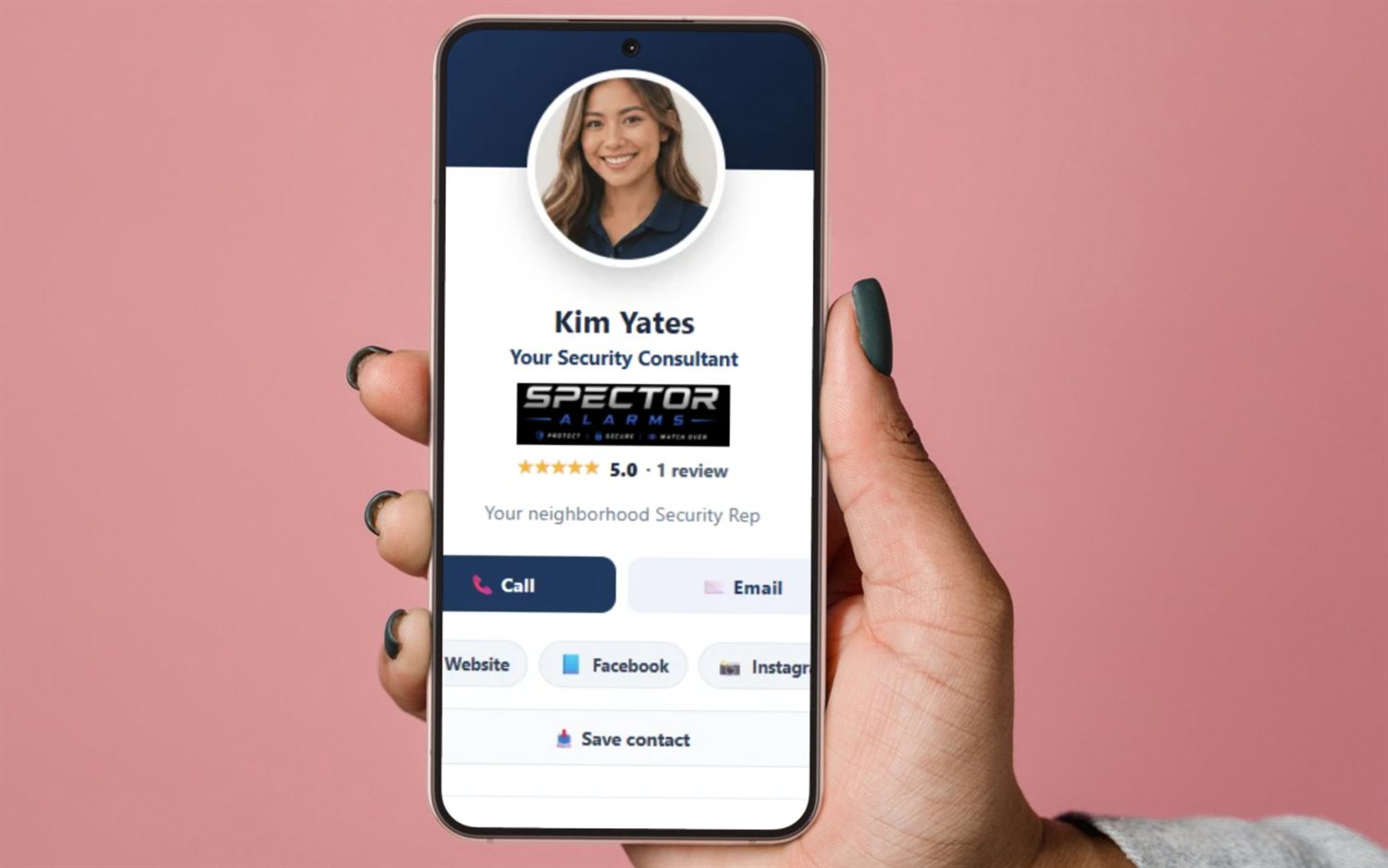
  • The leave-behind: a card with a QR code beats a flyer, because it puts your name and a tap-to-call in their phone instead of in the recycling. Every FieldStacker account includes a free digital business card with a QR.
  • Write the finding on it: "the strip along your driveway is crabgrass — happy to explain" outperforms a company name and a phone number every time.
  • The go-back line: "Hey, I am the one who stopped by Tuesday about the crabgrass along your driveway." You are no longer a stranger, and that changes the first five seconds completely.
  • The seasonal go-back: "You told me in September to come back before spring. Here I am." That is the highest-converting knock in this trade and it is entirely a record-keeping problem.

Get the free digital card →

FieldStacker free digital business card with a QR code, used as a lawn care leave-behind at a not-home door
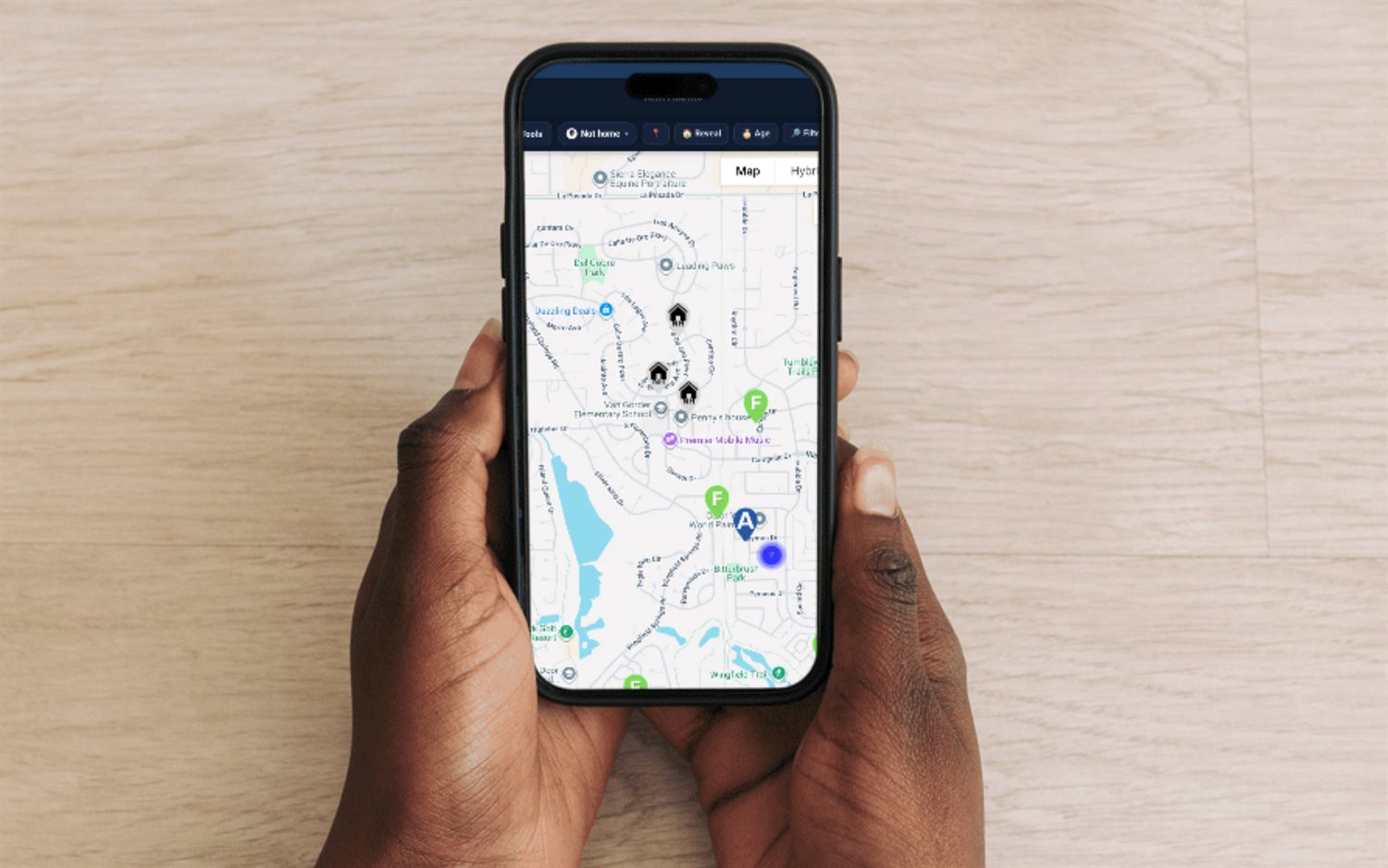
FieldStacker knock map with color-coded pins, each carrying the yard finding and the callback month for a lawn care go-back
Where the script meets the street

A script is only worth what you wrote down

Every script on this page depends on a record: the weed you named, the incumbent's renewal month, the "come back in February," the email you promised tonight. Reps who keep that in their head lose it by Thursday.

  • Tag the door with what you actually saw in the yard, not just a status
  • Custom dispositions for competitor-held, DIY, rental, no-soliciting and quoted
  • Callbacks that come due in the month you promised, so the seasonal go-back happens
  • Objection coaching between doors to fix the line you fumbled two houses ago
  • Works offline, because half a route is out where the signal is not

FieldStacker for lawn care →   General objection handling →

Keep reading

The rest of the lawn care and landscaping series.

🚪

How to sell lawn care door to door

Territory choice, season windows, permits and licensing, the close and the follow-up. Field guide →

💰

Lawn care sales commission

How this trade actually pays, and what claws it back. See the structures →

📊

What reps make

Honest ranges and the math behind them. See the numbers →

🗺️

The knock map

Territories, pins, dispositions and routes. How it works → · All industries →

Questions lawn care reps ask

What is the best opener for door-to-door lawn care sales?

Name what you can see. Lawn care is the only door-to-door trade where the qualifying evidence is sitting in the front yard, so the strongest opener is a specific observation instead of a generic greeting: the crabgrass line along the driveway strip, the thin shade under the maple, the fresh sod on a new build, the competitor flag at the end of the walk. "Hey — I was walking past and that strip along your driveway is crabgrass, not grass, and it is going to take the whole edge by August" gets a conversation. "Hi, do you have a minute to talk about lawn care?" gets a door. The second-strongest opener is the truck: if your crew is working two doors down, lead with that.

How do I answer "I already have a lawn guy"?

Do not argue and do not fish for a complaint. Assume the incumbent is fine, ask one question that surfaces a gap, then set yourself up for the renewal window: "Good — who do you use? ... They do solid work. Honest question, are they treating it or just cutting it? Most folks on this street have one company doing one of those and nobody doing the other." Treatment and maintenance are different services and a huge share of homeowners only buy one. If there truly is no gap, get the renewal month and tag the door — an incumbent account with a known renewal date is a better lead next February than a cold door is today.

How do I handle a homeowner who says "I do it myself"?

Respect it, because a DIY homeowner already believes in the value of a good lawn — that is a warmer prospect than someone who does not care. Do not tell them their work is bad. Compare the job, not the person: what they are buying in a bag at the box store is usually a different analysis and a different rate than a licensed applicator puts down, the pre-emergent timing window is narrow and easy to miss by two weeks, and their Saturday has a value. A useful line: "You are clearly doing something right — the turf is thick out front. Most people who switch are not switching because they did it badly, they are switching because they got tired of the timing." Some DIY homeowners never convert, and that is fine; tag them and stop spending fifteen minutes there.

What do I say when they ask "how much?" before I have seen anything?

Never lead with an annual number and never guess a price you have to walk back. Give a real, bounded answer and trade it for the measurement: "Depends entirely on your square footage — a lawn this size on this street is usually in a range, and I can get you the exact number in about four minutes if you let me measure it." Blurting a price at the door does two things wrong: it prices you against a number they will repeat to your competitor, and it skips the step where they tell you what actually bothers them about the lawn. If they push hard, quote the first application or the first month, not the season — a small honest number beats a big vague one.

How should I answer the kids-and-pets safety objection?

Carefully and truthfully, because this is the one objection where a sloppy answer is also a legal problem. Do not say "it is completely safe", do not say "it is organic" unless the product genuinely is, and do not invent a re-entry interval. Say what is actually true: the products are EPA-registered and applied by a licensed applicator under label directions, the label specifies exactly how long to stay off the treated area, your technician posts the yard, and you will leave the product information with them. If they want a reduced-input, organic or fertility-only program and you offer one, offer it — that is a legitimate sale, not a consolation prize. If you do not offer one, say so.

Do go-back scripts matter as much in lawn care as other trades?

More, because half of your "no" is a calendar problem rather than a real objection. "Check back in the spring," "we are already committed for this season," "ask me after we move in" are all deferrals with a date attached, and in a trade with a hard pre-emergent deadline that date is worth money. The go-back script is easy — "Hey, I am the one who stopped by in September about the crabgrass along your driveway. You told me to come back before spring, so here I am" — but it only works if somebody wrote down what was said and when to return. Dispositioning every door and setting the callback is the entire mechanism.

Put these scripts on a map that remembers

Tag what you saw in every yard, let the February callbacks come due on their own, and track what the sale actually paid you. Start a 14-day free trial — no credit card.