Field guide · final expense insurance

How to sell final expense insurance door to door

Get licensed and appointed. Pick the mail drop, not just the neighbourhood. Knock in senior hours, not sales hours. Sell the chair, not the policy. Field underwrite before you quote. Then set the draft to the deposit and make the call that keeps it on the books.

Flat month-to-month from $30/mo · 14-day free trial · no seat minimums, no annual contract

The whole guide in seven lines: get the licence and the appointments first. Choose the mail drop filters, not just the ZIP. Knock in retiree hours, which are the opposite of every other trade. Lead with the card and ask for the table, never for a sale. Field underwrite and read their medication bottles before you quote anything. Sell to a monthly budget they said out loud. Set the draft date to their Social Security deposit and call them inside 48 hours.

Why this trade rewards process over hustle

Final expense punishes improvisation harder than most door-to-door work, for a specific reason: three separate parties have to agree after the handshake. The underwriter has to accept the health history. The bank account has to have money in it on the draft date. And the client has to still want it after the family weighs in and the free look period runs out. A rep who is brilliant at the door and sloppy at the table writes a lot of applications and places very few of them.

Everything below is ordered the way the day actually runs. If you only fix one thing, fix step five — field underwriting before you quote — because it is where the most money is quietly lost.

Step 1 — Get legal before you get leads

Unlike roofing or pest control, you cannot start this job on a Monday. Budget four to eight weeks.

🎓

Resident life licence

Pre-licensing course in most states, the state exam, fingerprints and a background check. Health is worth adding at the same time if you might touch the Medicare side later.

🤝

Carrier appointments

You are appointed with each carrier separately through your IMO, and each one has its own product training to complete. You cannot solicit a carrier’s product before that appointment is in force.

🛡️

AML and E&O

An annual anti-money-laundering certificate and errors-and-omissions cover are effectively mandatory. Most IMOs will not release contracts without proof of both.

📜

Local solicitation permit

Many municipalities require a peddler or solicitor permit, maintain no-knock registries, and restrict hours by ordinance. Check the town before you work it, not after a complaint.

🏢

Pick the upline carefully

Your contract level and your release policy are decided here and are painful to change later. Read how the commission actually works before you sign anything.

💵

Have runway

You will buy leads before you can convert them reliably. Going into this with no cushion is the most common reason capable people leave in month three.

Step 2 — The mail drop is the territory

In most door-to-door trades you pick a neighbourhood and knock it. In final expense you pick the filters on a mailer and the neighbourhood arrives in an envelope three weeks later. That makes the order form one of the highest-leverage decisions in your week, and most new agents let someone else fill it in.

What you are usually specifying is an age band — commonly somewhere between the mid fifties and around eighty, because that is the window where simplified issue whole life is both needed and issuable — a household income ceiling, homeowner status, and the ZIP codes it drops into. Then pick ZIPs the way the business actually works:

  • Senior density and modest housing. Older subdivisions, small towns, rural county roads and manufactured-housing communities produce the cards. Free Census age and income data will get you most of the way in an afternoon.
  • Avoid affluent ZIPs. People with wealth already have advisors, permanent policies and liquidity. The need you sell against does not exist there.
  • Avoid what you cannot physically reach. Gated communities, secure buildings and locked high-rises turn a paid lead into a wasted drive. This is a door-knocking trade — reachability is a filter.
  • Watch the geography of the drop. A mailer scattered across six counties looks the same on paper as one concentrated in two, and it will cost you an extra day of driving every week. Ask for tighter ZIP clusters.
  • Mix fresh and aged deliberately. Fresh cards convert best and cost most. Aged lists are cheap and reward exactly the persistence that most agents will not apply.
Step 3 — Route it before you turn the key

Windshield time is the tax this job charges

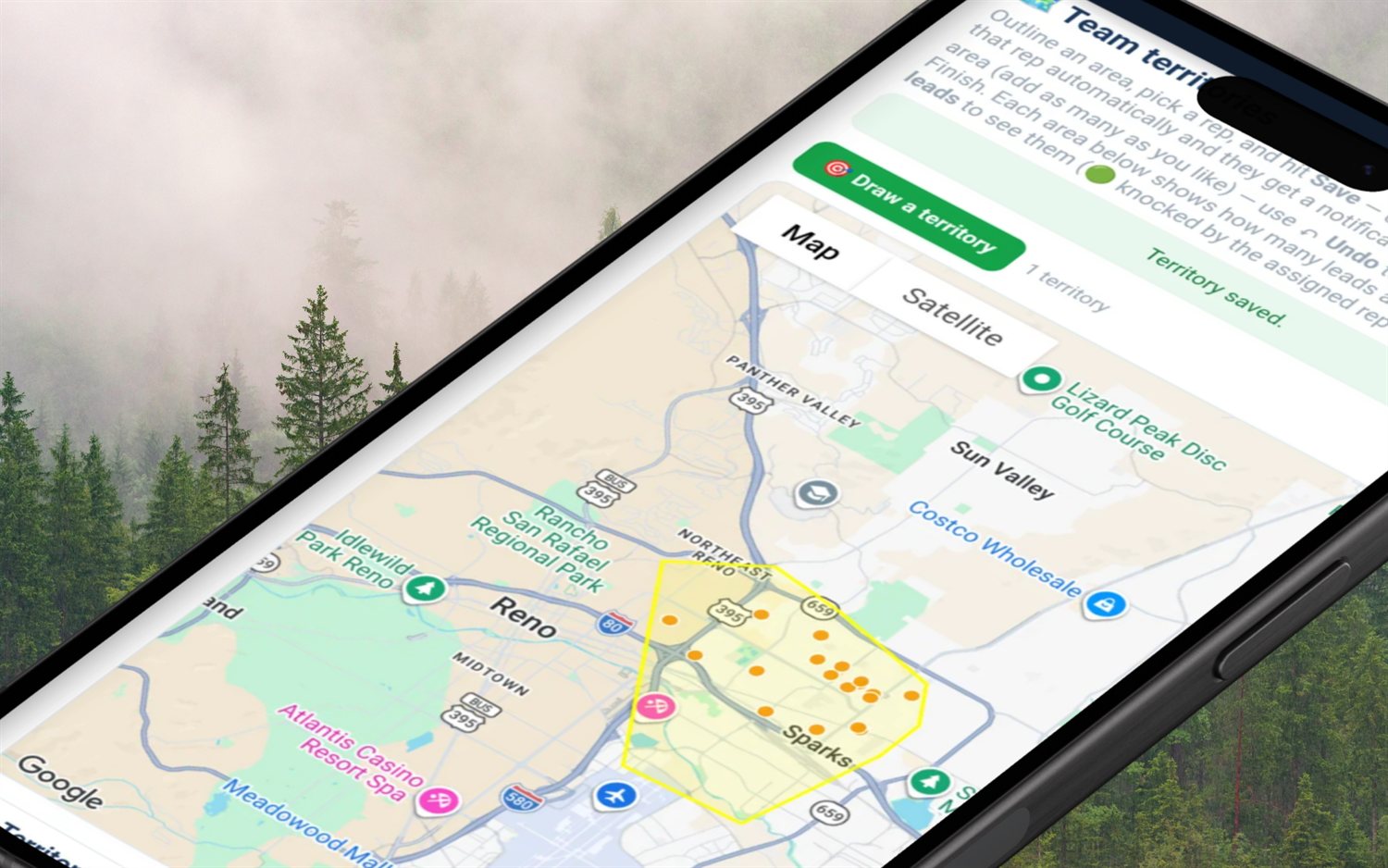
Twenty cards arrive scattered across three or four counties. How you sequence them decides how many households you sit this week — more than your pitch does, more than your carrier mix does. This is the single most under-rated lever in final expense and the one no paper stack in a passenger seat can help with.

  • Import the week's cards or a vendor CSV — every address geocodes itself onto the map
  • Build the loop so the three cards near one small town get worked in one pass
  • Trace the county or the senior-heavy side of town as a territory and assign the leads inside it
  • Colour pins by lead type and age of card so a route reads correctly at a glance
  • Work it offline, because rural county roads are exactly where the signal disappears

See the knock map →   The final expense CRM →

FieldStacker territory tool tracing a rural county and routing a scattered final expense direct mail lead list into one loop

Step 4 — Senior hours are not sales hours

Every other door-to-door trade tells you to knock from four until dark, because that is when working homeowners are in. Final expense inverts it completely. Your prospects are retired. They are home at ten in the morning and at two in the afternoon, and by seven in the evening they are not opening the door for a stranger — nor should you want them to.

The practical window is roughly nine to eleven and one to five, with lunch avoided and everything wrapped up before dusk. Tuesday through Thursday are the strongest days. Saturday mornings work. Sunday mornings are church, so start Sunday after lunch if you work it at all. Compare that to the general best times to knock doors and you will see why final expense agents and summer-programme reps almost never compete for the same hours.

Seasonally, the most important rule is simply knock the card while it is fresh. A response lead decays quickly — the person who wrote it was thinking about this three weeks ago and will be thinking about something else in six. Beyond that: January brings the annual cost-of-living increase to Social Security cheques and a fresh look at the household budget, late winter brings tax refunds, the Medicare annual enrolment period from mid-October to early December pulls a large share of senior-market agents away from final expense entirely, and the last three weeks of December are not worth the fuel.

Step 5 — The kitchen table, in order

The sequence matters more than the words. Doing these out of order is how applications get declined and how premiums get quoted too high.

1

Sit and slow down

Kitchen table, hard surface, beside them rather than across a coffee table. Ask about the photographs. You are about to discuss their death and their family — five minutes of being an actual human is not a technique, it is the minimum.

2

Establish the need out loud

Who would handle things. Burial or cremation. Which funeral home, is there a plot, has anyone priced it. Let them say the number. A funeral with a viewing and burial runs well into five figures in much of the country, and Social Security pays a one-time death payment of $255.

3

Read what they already have

Ask them to fetch the policy. How much, from where, does it end at an age, does the premium step up. If it is genuinely doing the job, say so — that agent gets referrals for years.

4

Field underwrite, properly

Health questions and the full medication list, from the bottles rather than from memory. The carrier will pull prescription history regardless. Now you know who takes them at level, who grades it and who needs guaranteed issue.

5

Quote to their number

Ask what they can comfortably do a month, then show what that buys — and one option a little above and a little below. You are selling a budget, not a face amount. This is also how you stop underwriting your own income downward.

6

Write it while you are there

The e-App on the tablet, beneficiary confirmed and spelled correctly, bank details, then the carrier’s point-of-sale interview or voice signature. A "come back tomorrow" case is a case the family talks them out of overnight.

The exact words for each step →

Step 6 — The close, and the things you must not say

Closing final expense is mostly a matter of not breaking anything. The client already told you they had a problem, told you their budget, and answered the health questions. The close is confirmation, not persuasion: "So that is the twelve thousand at fifty-eight a month, your daughter Melissa as beneficiary, first draft on the fourth. Let us get the company on the phone."

The lines that get agents in trouble are all shortcuts:

  • Do not say "approved." Not until an underwriter has actually approved it. Say submitted, say we should hear within a few days, say what happens if they come back with questions.
  • Do not blur level, graded and guaranteed issue. If the client is landing on a graded or modified plan where the first couple of years pay back premium plus interest rather than the full amount, say that in plain words at the table, and make sure they repeat it back. A family that discovers it at the funeral home is a complaint, a rescinded policy and a reversed commission.
  • Do not fill in a health answer for them. Ask, record what they said, and if it is a knockout for that carrier, move to a carrier it is not. A misstatement discovered inside the two-year contestability period unwinds the whole thing.
  • Do not skip the replacement paperwork. If you are replacing existing coverage, the replacement forms exist and are required. Skipping them is a licence problem, not a paperwork problem.
  • Do tell them about the free look. Most policies carry one, commonly 10 to 30 days by state and product. Saying it yourself costs you almost nothing and buys a great deal of trust.

Step 7 — Set the draft date to the deposit

This is the highest-return ninety seconds in the entire sale and most new agents never think about it. Social Security deposits arrive on a schedule tied to the recipient's birth date, so "the third" means something specific to that specific client. Ask which week theirs lands, then set the bank draft to fall just after it.

A draft that hits an empty account in month two does not just fail — it usually ends the policy, reverses the advance you were paid, and dents the persistency figure your carrier watches. Free money, in the form of a question you can ask in one sentence. The mechanics of why that matters so much are on the commission page.

Step 8 — The 48-hour call and the referral ask

Within two days of every sale, call with no selling in it whatsoever. Confirm the policy is with the underwriter, remind them the first draft is on the fourth, tell them the carrier may ring to verify a couple of answers, and thank them. That is the whole script. Buyer's remorse in this trade grows in silence and the free look window is right there — a short friendly call is the cheapest persistency insurance available.

And ask for names while you are at the table, not later. "Who else on this street should be looking at this? Anybody at church?" A referral in a senior community outperforms a mailer by a distance, costs nothing, and is the main reason an experienced agent's lead cost per sale is a fraction of a new agent's. Then knock the houses around every client you write — you already drove out there.

Step 9 — Work the card three times

The last thing, and the thing that most separates agents who make a living here from agents who quit blaming lead quality. A card you paid thirty-odd dollars for is not spent after one no-answer. Come back at a different hour on a different day, leave a handwritten note with a time you will return, and actually turn up then. A meaningful share of final expense business is written on the second and third attempt, and it is business you have already bought and paid for.
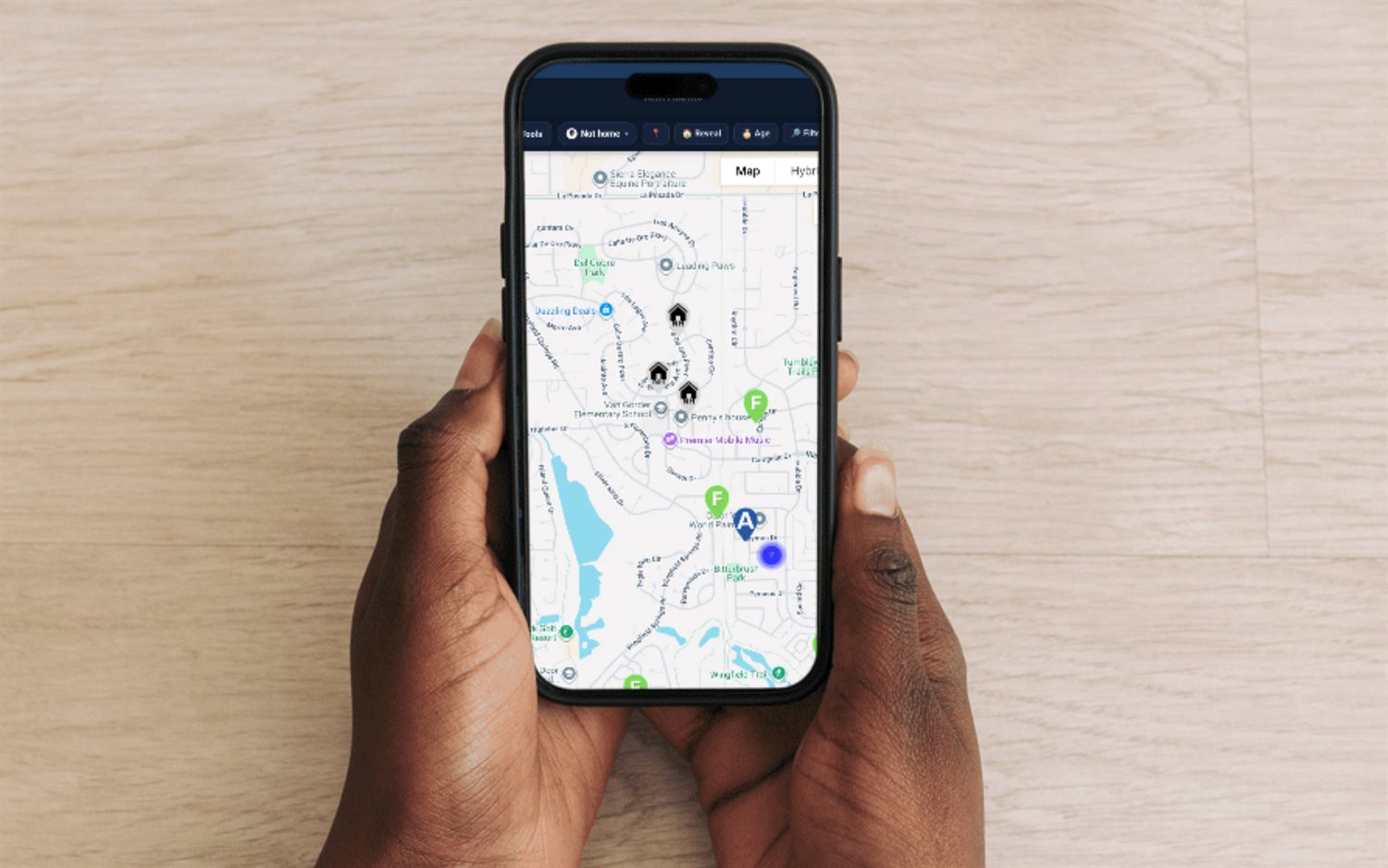
FieldStacker knock map with colour-coded pins recording attempt count, existing coverage notes and callback timing on every final expense lead
Step 10 — Let the route remember

By month three your best leads are ones you already knocked

You know which attempt this is, what her existing policy was for, that the daughter needs to be on the phone, and which week her deposit lands. That is the whole advantage of a paid lead, and it is worth nothing if it lives in your memory of a county you worked in March.

  • Custom dispositions for attempts: not home 1st, 2nd, 3rd, appointment set, presented no sale, sold pending underwriting, issued, declined
  • Notes on the pin — existing coverage, the budget number, who really decides
  • Callbacks that come due the right week instead of when you happen to remember
  • Advanced commission with lapse chargebacks netted, plus auto-mileage at the IRS rate and a 1099 tax set-aside
  • A free digital business card with a QR code, so "leave me something" still captures a contact

The final expense CRM →   Every feature →

Field questions, answered straight

Do you need a license to sell final expense insurance door to door?

Yes. You need a resident life insurance producer license from your state, which means pre-licensing study in most states, the state exam, fingerprinting and a background check. On top of that you must be appointed with each carrier individually, complete that carrier's product training, hold an annual anti-money-laundering certificate, and carry errors and omissions cover — most IMOs will not release contracts without it. Separately from all of that, many cities and counties require a solicitor or peddler permit for the knocking itself and set the hours you may work. None of that is optional and none of it is what a CRM does; get it done before you buy a single lead.

How do you pick a good final expense territory?

Your mailer picks it before you do, which is the part new agents miss. When you order a direct mail drop you specify the filters — an age band, usually somewhere from the mid fifties to around eighty, a household income ceiling, and homeowners or a mix — and then the ZIP codes. So choose ZIPs with genuine senior density and modest, owner-occupied housing: older subdivisions, small towns, rural county roads, manufactured housing communities. Free Census age and income data will get you most of the way. Avoid affluent areas, where people already have advisors and permanent coverage, and avoid gated communities and secure high-rises where you physically cannot reach the door.

What is the best time of day and the best season to knock final expense leads?

The clock is completely different from other door-to-door trades. Your prospects are retired and home, so mid-morning through late afternoon is prime — roughly nine to eleven and one to five — which is the exact window a solar or pest rep would call dead. Avoid lunchtime, avoid early morning, and stop before dark, because a senior will not open the door after dusk and you should not be asking them to. Tuesday to Thursday are the strongest days; Sunday morning is church. Seasonally, knock the card while it is fresh — response leads decay fast. January brings the cost-of-living increase to Social Security cheques and a fresh look at budgets, tax refund season loosens things up in late winter, the Medicare annual enrolment period from mid-October to early December pulls a lot of senior-market agents away from final expense, and the last three weeks of December are dead.

What actually happens at the kitchen table?

A repeatable sequence. Rapport for a few minutes, then confirm why they sent the card in. Establish who would actually handle things and what they would want — burial or cremation, which funeral home, is there a plot. Find out what they already have and read it if they have it. Then field underwrite properly: the health questions and the full medication list, and ask them to bring you the pill bottles rather than reciting from memory, because the carrier will pull prescription history anyway and a surprise at underwriting is a declined case. Only then do you quote, and you quote to a monthly number they gave you rather than a face amount you chose. Finally the e-App on your tablet, the bank draft details, and the carrier's point-of-sale interview or voice signature.

How do you keep the policy on the books?

Three habits, and they are worth more to your income than any closing technique. Sell to a premium the client can genuinely sustain on a fixed income, even when they would agree to more. Set the bank draft date to land just after their Social Security deposit — deposit dates run on a schedule tied to their birth date, so ask which week theirs falls in — because a draft that hits an empty account in month two is a chargeback. And call them within two days with no selling in it, purely to confirm what happens next and to answer whatever the family asked overnight. Persistency is not a compliance metric, it is the difference between a good month and a good year.

Is it ethical to door-knock seniors about funeral costs?

It is, if you do it the way the good agents do it and not the way the trade's worst reputation was earned. That means never implying you are from the government, Medicare, Social Security or a funeral home; identifying yourself as a licensed independent agent immediately; never telling someone they are approved before an underwriter says so; being precise about the difference between level, graded and guaranteed issue rather than letting a client assume day-one full coverage; and leaving the moment a person genuinely asks you to. The product itself solves a real problem — a funeral with a burial runs into five figures in much of the country and Social Security pays a one-time death payment of 255 dollars. Selling it honestly to someone who needs it is a decent way to earn a living.

Keep reading

Route this week's cards before you turn the key

Import the list, build the loop, log every attempt, and let the go-backs come due on their own. 14-day free trial, no credit card.