HVAC · rep income

How much do HVAC sales reps really make?

Ranges instead of a recruiting number. What a canvasser earns versus a comfort advisor, why two identical reps make fifty thousand dollars apart, and what actually lands in the bank after taxes.

Flat month-to-month from $30/mo · 14-day free trial · no seat minimums, no annual contract

Read this first. Every number on this page is a range assembled from what reps, managers and job postings across the trade commonly describe — not a survey, not a guarantee, and not an offer. HVAC pay swings hard on market, company, equipment mix, lead flow and the month you got hired. Use these to sanity-check an offer, never to plan a budget. Your own written comp plan is the only real number.

Ask what an HVAC sales rep makes and you will get answers between thirty thousand and three hundred thousand, all of them technically true. That spread is not noise. It reflects two different jobs, two different pay structures, and one variable — how many qualified appointments hit your calendar each week — that dwarfs everything else including your talent. This page breaks the range apart so you can find where you would actually sit.

Commonly reported ranges

Annual totals including base, commission and spiffs. Wide on purpose — anyone quoting you a single figure is selling something.

RoleHow the pay is builtCommonly reported annual total
Canvasser / appointment setter Hourly base plus a fee for each appointment that sits, plus a bonus when the door turns into an installed system. Often seasonal. Roughly $35k–$60k. Setters who self-generate hard and earn a share of the install can exceed it; part-season work lands well under it.
First-year comfort advisor Small base or draw plus commission on systems, plus membership and IAQ spiffs. Roughly $45k–$80k. The spread here is driven mostly by hire date and lead flow, not skill.
Established comfort advisor (2–5 yrs) Same structure, better close rate, higher average ticket, meaningful add-on attach. Roughly $85k–$150k at a company with steady replacement lead flow.
Top performer, high-volume shop Strong margin discipline, high attach rate, and a real self-generated pipeline on a plan that pays extra for it. $150k–$250k+. Real, and genuinely uncommon — this is the tail of the distribution, not the target.
Sales manager Base plus an override on the team’s revenue or gross profit. Varies widely; frequently lands near a strong advisor’s number, with less volatility and more meetings.

Ranges reflect commonly described pay across US residential HVAC and vary substantially by metro, climate, company size and season. Verify locally.

The four numbers that decide your income

An HVAC advisor’s year is almost entirely explained by one equation. Everything else is detail.

qualified appointments × close rate × average ticket × your commission rate

Two reps with identical skill can differ by fifty thousand dollars because one of those four multipliers is different, and reps chronically obsess over the one they control least.

1. Qualified appointments — the ceiling nobody talks about

This is the big one. Most comfort advisors run leads generated by the service department: a technician finds a failed or aging system on a service call and turns it over. That means your income is set by somebody else’s dispatch board, somebody else’s technicians and somebody else’s marketing budget. A shop feeding you twelve qualified replacement leads a week produces a fundamentally different career than one feeding you four, and no amount of closing skill fixes the difference.

It is also the reason canvassing is worth doing in a trade where the closer is usually somebody else. Self-generated doors raise the ceiling rather than fighting other reps for a share underneath it — and on most comp plans they pay at a better rate too.

2. Close rate

On genuinely qualified in-home replacement appointments, a range in the thirties to around fifty percent is what competent advisors commonly describe. Below that and the problem is usually one of three things: presenting price before establishing scope, running the appointment with only one decision-maker present, or discounting early and training the customer to wait. The second one is the most expensive and the easiest to fix — insist both people are home before you take the slot.

3. Average ticket

Residential system replacement commonly runs somewhere from around six thousand to fifteen thousand dollars, and jobs involving ductwork, electrical upgrades, high-efficiency equipment or multiple systems go well past that. Your market sets much of this for you — regional efficiency minimums, climate, housing stock and the equipment your company stocks all move it. But attach rate is yours: indoor-air-quality accessories, thermostats and surge protection quietly move an average ticket more than a percentage point of commission ever will.

4. Your commission rate

The one reps negotiate hardest and that matters least in isolation. Eight percent of a lot beats twelve percent of a little every year of your life. What matters more than the headline rate is the basis — revenue or gross profit — and what reverses it. That is a whole subject on its own: see how HVAC sales commission works.
An illustration, not a promise

How the equation plays out over one year for an established advisor. Change any input and the answer moves thousands.

☀️

Peak weeks

Say 20 weeks a year at 10 qualified leads, a 40% close and an $11,000 average ticket on an 8% revenue plan. That is roughly $3,500 a week, or about $70k across the peak.

🍂

Shoulder weeks

The other 30 weeks the board thins to maybe 4 leads. Same close rate and ticket puts you nearer $1,400 a week, or roughly $42k across the rest of the year.

🧮

The year

Around $112k gross before add-on spiffs and before chargebacks — which is why "what do you make" is an unanswerable question without those two adjustments.

Run the same arithmetic with 6 peak leads instead of 10 and the year drops by roughly thirty thousand dollars without a single thing changing about the rep. That gap is the entire argument for generating your own doors during the shoulder season instead of waiting for the phone.

The part that ruins good years

HVAC income is lumpy, and reps budget on the wrong month

This trade is twice-peaked — cooling season and heating season — with real troughs in between. A great July does not mean a great April, and every year some reps discover that the hard way. Three habits separate the ones who survive the shoulder:

  • Budget on the trough month, not the peak month. If April is $4k, your life costs $4k.
  • Set money aside during the peak — automatically, before it feels like yours.
  • Canvass in the shoulder. The pipeline you build in March is what makes June worth having.

The shoulder-season playbook →

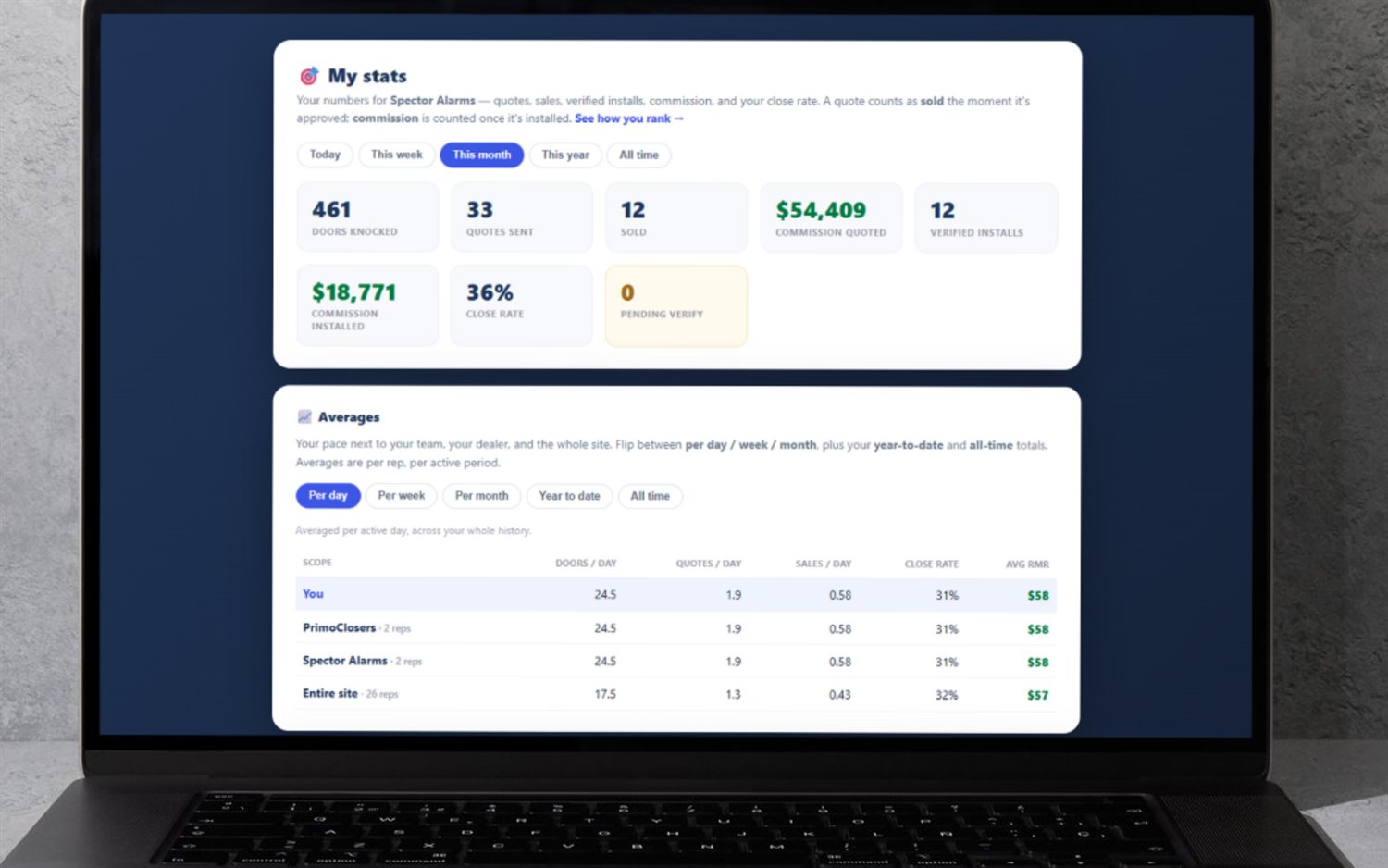
FieldStacker stats dashboard showing a rep’s activity and results trending across the season

Gross is not take-home

Whether the number above is what you keep depends entirely on a box on your paperwork.

If you are W-2 — common for comfort advisors in this trade, less so in solar or roofing — taxes are withheld, the company covers half of Social Security and Medicare, and you may have benefits, a vehicle or an allowance. Your gross is much closer to a normal salary comparison. Watch one thing: if you are on a recoverable draw, that money is a loan against future commission, and a slow shoulder season can leave you owing rather than merely flat. Ask which kind of draw it is before you sign.

If you are 1099 — common for canvassers and setters — nothing is withheld and you owe the full 15.3% self-employment tax on your net profit on top of income tax. Most reps set aside somewhere around 25–30% of every payment and pay quarterly. Your truck, fuel, phone and gear come out of your side unless the plan says otherwise, which is why mileage is usually the largest deduction on a canvasser’s return. None of this is tax advice — talk to a CPA — but the 1099 tax primer covers the mechanics in plain English.

How to move your own number

  • Generate your own appointments. The only lever that raises the ceiling instead of dividing it. Most plans pay more for self-generated work — check yours.
  • Raise attach rate before you raise close rate. Adding an air-quality accessory to deals you were already closing is the cheapest income increase available to you.
  • Stop taking one-person appointments. At this ticket size the second decision-maker is not optional, and the sit you protect by skipping them is the sit you lose.
  • Defend margin. On a gross-profit or sliding-scale plan, a small discount can cost you more than the discount itself.
  • Work the shoulder deliberately. Canvass, chase memberships, mine your old dispositions. The reps with flat income curves are not luckier, they are just busy in March.
  • Track chargebacks honestly. A rep who counts cancelled deals as income has no idea what they earn — which makes every career decision a guess.
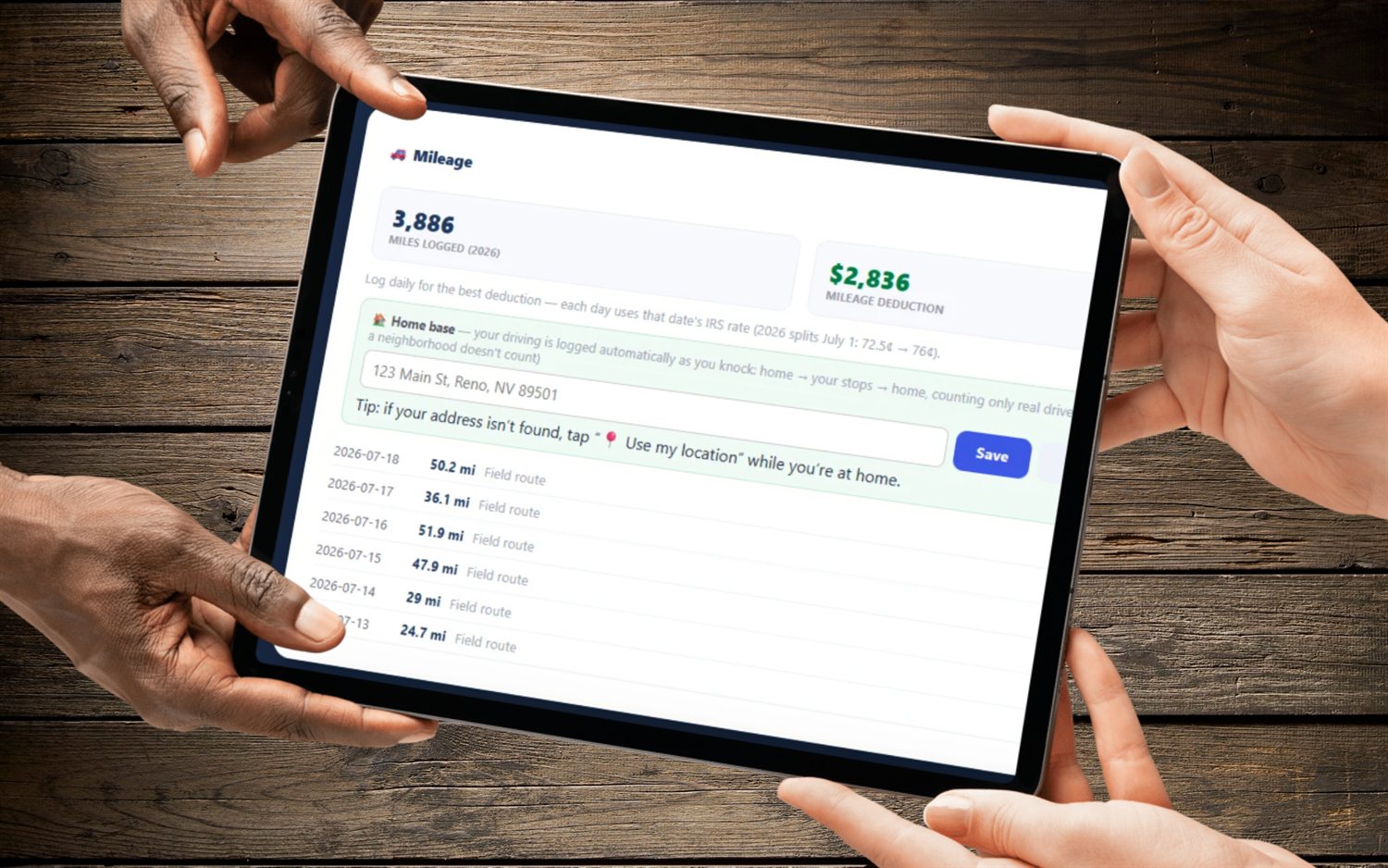
FieldStacker automatic mileage capture logging an HVAC canvasser’s business driving at the IRS standard rate
Know the real number

The only income figure worth trusting is your own

Averages on the internet do not pay your rent. FieldStacker tracks the numbers a rep actually needs to know where they stand:

  • Per-deal commission and flat spiffs on your own splits
  • Chargebacks netted out, so a cancelled system stops counting as money
  • Automatic mileage at the IRS rate — usually the biggest 1099 deduction in this trade
  • A quarterly tax set-aside that fills up during the peak
  • Activity stats and a leaderboard, so you can see whether it is your effort or your lead flow

The HVAC CRM →   Flat pricing →

HVAC pay questions, answered straight

How much do HVAC sales reps make?

The honest answer is a wide range, because "HVAC sales rep" covers two different jobs. Canvassers and appointment setters commonly land somewhere around the mid-thirties to low-sixties on an hourly base plus per-appointment fees and install bonuses. Comfort advisors — the people who run the in-home appointment and close the system — commonly report somewhere in the eighties to low six figures once established, with strong performers at busy replacement companies going well past that and first-year reps often landing far below it. Treat every figure as a range that varies by market, company, lead flow and season, and verify against your own comp plan and local job postings.

How much does a first-year HVAC sales rep make?

Usually less than the recruiting conversation implied, and that is normal rather than a red flag. A first-year comfort advisor commonly lands somewhere in the range of the mid-forties to around eighty thousand, and the spread inside that range has almost nothing to do with talent in the first six months. It has to do with how many qualified leads the service department hands you, whether you started before or after peak season, and how long it takes you to stop discounting. Reps who start in the spring have a materially different first year than reps who start in October.

Do HVAC sales reps make more than solar or roofing reps?

Usually less at the top and more at the bottom. The very best solar and storm-roofing reps out-earn almost every HVAC rep, because those trades pay enormous commissions on self-generated deals and have no ceiling. HVAC pays less per deal but sells something people cannot decline — a furnace that fails in January is not a discretionary purchase — so the income is steadier, the floor is higher, more roles come with a base or a draw, and W-2 employment with benefits is far more common. It is the trade-off between a higher ceiling and a firmer floor.

What is the single biggest factor in HVAC sales income?

Lead flow, and it is not close. Most comfort advisors run leads generated by the service department when a technician finds an aging or failed system, which means your income is capped by somebody else's dispatch board. Two reps of identical skill at two companies can differ by fifty thousand dollars a year purely on how many qualified appointments land on their calendar each week. This is exactly why canvassing matters in HVAC: self-generated doors are the only way a rep raises the cap instead of competing for a share under it, and self-generated jobs often pay at a higher rate too.

Are HVAC sales reps W-2 or 1099?

More often W-2 than in solar or roofing, which surprises reps coming from those trades. Comfort advisors are frequently W-2 employees with a small base or a draw against commission, sometimes with benefits and a company vehicle or allowance. Canvassers and setters are more often 1099, seasonal, or hourly-plus-bonus. If you are on a draw, find out whether it is recoverable — a recoverable draw is a loan against future commission, and a slow shoulder season on one can put you in the hole rather than simply flat.

Is HVAC sales income steady through the year?

The annual total is steadier than solar or storm work, but the month-to-month is not. HVAC demand is twice-peaked — cooling in summer, heating in winter — with genuinely thin stretches in spring and fall when the phone slows and company leads dry up. Reps who budget on their July income and not their April income get hurt every single year. The fix is unglamorous: know your trough number, set money aside during the peak, and use the shoulder seasons to canvass and build the pipeline that carries the next one.

The rest of the HVAC set

💵

Commission mechanics

Revenue vs gross profit, spiffs, clawbacks. HVAC sales commission →

🗣️

Scripts

The openers and objections that fill the calendar. HVAC door-to-door scripts →

Raise the ceiling instead of dividing it

Generate your own appointments in the shoulder season and track every dollar to the door it came from. 14-day free trial, no credit card, flat month-to-month.